0 views
I was tired of private rewards.
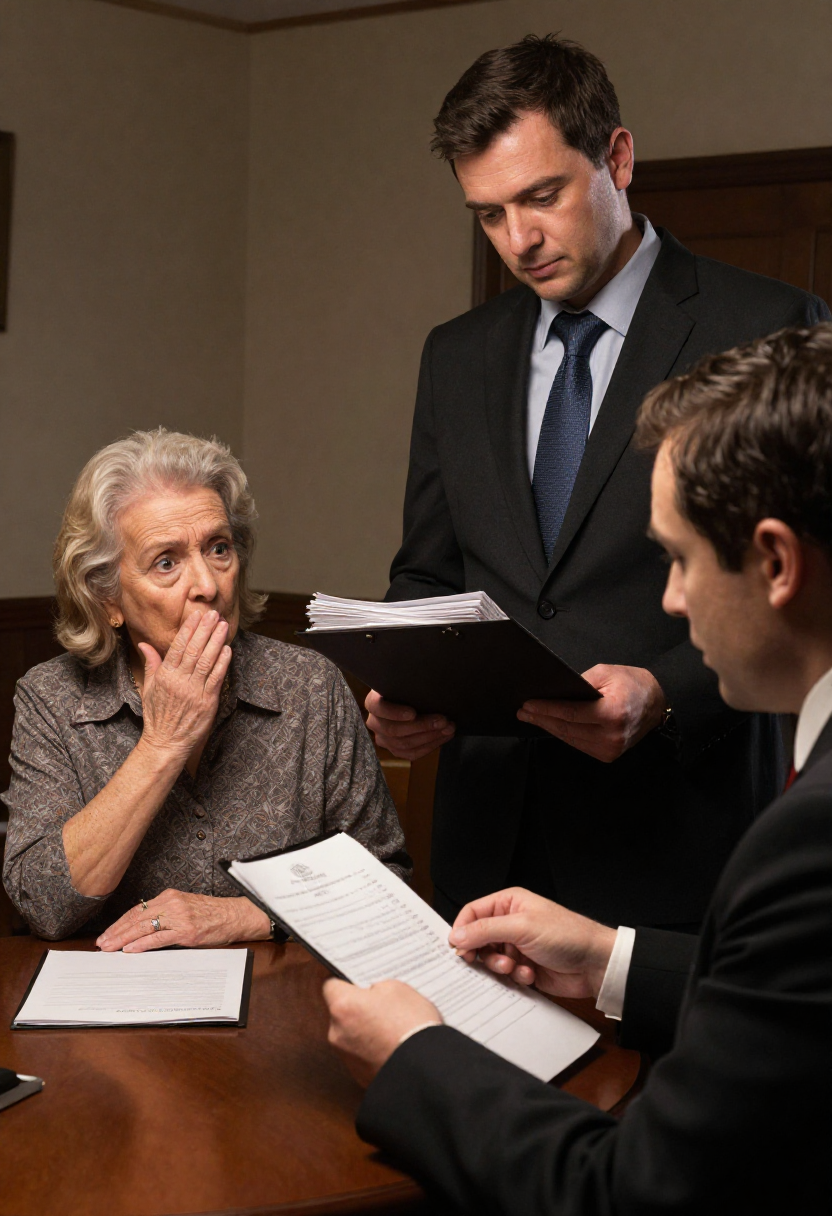
“Mom,” I said. “I’m not doing this to take the house from you. I’m not doing this to punish you. I’m doing this because I need you to see what happened. I need everyone in this room to see it.”
She turned to look at me, her eyes wet. “I do see it.”
“Then why?” I asked, and this was the question I had carried for years, wrapped up carefully so it wouldn’t detonate in the wrong moment. “Why is it equal? After everything, why is it equal?”
She was quiet for a long time. Outside, the October light was thinning toward afternoon, that particular quality of fall light that makes everything look like memory.
“Because I’m their mother too,” she finally said. “And because I was afraid.”
“Afraid of what?”
“Of them.” Her voice was almost a whisper. “Of losing them. If I left you more, they’d—Patrick would stop calling. Marcus would be angry. Brendan—” She stopped.
“I would still be here,” I said. “I would still call. I would still show up. You know that.”
“Yes,” she said. “I know that.”
The weight of that admission sat in the room. The terrible arithmetic of it: she had discounted my loyalty because she knew it was unconditional. She had taken the surest thing in her life and used its certainty against itself.
I think Patrick understood it too, in that moment, because he said, quietly, from across the room: “Danny. I’m sorry.” Just that. No elaboration. But the words were real—I could hear the absence of performance in them—and they landed differently than I expected.
Marcus said, “I should have done more. There’s no—I can’t explain it. I should have done more.”
Brendan came back from the kitchen. He stood in the doorway and looked at me and said nothing for a long moment. Then: “What do you want to happen?”
What I wanted—what I had always wanted, at the bottom of everything, beneath the spreadsheets and the receipts and the legal document I had filed between two manila folders—was to not be alone in this. To have had, at some point over twelve years, a single brother who called and said, hey, let me cover this one. To have received, on some ordinary Tuesday, a text that said, Mom mentioned her heating bill is high, I’m sending her something.
That was what I wanted. A thing that could no longer be given.
What I asked for was different.
I told them I didn’t want to sue my own mother. I told them the note was real and the obligation was real, but that what I wanted was acknowledgment and something approaching fairness—not charity, not pity, but the basic recognition that the distribution of inheritance should account for the distribution of contribution.
Sandra Holt mediated the conversation that followed. It went on for nearly three hours. Patrick flew back to Phoenix the following morning and called me from the airport to say he’d transfer $25,000 into a joint account for Mom’s ongoing care. Marcus said he would take on the monthly grocery and utility payments going forward. Brendan agreed to handle all the home maintenance and to be the backup when I wasn’t available—a commitment that had a structural accountability to it now, witnessed by everyone in the room.
And the will.
Mom called Sandra two weeks later and revised it. Not dramatically. Not punitively. She left the house to all four of us, but specified that the first $150,000 of its value would be offset against my share as satisfaction of the promissory note—meaning, in practical terms, that I would receive the house outright and my brothers would divide the remaining assets. Given the estate’s likely value, it wasn’t a financial windfall. It was a recognition.
That was enough.
I want to tell you that after that afternoon everything changed in the bright, clean way that change happens in stories. That my brothers became different men. That our Sunday dinners became warm and consistent. That Brendan showed up, reliably, with his toolbox and his labor and his slowly maturing understanding that family is not a status but a practice.
The truth is more textured than that.
Patrick calls more. Not every week, but often enough that I’ve stopped being surprised by it. He flew back in February to spend a long weekend with Mom—not for a holiday, not for an occasion, just because. I heard them laughing in the kitchen about something I wasn’t privy to, and I stood in the hallway for a moment and let myself feel glad about it.
Marcus is handling the groceries. He sometimes forgets, and Mom calls me, and I handle it without resentment because Marcus-who-sometimes-forgets is an improvement over Marcus-who-doesn’t-think-about-it-at-all, and improvement is its own kind of thing.
Brendan fixed the water heater in April. He called me afterward and said, “The pressure valve was completely shot. Did you know about that?” He sounded genuinely proud of himself. I told him I hadn’t known. I thanked him. I meant it.
My father died with his hand in mine and a request on his lips. Take care of your mother.
I took it as an instruction to carry alone. Maybe that was his fault, for directing it only at me. Maybe it was mine, for not understanding that a promise doesn’t require you to be the only person keeping it. Maybe it was simply the nature of families—the way we fall into roles as children and then spend our adult lives performing them with the skill and the resentment of long-typecasted actors.
I kept the folder. I still have it. Twelve years of receipts in acid-free sleeves, the promissory note behind a clear cover sheet. I don’t know exactly why I’ve kept it. Perhaps because the discipline of documentation is how I learned to value my own life—the knowledge that I had been here, that I had shown up, written down, accounted for.
Or perhaps because I want to remember the afternoon I sat in my mother’s living room and said: I see what happened. I need you to see it too.
My mother called me last Thursday. She wanted to know if I could drive her to the eye doctor on Tuesday. She mentioned that she had seen a recipe for the lemon cake my father used to like, and did I want to come over Saturday so she could make it.
I said yes to both.
She paused before hanging up, that particular pause she sometimes takes when she’s deciding whether to say the next thing.
“Danny,” she said. “I should have said it sooner. But I see you. I see what you gave.”
I held the phone for a moment in the quiet of my car.
“I know, Mom,” I said.
And I drove to her house, eleven minutes away, for the first time in a long time without the weight of invisibility.
The promissory note sits in my filing cabinet between two manila folders. It has never been exercised. Some documents exist not to be used, but to say: this was real. What happened here was real. I was here.