0 views
That was almost worse than malice. Almost. But not quite.
Because malice is a decision. What she had done was a kind of blindness, and blindness can sometimes, in time, be corrected.
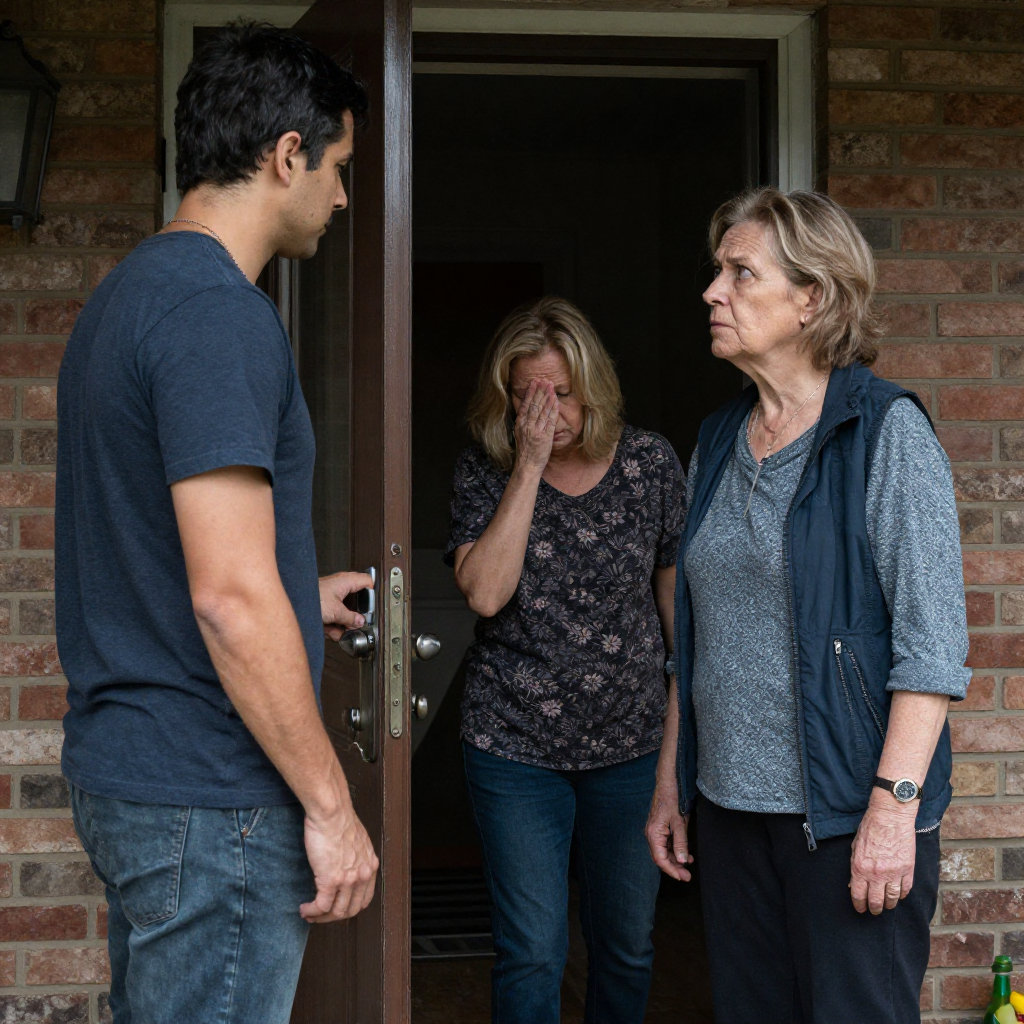
“I can’t promise you anything,” I said, finally. “I don’t know what this is. I don’t know what it can be. I’ve built my life without you in it. That’s not a guilt trip. It’s just what happened.”
“I know,” she said. For the third time. As though she had learned to say those two words because they were the only honest ones available.
“Grandma’s funeral is Saturday,” I said. “You can come, if you want to. If you think it would mean something.”
She nodded. Something moved through her face — relief, grief, shame, hope, some compound of all of them that I didn’t have a name for.
“I want to try,” she said. Her voice was small and she seemed to know it. “I know I don’t have the right to ask for that. But I want you to know that I want to try.”
I thought about the card. The cream-colored paper. The garden I’d drawn with painstaking care. I have everything I want. I thought about Grandma Ruth on the porch, waving. I thought about the letter she had written without telling me, two years ago, still trying, still holding the door open against every reason to let it close.
You walked through it yourself, she had told me.
Maybe that was true. And maybe now there was another door, strange-shaped and uncertain, and I was standing in front of it in my pajamas at two in the afternoon with cold tea and a suspicious cat and a grief so large it had its own weather system. Maybe the timing was terrible. Maybe it would always have been terrible.
But Grandma Ruth had taught me that love doesn’t wait for the right conditions. It shows up. It keeps the door open. It tends the garden even when the season is wrong.
I didn’t walk through the door that afternoon. I wasn’t ready, and pretending I was would have been a lie, and I had run out of the energy required for lies.
But I left it open.
Epilogue: The Garden
My mother came to the funeral on Saturday.
She sat in the back and she did not draw attention to herself and she did not make it about her own grief, which took a restraint I hadn’t expected and noted without saying so. Afterward, at the reception in the yellow house — I’d held it there because the alternative was wrong, because that house was Grandma Ruth and Grandma Ruth was that house — my mother moved quietly among people who had known Ruth for decades. She listened. She asked questions. She brought a casserole that she’d made herself, which I only discovered later from Mrs. Pellegrino, who seemed moved by it.
She stood in the garden as the reception wound down, the late afternoon light coming through the tomato plants, the first green shoots of the season just beginning. I came to stand beside her. We stood there for a moment, two women with twenty-one years of silence between them and one small yellow house, and the air smelled like earth and something new.
“She had a green thumb,” my mother said.
“Everything she touched grew.”
A pause.
“I saved it,” I said. I don’t know why I told her. Maybe because grief strips away the careful management of information. Maybe because some things need to be said out loud in order to stop being secrets. “The card. From when I was eleven. I still have it. It’s in a box in my closet.”
My mother went very still.
“I don’t know why I kept it,” I said. “I’ve asked myself that. I think — I think I kept it because some part of me never stopped hoping that someday it would matter. That someday you’d want to see what I’d made.” I looked at the tomato plants. “Grandma kept everything I ever made her. Every drawing, every card, every stupid macaroni art project from second grade. She had a whole box. I found it going through her things.” I paused. “She kept everything.”
My mother’s eyes were bright with something she didn’t let fall. She looked straight ahead at the garden and breathed carefully.
“I’m sorry,” she said.
Not about the card, specifically. Not about any one thing. About all of it — about the girl who had stood in a living room holding out her heart in a cream-colored envelope and been waved off like an inconvenience. About the years of phone calls that hadn’t come. About the twenty-dollar bill and the signed name and the silence that followed. About the letter she hadn’t answered. About all the ordinary Tuesday evenings and Sunday mornings she had spent elsewhere while I grew up in someone else’s yellow-curtained house, learning to be loved by a woman who kept everything.
I nodded.
It wasn’t enough. That was true and would probably always be true. Some deficits are too large and too old to be filled by any single apology, however sincerely delivered.
But it also wasn’t nothing. And Grandma Ruth had taught me something important about the difference between enough and something — that something, tended carefully and given time, has the potential to become more than it started as.
“There’s a nursery down the road,” I said, after a long moment. “Grandma went every spring for her tomatoes. I was going to go next week. Start keeping up the garden.” I looked at the beds, the careful rows, the evidence of decades of patient tending. “I don’t know how to do any of this. She always did it.”
My mother looked at the garden.
“I could come,” she said. Quietly. “If you wanted. I don’t know much either. But I could — I could come and we could figure it out.”
The offer was small. It was a nursery trip, not a reconciliation. It was a Saturday morning, not a lifetime. It was one small thing that might become two small things that might, over years and with enormous effort and no guarantees, become something neither of us could quite name yet.
I looked at the tomato plants. I thought about seeds.
“Okay,” I said.
It was the smallest possible yes. It contained multitudes of uncertainty. It did not promise anything about what came next, or whether what came next would be worth the risk of hoping for it.
But Grandma Ruth had spent her whole life proving that the door, once opened, could hold more than you expected. That love, given time and tending and the willingness to show up even when the season was wrong, had a way of growing toward the light.
She had kept the door open for me. And I, her best thing, her lighthouse, the girl she’d loved without conditions or qualifications or any thought of getting something back —
I kept it open in return.
In the garden, the tomatoes came in. Everything she had ever planted still, stubbornly, grew.
And I stood in the middle of it, thirty-two years old and motherless in one way and maybe, one small Saturday at a time, not quite in another — holding the door open, the way she had taught me, to see what the light would bring.