0 views
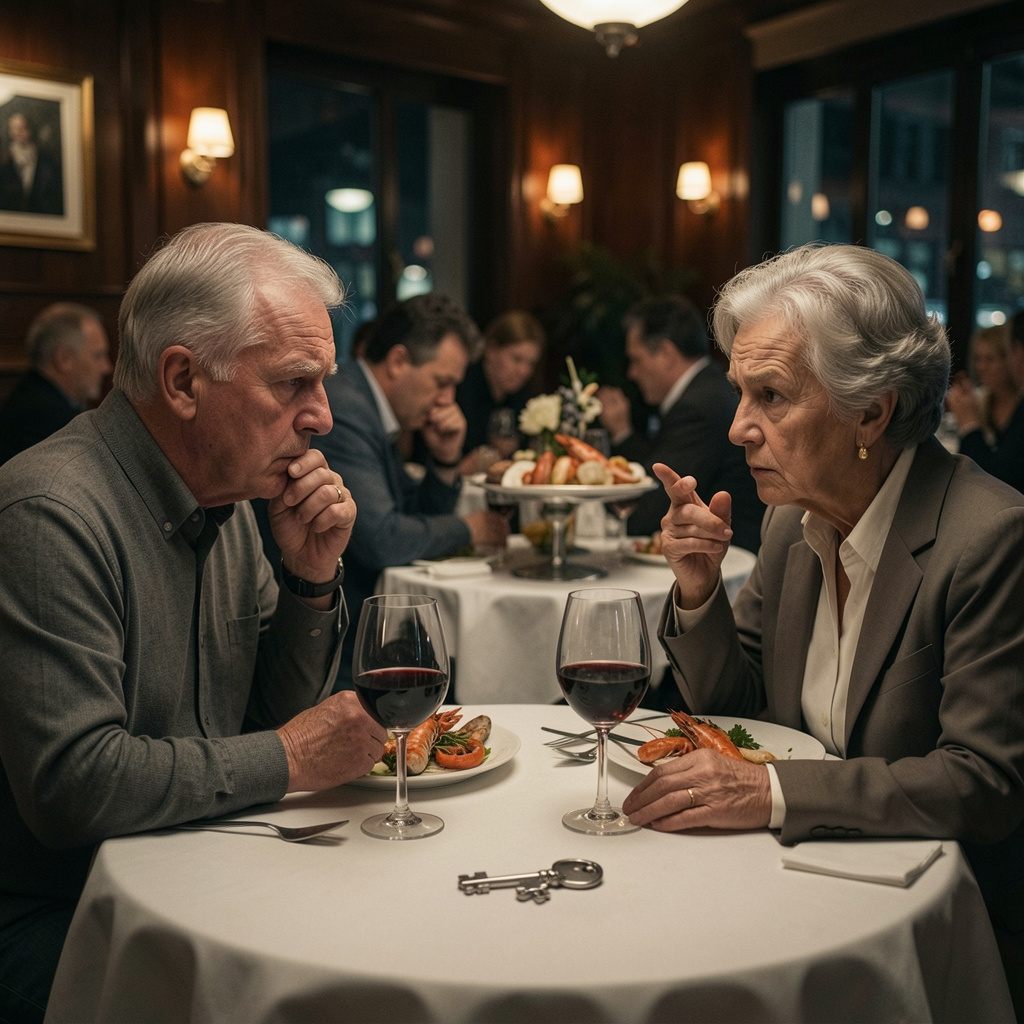
The Admiral’s Feast arrived on a white oval platter, steaming with the kind of abundance that made Red Lobster worth the forty-minute wait on a Saturday night.
Margaret set her napkin across her lap with the careful precision she applied to everything — her flower arrangements, her lesson plans, the way she’d folded the corners of their mortgage documents before signing.
Thirty years of watching those hands, and Daniel still noticed the deliberateness in them.
He had chosen the corner booth. Privacy, he told himself, though the word felt thin now that the moment was actually here.
The restaurant hummed around them — a child’s birthday at the round table near the window, the low saxophone of the speaker system, the percussion of a dozen conversations layered over one another. He had rehearsed this for eleven months. Eleven months of carrying it like a stone in the center of his chest.
The wine came. A Chardonnay, because Margaret always ordered Chardonnay.
“To thirty years,” she said, lifting her glass.
He touched his glass to hers. The crystal rang softly.
To thirty years.
She broke into the Admiral’s Feast with the efficiency of someone who had cracked open difficult things before. The snow crab legs first — she always worked the crab legs first, saving the shrimp scampi for last because she liked ending on something warm and garlicky. He knew this. He knew which side of the bed she slept on and which brand of shampoo made her sneeze and that she cried at insurance commercials but not at funerals. Thirty years of accumulated knowledge, and somewhere in the middle of accumulating it, he had burned a hole straight through it.
He waited until the first leg cracked.
“I had an affair.”
The words came out quieter than he had rehearsed them. More matter-of-fact.
“2016.” He cleared his throat. “Eight months.”
Margaret set down the crab leg. Picked up the small silver fork. Extracted the meat with surgical care. Then she reached across the table for the ramekin of drawn butter and dipped the piece of crab and lifted it to her mouth.
Ate it.
Chewed.
Swallowed.
“I know,” she said.
The restaurant continued existing around him. The birthday child blew out candles. Someone laughed at the bar. The saxophone played something he didn’t recognize, a melody that seemed to understand the absurdity of this moment far better than he did.
“You—”
“I followed you once.” She speared a shrimp, then seemed to reconsider, and set the fork down. When she looked up at him, her eyes were clear. Completely, terrifyingly clear. Not red, not glassy, not the eyes of a woman receiving devastating news. The eyes of a woman who had already processed the news and moved several steps past it while he was still standing at the entrance. “Embassy Suites. Route 4.”
His chest tightened.
“November. The fifteenth, I think. A Tuesday.” She tilted her head slightly. “You told me you were at a conference in Parsippany.”
He had been. He and Katherine had taken a room for four hours in the middle of a conference he was actually attending, a fact that had somehow made the whole thing feel less like betrayal and more like a logistical accommodation. He understood now how spectacularly he had rationalized.
“While you were in that room,” Margaret continued, in the same tone she used to explain things — she had been a seventh-grade English teacher for twenty-two years, and that patient, unhurried clarity never fully left her voice — “I was in the lobby. Meeting a divorce lawyer.”
Daniel’s hand found the stem of his wine glass. He didn’t pick it up. He just held it.
“His name was Gerald Finch. He had an office in Ramsey. Thirty-two years of family law.” She reached for her own wine now, sipped it. “He was very thorough. Very kind, actually. He brought me a cup of tea in a paper cup because the lobby coffee station had those little Lipton bags, and he could see I was — not quite myself.”
Eight years ago. She had been sitting forty feet below him, drinking Lipton tea out of a paper cup, while he—
“He drew up papers that night.” Margaret’s eyes stayed on him with that unnerving steadiness. “I want you to understand that. He had a paralegal working late. I sat in a chair across from him for almost three hours. $420,000 split. The house — we agreed you’d buy out my half. The retirement accounts, divided. His fees were reasonable, all things considered.”
The crab was getting cold between them.
“Margaret—”
“I never filed.” She reached into the purse hanging from the hook beneath the booth and when her hand came back up it held a small key. Brass. The kind that opened a safety deposit box, with the little tag and the bank’s logo printed in faded blue. She set it on the white tablecloth between the bread basket and his untouched crab. “I decided I didn’t want to file. Not then.”
“Why?” The word came out broken in the middle.
She considered the question as though it deserved real consideration. As though she were grading an essay response and wanted to give the student credit for at least asking.
“Because filing meant it was over on your terms,” she said. “You had made a decision. You’d had your eight months and made your choices, and filing the papers would have meant I was simply responding to those choices. Reacting.” She looked at the key. “I wanted you to lose everything on my terms. Not hers. Not yours.”
The word hers landed differently than he expected. Not with venom. With precision.
“I want to explain—”
“Daniel.” She said his name gently. Not sharply, which would have been easier. Gently. “I’ve had eight years to build whatever explanation you’re about to give from the available evidence. I’ve had eight years to imagine the version of you that did this, and the version of her, and the version of me that didn’t see it, or saw it and chose not to look.” She paused. “Whatever you’re going to say isn’t going to add a fact I haven’t already constructed.”
He thought of Katherine. She had moved to Phoenix in 2019. They had ended things in March of 2017 and he had not spoken to her since. For a long time the fact of Katherine had lived in him like a cyst — painful when he pressed it, something he learned not to press. He had told himself he would tell Margaret. After the holidays. After her mother’s hip replacement. After her school won the district reading award and she had a moment of uncomplicated happiness he didn’t want to contaminate. Always after.
Eleven months ago, Gerald Finch had died.
He had seen the obituary in the local section — Gerald R. Finch, 67, family law attorney, beloved husband and father — and he had not understood why the name struck him until Margaret set down her coffee cup very carefully and left the kitchen table and didn’t come back for almost half an hour. He had watched her leave. He had looked at the obituary again. He had understood.
That evening, he had stood at the kitchen window watching her move through her garden in the October cold, pulling the dead marigolds in a gesture that looked less like gardening and more like something he couldn’t name. And he had known, with a certainty he hadn’t earned, that she knew. That she had always known. That the years of ordinary life they had continued to build together — the second mortgage paid off, her mother’s decline and death, his promotion, the kitchen renovation, the trip to Portugal for their twenty-fifth — had been built alongside something she was carrying, the way a river carries debris beneath a surface that still reflects the sky.