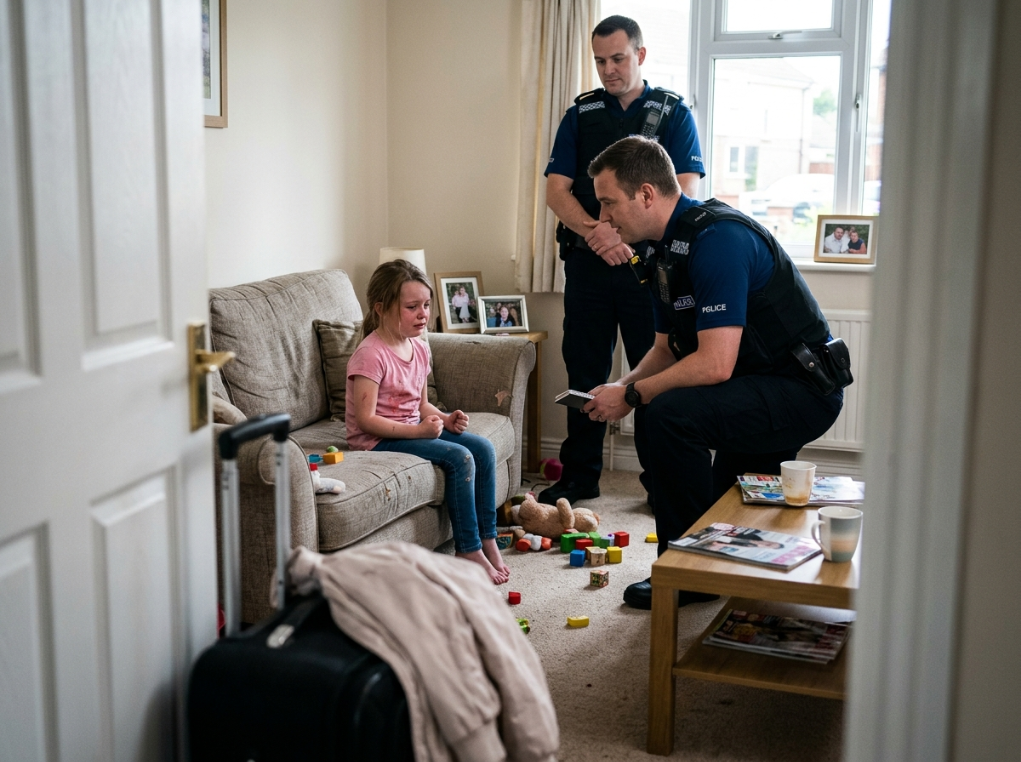
“You did share?” “I said she could play with it after me.”
A pause. “Then Nora threw it.”
My daughter’s voice became so quiet I almost missed the next sentence. “It broke.” I sat very still. “Your dragon broke?”“She stepped on it.”
I remembered the toy.
A small plastic dragon with one crooked wing. Charlotte carried it everywhere. It had been her favorite since she was three.
“What happened next?”
“Nora laughed.”
“And you?”
“I got mad.”
“That’s okay.”
Charlotte looked surprised.
“You’re allowed to get mad,” I said. “Being angry isn’t the same thing as hurting someone.”
She nodded slowly.
“I told Nora she was mean.”
“What did Grandma say?”
Charlotte’s fingers tightened around the blanket.
“She said I was always making trouble.”
There it was.
The old sentence.
The one my mother had used on me.
Always making trouble.
Always too sensitive.
Always ruining things.
I felt something inside me shift—not break, exactly.
More like a lock turning.
“What happened after Grandma said that?”
Charlotte hesitated.
“Mommy?”
“I’m listening.”
“Grandma told me to go sit on the couch.”
“So you did.”
“Yes.”
“And then the police came?”
She nodded.
I waited.
Charlotte looked down.
Then she said, “Grandma told the police I was dangerous.”
My stomach dropped.
“What?”
“She said I attacked Nora.”
I stared at my daughter.
“Did she say that?”
Charlotte nodded.
“She said I might hurt her again.”
The room seemed suddenly too small.
I could hear the air conditioner humming through the vent.
I could hear a car passing outside.
Everything sounded normal.
That was the strangest part.
The world had not changed.
But mine had.
I pulled Charlotte against me.
“Thank you for telling me.”
She buried her face in my shoulder.
After a few seconds, she whispered, “Are you mad?”
“Yes.”
Her body stiffened.
“Not at you.”
She relaxed.
“I’m mad because adults are supposed to make children feel safe.”
She was quiet for a moment.
Then she asked the question I knew she had been holding all night.
“Do I have to go back?”
I closed my eyes.
“No.”
The answer came immediately.
“No, sweetheart. You don’t.”
The next morning, I did something I should have done years earlier.
I opened my bank account.
Then I opened every recurring payment connected to my mother and Kendra.
Electricity.
Phone.
Car insurance.
The grocery account I had quietly funded.
Kendra’s rent assistance.
My mother’s credit card.
A medical bill.
Another credit card.
I stared at the numbers.
Then I laughed.
Not because anything was funny.
Because I finally understood how absurd it was.
For years, I had told myself I was helping my family.
But somewhere along the way, helping had become financing.
And financing had become obligation.
And obligation had become control.
I had been paying for the privilege of being treated like the least important person in the family.
I canceled the first payment.
Then the second.
Then the third.
My hand didn’t shake.
That surprised me.
I expected guilt.
Instead, I felt calm.
Almost frighteningly calm.
At 9:14 that morning, my phone rang.
Mom.
I let it ring.
She called again.
Then Kendra.
Then Mom again.
Finally, a text appeared.
You need to come over. We need to talk.
I typed one sentence.
No.
Three dots appeared immediately.
Then disappeared.
Then appeared again.
You are being emotional.
I put the phone facedown.
Charlotte was at the kitchen table drawing.
She had drawn herself, me, and a yellow house.
There was no grandmother.
No aunt.
No Nora.
Just us.
I didn’t ask why.
At 11:32, someone knocked on my door.
I looked through the window.
My mother stood on the porch.
Kendra was beside her.
I didn’t open the door.
Mom knocked again.
“Mall,” she called. “Open the door.”
Charlotte looked at me.
“Is Grandma here?”
“Yes.”
“Do I have to see her?”
“No.”
I moved the curtains closed.
Mom saw me.
Her expression changed.
“Mall!” she shouted. “This is ridiculous.”
Kendra stepped forward.
“We just want to talk.”
I didn’t answer.
Then Mom’s voice became quieter.
And somehow that was worse.
“You’re making a mistake.”
I stood on the other side of the door.
“What mistake?”
“You’re turning your daughter against her family.”
I laughed once.
“You called the police on her.”
“We were trying to teach her a lesson.”
“She is five.”
“She needs boundaries.”
“She needs adults who don’t threaten her.”
Silence.
Then Kendra said, “You don’t know the whole story.”
That sentence stopped me.
I looked through the glass.
“What don’t I know?”
Neither of them answered.
Mom looked at Kendra.
Kendra looked away.
For the first time since I had come home, they looked frightened.
Not angry.
Not offended.
Frightened.
And that was when I knew there was something else.
Something they hadn’t told me.
“What aren’t you telling me?” I asked.
Mom’s face hardened again.
“Nothing.”
Kendra whispered, “Mom…”
“Get in the car.”
“Mom, we should just tell her.”
My heart began pounding.
“Tell me what?”
Kendra wouldn’t look at me.
Mom grabbed her arm.
“We are leaving.”
Kendra pulled away.
“No.”
My mother stared at her.
“You don’t understand what you’re doing.”
“Yes, I do.”
Kendra looked directly at me.
Her eyes were red.
Then she said six words that made my entire body go cold.
“It wasn’t about the dragon, Mall.”
My hand tightened around the doorknob.
“What was it about?”
Kendra opened her mouth.
My mother stepped between us.
“Kendra.”
But Kendra had already started crying.
“It was about the envelope.”
My heart stopped.
“What envelope?”
Mom went completely still.
And Charlotte, standing behind me, whispered:
“The red one.”
I turned around.
My daughter was staring at the floor.
“Charlotte?”
She looked up at me.
“I saw Grandma hide it.”
Nobody moved.
Then Mom’s face went white.
And suddenly I understood something terrifying.
The police hadn’t been called because of a broken toy.
They had been called because my five-year-old daughter had seen something she was never supposed to see.
And whatever was inside that red envelope had scared my mother far more than anything Charlotte had ever done.
For several seconds, nobody spoke.
My mother stood on the porch with her hand still wrapped around Kendra’s wrist.
Kendra was crying.
Charlotte was behind me.
And I was staring at the woman who had spent my entire childhood teaching me that secrets were safer when nobody asked questions.
“The red envelope,” I repeated.
My mother released Kendra.
“Charlotte is five,” she said. “She doesn’t know what she saw.”
“Then you shouldn’t have a problem explaining it.”
“It was nothing.”
Kendra shook her head.
“It wasn’t nothing.”
Mom turned on her.
“Enough.”
“No.”
Kendra wiped her face.
“You’ve been saying that for months.”
My mother looked at me.
“Your sister is upset. She’s confused.”
“I’m not confused,” Kendra said.
Her voice cracked.
“I’m terrified.”
That word changed everything.
I opened the door.
Kendra stepped inside immediately.
Mom stayed on the porch.
I looked at her.
“You can come in.”
She didn’t move.
“Not if you’re going to interrogate me.”
“This isn’t an interrogation.”
“What is it, then?”
“The first honest conversation we’ve had in years.”
My mother stared at me.
Then she walked inside.
I put Charlotte in my bedroom with a movie and told her she could close the door if she wanted.
She looked nervous.
“Are you going to be okay?”
I almost smiled.
A five-year-old shouldn’t have to ask her mother that question.
“I will.”
She nodded.
“And Mommy?”
“Yes?”
“Don’t let Grandma take the red thing.”
I felt a chill.
“What red thing?”
“The envelope.”
She closed the door.
I returned to the living room.
Mom and Kendra were sitting opposite each other.
Neither looked at me.
I sat down.
“Start talking.”
Kendra took a breath.
Mom said nothing.
So Kendra did.
“About eight months ago, Mom started asking me for copies of your documents.”
I looked at my mother.
“What documents?”
“Tax papers. Insurance information. Your old employment paperwork.”
My mother immediately interrupted.
“It was for financial planning.”
Kendra shook her head.
“That wasn’t what you told me.”
“Don’t do this.”
“You told me Mall was going to help us anyway.”
My stomach tightened.
“What does that mean?”
Kendra looked at me.
“Mom said you were going to sign something.”
“What?”
“A property transfer.”
I stared at her.
“What property?”
“The house.”
I laughed because the alternative was screaming.
“My house?”
Kendra nodded.
“The house you bought after Dad died.”
My mother leaned forward.
“You were going to leave it to Charlotte.”
“Yes.”
“I thought you had changed your mind.”
“I never told you that.”
“You didn’t have to.”
I looked at Kendra.
“What did you sign?”
She started crying again.
“Nothing.”
Mom stood.
“This is ridiculous.”
I stood too.
“No. What’s ridiculous is that I have spent years paying your bills while you were secretly planning what would happen to my house.”
“That is not what happened.”
“Then tell me what happened.”
My mother said nothing.
I waited.
Finally, Kendra whispered:
“Mom borrowed money.”
“How much?”
Neither answered.
“How much?”
Kendra looked at the floor.
“Thirty thousand.”
My mouth went dry.
“From whom?”
“A private lender.”
“Why?”
Silence.
Then Kendra said:
“To cover Nora’s medical expenses.”
That stopped me.
I looked at her.
“What medical expenses?”
Kendra wiped her cheeks.
“The treatment wasn’t covered.”
I softened for half a second.
Then I noticed my mother’s expression.
Too calm.
Too controlled.
“What does that have to do with my house?”
Kendra looked at Mom.
Mom closed her eyes.
“The lender wanted collateral.”
My blood ran cold.
“You used my house as collateral?”
“No.”
Mom’s answer came too quickly.
“I never signed anything.”
“Then what did you sign?”
She didn’t answer.
Kendra did.
“Mom signed a document with your name on it.”
The room went silent.
I couldn’t hear anything for a moment.
Not the air conditioner.
Not the refrigerator.
Nothing.
“My name?”
Kendra nodded.
“I found it last month.”
I looked at my mother.
“You forged my signature?”
“No.”
“Did you?”
“I was desperate.”
That wasn’t a denial.
I stepped backward.
My chair hit the wall.
“How much?”
Mom looked away.
“How much did you borrow using my name?”
“Thirty thousand.”
Kendra whispered, “It’s more now.”
“How much?”
“Forty-six.”
I felt sick.
Forty-six thousand dollars.
Debt I had never agreed to.
Debt attached to my name.
Attached to my home.
And suddenly the police call made sense.
Not completely.
But enough.
“They knew Charlotte saw the envelope,” I said.
Kendra nodded.
“She saw Mom putting the documents inside.”
“Why didn’t you tell me?”
Kendra looked at me.
“Because Mom told me if I did, the lender would come after us.”
I stared at her.
“You let my daughter get blamed.”
“I know.”
“You watched her cry in front of police officers.”
“I know.”
“You let me think she had hurt Nora.”
“I know!”
Kendra broke down.
“I was scared.”
I wanted to hate her.
Part of me did.
But another part remembered the little girl she had once been.
The same girl who had learned to obey Mom before she learned to question her.
I looked toward the hallway.
Charlotte was silent.
Too silent.
Then I heard the bedroom door open.
She appeared holding something in both hands.
A red envelope.
My mother stood so quickly her chair fell backward.
“Charlotte.”
My daughter froze.
Mom took one step toward her.
I stepped between them.
“Don’t.”
Mom stopped.
Charlotte held the envelope against her chest.
“I found it.”
My heart hammered.
“Where?”
“In Grandma’s bag.”
Mom’s face drained of color.
Kendra covered her mouth.
I reached for the envelope.
Charlotte handed it to me.
“Mommy, there’s a picture inside.”
I opened it.
The first thing I saw was my father’s handwriting.
My breath caught.
It was a photograph.
Old.
Faded.
My father stood beside a woman I had never seen before.
On the back, he had written a date.
And underneath it were four words:
She knows the truth.
I turned the photograph over.
There was another sheet of paper.
A name.
An address.
And a sentence that made my hands go numb.
Ask Evelyn why she lied about the night your father died.
Evelyn.
My mother’s name.
I looked up.
My mother was staring at the photograph.
She wasn’t angry anymore.
She looked defeated.
“You weren’t supposed to find that,” she whispered.
I stared at her.
“What did you lie about?”
She sat down slowly.
For the first time in my entire life, I saw my mother look old.
Not stern.
Not powerful.
Just old.
And afraid.
Kendra whispered, “Mom, tell her.”
My mother closed her eyes.
“I didn’t kill your father.”
I swallowed.
“I didn’t ask whether you killed him.”
Her eyes opened.
“I know.”
She looked at the photograph.
“But if I tell you what happened that night…”
Her voice broke.
“You may never forgive me.”
I tightened my grip on the red envelope.
“After what you did to my daughter?”
I shook my head.
“You’ve misunderstood something.”
My mother stared at me.
“I don’t need to forgive you.”
I put the photograph on the table.
“I need the truth.”
And for the first time, my mother didn’t try to stop me.
She simply whispered:
“Then you need to find the woman in that photograph before someone else does.”
For a long moment, I couldn’t move.
“Who is she?”
My mother looked at the photograph.
“Her name is Evelyn Hart.”
I stared at her.
“You said Evelyn.”
“She was your father’s business partner.”
My heart thudded.
“Dad had a business partner?”
“He did.”
“Why didn’t I know?”
“Because after he died, I made sure you didn’t.”
The honesty of that sentence hurt more than another lie would have.
Kendra sat silently beside her.
I picked up the photograph again.
My father was smiling.
It was a smile I remembered from childhood—the real one, the one he wore when he thought nobody was watching.
“Why did Dad never tell me about her?”
“Because he was planning to.”
My mother’s voice trembled.
“The night he died, he was going to tell you everything.”
I looked at her.
“What happened?”
She took a long breath.
“He discovered that someone had been stealing money from the company.”
“Who?”
“I don’t know.”
“You don’t know?”
“No.”
She looked at Kendra.
“Your father believed it was someone close to him.”
“And you?”
“I thought he was being paranoid.”
She looked down.
“That night, he received a phone call. He left the house angry. He told me he would be back in an hour.”
“He never came back.”
“No.”
My mother swallowed.
“His car crashed on the highway.”
I remembered that night.
I remembered being seventeen.
I remembered my mother waking me.
I remembered the hospital.
I remembered the silence.
But there was one thing I had never questioned.
The police had called it an accident.
My mother had agreed.
And I had been too young and too devastated to ask why.
“What did you lie about?”
My mother looked at me.
“He wasn’t driving when the crash happened.”
My breath caught.
“What?”
“He had stopped the car.”
“Why?”
“To meet Evelyn.”
I looked at the photograph.
“Then what happened?”
“We don’t know.”
My mother reached into her purse.
She pulled out another envelope.
This one was yellow.
She placed it on the table.
“I kept this for twenty-two years.”
I stared at it.
“Why?”
“Because I was afraid.”
“Of what?”
“That your father’s death wasn’t an accident.”
The room went silent.
I opened the envelope.
Inside was a letter.
My father’s handwriting.
The words were brief.
He wrote that he had discovered financial fraud and had gathered evidence. He named the person he suspected.
Not my mother.
Not Evelyn.
Someone else.
Someone I knew.
Someone who had remained close to our family for decades.
My uncle.
I looked up.
“He did this?”
My mother shook her head.
“We never proved it.”
“But the documents?”
“Your father had copies.”
“And the red envelope?”
“Evidence.”
“Why did you have it?”
“Because after he died, I found it.”
I stared at her.
“And you hid it.”
“Yes.”
“Why?”
My mother began crying.
“Because I was terrified. I had you. I had Kendra. I thought if I kept quiet, the danger would disappear.”
“It didn’t.”
“No.”
She looked at me.
“It followed us.”
The next week changed everything.
I contacted a lawyer.
We discovered that the document with my forged signature had already been submitted as collateral.
The lawyer moved quickly.
The lender was notified that the signature was fraudulent.
The property was protected.
My mother couldn’t sell, transfer, or borrow against my house.
And the debt?
It was not mine.
For the first time in years, I stopped rescuing everyone.
I didn’t pay Mom’s debt.
I didn’t pay Kendra’s.
I didn’t apologize for setting boundaries.
I didn’t explain myself ten different ways so people would feel comfortable with my decisions.
I simply told the truth.
And truth, I learned, doesn’t always need to shout.
Sometimes it just needs to stop cooperating with a lie.
My uncle was eventually questioned about the old business records.
New evidence surfaced.
The case involving my father’s company was reopened.
I never learned every detail.
Maybe I never will.
Some mysteries don’t disappear completely.
But the truth about my father finally stopped being something whispered behind closed doors.
And my mother?
She moved out of the house.
She apologized to Charlotte.
Not once.
Not dramatically.
She apologized over and over.
She admitted she had frightened her.
She admitted she had treated her differently from Nora.
And most importantly, she never asked Charlotte to forgive her.
That mattered.
Because forgiveness isn’t something you demand from the person you hurt.
It is something they may choose to give you.
Three months later, Charlotte and I moved back into our own home.
We painted her bedroom pale yellow.
She chose the color.
She chose the curtains.
She chose where her books went.
She put her little blue dragon on the shelf.
I had repaired the broken wing.
It wasn’t perfect.
The glue line was still visible.
Charlotte loved it anyway.
One Saturday morning, she ran into the kitchen wearing pajamas and holding a drawing.
“Mommy!”
I turned around.
“What?”
“Look!”
It was a picture of our family.
There was me.
There was Charlotte.
And beside us was a big yellow house.
Above it, she had drawn a sun.
“No Grandma?” I asked gently.
Charlotte thought for a moment.
Then she added a tiny figure in the corner.
“She’s visiting.”
I smiled.
“That’s fair.”
Charlotte hugged my waist.
“Mommy?”
“Yes?”
“Am I still difficult?”
The question nearly broke me.
I crouched down.
“You were never difficult.”
“But Grandma said…”
“I know.”
I held her face in my hands.
“You were brave.”
She smiled.
“Even when I cried?”
“Especially then.”
She thought about that.
Then she nodded.
“Okay.”
She ran back toward her room.
I watched her go.
And for the first time, the house felt completely quiet.
Not the dangerous kind of quiet.
The peaceful kind.
The kind I had wanted all my life.
My phone buzzed.
A message from Kendra.
Nora wants to know if Charlotte can come over tomorrow.
I smiled.
I typed back:
Yes. But no police officers this time.
A few seconds later, Kendra replied:
Deal.
I put the phone down.
Then I noticed something on the kitchen counter.
The red envelope.
I picked it up.
For months, I had thought of it as the beginning of everything terrible.
But now I understood something.
The envelope hadn’t destroyed our family.
The secrets had.
The envelope had simply opened the door.
I looked toward Charlotte’s bedroom.
She was laughing.
Loudly.
Without fear.
Without checking whether someone was going to tell her she was too much.
I smiled.
My mother had spent years teaching me that family meant tolerating pain.
I finally understood the truth.
Family wasn’t the people who demanded access to you.
Family was the people who made you feel safe enough to be yourself.
I folded the letter and placed it back inside the envelope.
Then I put it in a locked drawer.
Not because I was afraid anymore.
Because some chapters deserved to be remembered.
But they didn’t deserve to control the next one.
Charlotte ran back into the kitchen.
“Mommy!”
“What?”
“Can we make pancakes?”
I laughed.
“Chocolate chips?”
“Obviously.”
She grabbed my hand.
And as we walked toward the kitchen, I realized something I hadn’t understood when I walked through my mother’s door that terrible afternoon.
I thought I had come home to rescue my daughter.
But in the end, she had rescued me too.
She had taught me to stop confusing guilt with love.
To stop confusing silence with peace.
And to stop calling a cage a family simply because I had been born inside it.
The past still existed.
The scars were still there.
But they no longer owned us.
Charlotte climbed onto her chair.
I poured the batter.
She looked up at me and smiled.
“Mommy?”
“Yes?”
“I know you won’t let anybody take me away.”
I smiled back.
“Never.”
And this time, when I said it, I knew it was true.
The house smelled like pancakes.
The morning sunlight filled the kitchen.
My daughter was safe.
And for the first time in a very long time—
so was I.