My son invited me to use his guest room while.
“Ivy’s.” “Every week?” “Every day.”
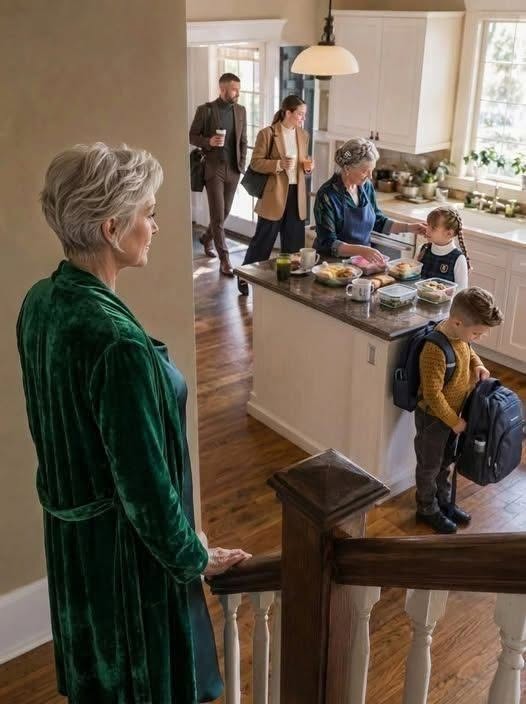
She moved to the kitchen. There was a container of chopped fruit waiting on the counter. “That’s for their lunches.”
I looked at her. “You do all this before they wake up?” She shrugged.
“Most mornings.”
Then she opened the refrigerator. There were three small containers labeled with names. “Carter doesn’t eat sandwiches if the bread gets soggy.”
She pointed to one. “Ivy won’t eat anything green unless she thinks it’s a flower.” She pointed to another. “So I cut cucumbers into little circles.” I smiled despite myself. Marjorie closed the refrigerator.
“This is what they mean when they say I help.” “I understand.” “No.”
She looked directly at me. “You don’t.” Something in her voice stopped me. She walked to the little desk in the corner and pulled out a thick envelope.
Then another. Then another. She laid them on the desk.
“What are those?” “Bank statements.”
I frowned. “Why?” “Because you asked what I pay.” She opened the first envelope. “I don’t pay rent.” I nodded. “But I pay for other things.”
She slid a receipt toward me. Daycare. Another. School supplies. Another. A grocery receipt. Another.
A prescription. I stared at the dates. Some were months apart. Some were every week.
“You pay for groceries?” “Sometimes.” “Sometimes?” “Whenever Trent and Allison are short.” She smiled sadly. “They’ve been short a lot.” I looked at her.
“Why didn’t you tell me?” “Would you have believed me?”
I opened my mouth. Then closed it. Marjorie sat down. “I moved in fourteen months ago because Allison was falling apart.” I pulled out the chair opposite her.
“Why?”
She took a breath. “She had a miscarriage.” The words landed quietly. But they hit hard. I had never heard that. Not once.
Marjorie continued. “She was supposed to return to work three weeks later. She couldn’t get out of bed.”
I looked toward the ceiling.
Upstairs, my son was still asleep.
“I took care of the children.”
Marjorie rubbed her hands together.
“Then Trent started working extra hours. Allison eventually went back to work. And somehow…”
She looked around the basement.
“I never left.”
“Because they needed you.”
“At first.”
She smiled faintly.
“After a while, I think I needed them too.”
That sentence stayed with me.
I looked down at the receipts again.
“Then why did they tell me you don’t pay rent?”
Marjorie laughed softly.
“Because I don’t.”
“But you contribute.”
“So do you.”
“Apparently not enough.”
She looked up sharply.
“Who told you that?”
“No one.”
“Paula.”
She leaned forward.
“Your six hundred dollars isn’t about utilities.”
My stomach tightened.
“What is it about?”
She didn’t answer.
Instead, she asked:
“Has Trent ever mentioned the second mortgage?”
I froze.
“The what?”
Marjorie looked toward the stairs.
Then she lowered her voice.
“Forget I asked.”
“No.”
She shook her head.
“Paula, you need to be careful.”
“Careful about what?”
She stood.
“I’ve already said too much.”
“Marjorie.”
She walked toward the bedroom.
I followed.
She stopped at the doorway.
“Your son didn’t invite you here because he wanted to help you.”
My chest tightened.
“What are you saying?”
She turned around.
“I’m saying you should find out why your condo is taking so long.”
I stared at her.
“My condo?”
“Yes.”
“What does my condo have to do with Trent?”
“Everything.”
Before I could ask another question, we heard footsteps overhead.
Marjorie immediately turned off the basement light.
“Go upstairs.”
“Why?”
“Now.”
I climbed the stairs.
Trent was standing in the kitchen.
He was barefoot.
His hair was messy.
But he wasn’t sleepy.
He was staring directly at me.
“Mom?”
I stopped.
“You’re up early.”
He looked past me toward the basement door.
“Why were you downstairs?”
I felt my heart begin to pound.
“Getting coffee.”
“There isn’t a coffee machine downstairs.”
I held up the mug.
“Marjorie gave me some.”
He stared at me for several seconds.
Then smiled.
A strange, forced smile.
“Right.”
He walked toward the refrigerator.
“Did she tell you anything?”
There it was.
The question.
Too quick.
Too nervous.
I leaned against the counter.
“Like what?”
“Nothing.”
“Then why ask?”
He opened the refrigerator.
Closed it.
Opened it again.
“I just don’t want misunderstandings.”
“What kind of misunderstandings?”
He looked at me.
“About the house.”
I waited.
He said nothing.
Then Allison came into the kitchen.
She was carrying Ivy.
The little girl was still asleep against her shoulder.
Allison looked from me to Trent.
“What happened?”
“Nothing,” Trent said.
Then he kissed Ivy’s forehead.
But his eyes stayed on me.
That afternoon, I called the contractor handling my condo.
He answered on the second ring.
“Ms. Whitmore?”
“Yes.”
“I’m sorry. I was actually going to call you.”
My stomach dropped.
“Why?”
There was a pause.
“The closing date has changed.”
“Again?”
“I’m afraid so.”
“To when?”
Another pause.
“At least six weeks.”
I sat down.
“Six weeks?”
“Possibly longer.”
I looked through the kitchen doorway.
Trent was outside with the children.
He was laughing.
For the first time since moving in, I didn’t hear my son.
I heard a man I didn’t recognize.
“Why?” I asked.
The contractor hesitated.
“There’s a payment issue connected to the property.”
“What payment issue?”
“Your developer can explain.”
“Tell me.”
Silence.
Then he said something that made my fingers go cold.
“The construction account was recently placed under review.”
I stared at the wall.
“By whom?”
“We were instructed not to discuss it.”
“Who instructed you?”
He hung up.
I sat there for several minutes.
Then I opened my banking app.
The $600 payment to Trent was still sitting there.
I looked at it.
Six hundred dollars.
Not rent.
Not really rent.
I suddenly remembered what he had said.
We thought six hundred a month would be fair while you’re here.
Fair.
I opened my laptop.
I checked the property documents for my new condo.
Everything looked normal.
Then I saw a name.
A company name I recognized.
I had seen it before.
On one of Trent’s emails.
I searched my old messages.
There it was.
Three months earlier, Trent had asked me to forward him a copy of my condo purchase agreement.
He had said his mortgage broker wanted to “look at the paperwork.”
I had forgotten about it.
Now I couldn’t remember why I had trusted him.
I printed the document.
Then I heard footsteps behind me.
I turned.
Marjorie stood in the doorway.
Her face had gone pale.
“Where did you get that?”
“The condo paperwork.”
She walked toward me.
“Paula…”
“What does Trent have to do with my developer?”
She didn’t answer.
“Marjorie.”
She looked at the hallway.
Then she locked the kitchen door.
“There’s something you don’t know about your son.”
My mouth went dry.
“What?”
She lowered her voice.
“Trent has been in debt for almost two years.”
I stared at her.
“How much?”
She shook her head.
“I don’t know.”
“Then what do you know?”
She looked toward the stairs.
“I know that fourteen months ago, when I moved in, he asked me to sign something.”
“What?”
“A loan guarantee.”
I felt the room tilt.
“Did you?”
“No.”
“Why not?”
“Because I read it.”
She swallowed.
“And because the signature at the bottom wasn’t mine.”
I stared at her.
“Someone forged your signature?”
Marjorie nodded.
Then she whispered:
“And I think they used yours too.”
For several seconds, neither of us moved.
Then footsteps sounded upstairs.
Slow.
Deliberate.
Someone was coming down.
Marjorie grabbed my hand.
“Don’t say anything.”
The basement door opened.
Trent appeared at the top of the stairs.
He looked at both of us.
Then at the papers in my hand.
His expression changed.
Not anger.
Not surprise.
Fear.
And that was when I understood something much worse than the six hundred dollars.
My son hadn’t been asking me for rent.
He had been buying time.
And whatever was waiting at the end of those seven weeks…
I was beginning to suspect it had nothing to do with my condo.
Trent stood at the top of the basement stairs.
Nobody moved.
He looked at me first.
Then at Marjorie.
Then at the papers in my hand.
“Mom,” he said quietly, “what are you doing?”
I had never heard that tone from my son before.
It wasn’t angry.
It wasn’t defensive.
It was frightened.
I held up the document.
“I could ask you the same thing.”
His eyes dropped to the page.
“Where did you get that?”
“My own files.”
He took one step down.
Marjorie immediately moved between us.
“Don’t.”
Trent stopped.
For a moment, all three of us stood there in silence.
Then he said:
“Marjorie, this isn’t your business.”
She laughed.
It was a tired, almost broken laugh.
“Everything becomes my business when you put my name on a loan.”
Trent’s face went white.
I looked at him.
“Is that true?”
He didn’t answer.
“Trent.”
Still nothing.
I took another step toward him.
“Did you forge Marjorie’s signature?”
“No.”
The answer came too quickly.
“Then whose handwriting is that?”
He looked at the paper.
“I don’t know.”
“That’s not an answer.”
“I said I don’t know.”
His voice cracked.
I had seen my son angry.
I had seen him embarrassed.
I had even seen him cry.
But I had never seen him look trapped.
And somehow that frightened me more than anger would have.
Marjorie whispered:
“Tell her.”
He turned toward her.
“You don’t understand.”
“I understand enough.”
“No, you don’t.”
“I know you borrowed money.”
Trent looked at me.
I felt something cold settle in my stomach.
“How much?”
He looked away.
“Trent.”
“Mom, please.”
“How much?”
He rubbed his face.
“About eighty thousand.”
I couldn’t speak.
Marjorie closed her eyes.
I sat down on the bottom stair.
“Eighty thousand dollars?”
“It isn’t like that.”
“Then what is it like?”
“I was trying to fix something.”
“What?”
He didn’t answer.
I stood again.
“You asked me for six hundred dollars because you were trying to fix something?”
“No.”
“Then why?”
His eyes met mine.
“Because I needed you to stay.”
That sentence made no sense.
“I was going to stay anyway.”
“Not if you knew.”
“Knew what?”
He looked toward Marjorie.
She shook her head.
“Tell her.”
He swallowed.
“The house is in trouble.”
I looked around the basement.
“The house?”
“Yes.”
“Mortgage?”
He nodded.
“How far behind?”
He didn’t answer.
“How far?”
“Four months.”
My heart sank.
“Four months?”
“I can catch up.”
“With what?”
He looked at the floor.
I suddenly understood why Allison worked so much.
Why Marjorie had moved in.
Why the basement was full of carefully labeled containers.
Why everyone seemed exhausted.
And why Trent had been so determined to make my six hundred dollars sound reasonable.
But there was still something missing.
“How does my condo fit into this?”
Trent went completely still.
Marjorie looked at me.
I knew then.
She had been waiting for me to ask that question.
“Your son,” she said quietly, “used your financial information to apply for a loan.”
I turned toward Trent.
“Is that true?”
He shook his head.
“Not exactly.”
I laughed.
It wasn’t a happy laugh.
“There’s no such thing as ‘not exactly’ when somebody uses your information.”
“I didn’t take anything.”
“Did you apply?”
Silence.
“Trent.”
“Yes.”
The room seemed to shrink.
“Did you use my name?”
“No.”
“Then what did you use?”
He looked at me.
“My information.”
I stared at him.
“My tax documents?”
He nodded.
“My bank statements?”
Another nod.
“My condo purchase agreement?”
“Yes.”
I felt dizzy.
“Why?”
“Because the lender wanted proof of assets.”
I stepped backward.
“Proof of my assets.”
“I was going to pay it back.”
“You never asked me.”
“I knew you’d say no.”
“Because I would have.”
He looked down.
“I know.”
That hurt more than anything else.
Not because my son had made a mistake.
Because he had known exactly what I would say and decided my answer didn’t matter.
I picked up my papers.
“How much did you borrow?”
“Thirty-five thousand.”
I stared at him.
“Thirty-five thousand?”
“Temporary.”
“For what?”
“To cover the mortgage.”
I looked at Marjorie.
She nodded.
“He told me it was a short-term business loan.”
I turned back to Trent.
“You used my information to secure a loan to save your house.”
“I didn’t think it would get this far.”
“What does that mean?”
He didn’t answer.
Then Allison appeared at the basement door.
She was crying.
Not quietly.
Her face was wet.
“Trent.”
He looked up.
“Allison…”
“She knows.”
He froze.
“You told her?”
“No.”
She looked at me.
“I told her.”
I couldn’t understand.
“Told me what?”
Allison came down the stairs slowly.
She looked older than she had the night before.
“I found out three months ago.”
I stared at her.
“You knew?”
She nodded.
“About the loan?”
“About everything.”
“And you let me move in?”
She wiped her face.
“I didn’t know what else to do.”
“Allison.”
“I was scared.”
“Of what?”
She looked at Trent.
“Of losing the house.”
Then she looked at me.
“And of losing my children.”
My anger faltered.
“What do the children have to do with this?”
She sat down.
“Everything.”
There was a long silence.
Finally, she said:
“The lender didn’t just ask for collateral.”
“What else?”
“They wanted a guarantor.”
My stomach tightened.
“Who?”
She looked at me.
“You.”
I stared at her.
“No.”
“Trent never completed the final paperwork.”
“Why?”
“Because the signature didn’t match.”
Marjorie whispered:
“That’s what I was trying to tell you.”
I looked at her.
“Whose signature?”
She hesitated.
“Someone signed as you.”
My hands began to shake.
“But I never signed anything.”
“I know.”
“Then who did?”
Nobody answered.
The basement suddenly felt freezing.
I looked at Trent.
He looked terrified.
I looked at Allison.
She was crying.
Then I noticed something.
A small envelope sitting on the desk behind Marjorie.
White.
Unopened.
My name was written across it.
Not typed.
Written by hand.
PAULA WHITMORE
I walked toward it.
“What’s that?”
Marjorie turned.
“I don’t know.”
I picked it up.
“Why is my name on it?”
Trent stepped forward.
“Mom, don’t open that.”
I stopped.
That was the worst thing he could have said.
I tore the envelope open.
Inside was a single sheet of paper.
And a photograph.
The photograph showed me.
Standing outside a bank.
I was wearing the blue coat I had worn the previous winter.
I remembered that day.
I had gone to deposit the proceeds from my townhouse sale.
But I had not gone alone.
Someone had been standing several feet behind me.
I looked closer.
My breath caught.
The person in the photograph was Trent.
But that wasn’t the frightening part.
He was standing beside a man I had never seen before.
On the back of the photograph were six words:
HE KNOWS WHERE YOUR MONEY IS.
I looked at my son.
“Who is he?”
Trent said nothing.
I raised my voice.
“Who is he, Trent?”
Finally, he whispered:
“That’s the man who gave me the loan.”
“And his name?”
Trent looked at Marjorie.
Then at Allison.
Then back at me.
His voice was barely audible.
“Daniel Voss.”
I had never heard the name.
But Marjorie had.
The moment she heard it, she covered her mouth.
I turned toward her.
“You know him?”
She shook her head.
“No.”
But her eyes said otherwise.
“Marjorie.”
She looked at me.
“I knew his father.”
“What?”
She sat down heavily.
“Years ago.”
“How?”
Her voice trembled.
“Because Daniel Voss isn’t the one who started this.”
“Then who did?”
She stared at the photograph.
And then she said something that made every hair on my arms rise.
“His father died eleven years ago.”
I looked at her.
“So?”
Marjorie pointed at the photograph.
“The man standing beside Trent isn’t Daniel.”
My heart stopped.
“Then who is he?”
Marjorie whispered:
“His father.”
And somewhere upstairs, the front door opened.
None of us had heard anyone come home.
The front door opened upstairs.
None of us moved.
For a few seconds, there was only the sound of footsteps crossing the hallway.
Then the basement door opened.
A man stood there.
He was tall, gray-haired, and wearing a dark coat.
I had never seen him before.
But Marjorie had.
Her face drained of color.
“Edmund.”
The man looked at her.
“Hello, Marjorie.”
Trent stepped backward.
“That’s impossible.”
Edmund smiled sadly.
“That’s what everyone said.”
I stared at him.
“Who are you?”
He looked at me.
“My name is Edmund Voss.”
My stomach dropped.
“The father.”
He nodded.
“But I didn’t die eleven years ago.”
Marjorie stood.
“Then why did you let everyone believe you did?”
Edmund’s expression changed.
“Because my son was dangerous.”
The room became silent.
He looked at Trent.
“Daniel was the one who approached you.”
Trent swallowed.
“He said you were dead.”
“I know.”
“He said he inherited everything.”
“He didn’t.”
I looked between them.
“What is happening?”
Edmund turned toward me.
“Your son borrowed money from Daniel.”
“I know.”
“But Daniel wasn’t lending him his own money.”
Edmund paused.
“He was working for a company that specializes in buying distressed properties.”
I felt cold.
“My property?”
“Not initially.”
He took a breath.
“Your son was desperate. Daniel offered him a loan with impossible terms. Trent thought he could pay it back after the house was refinanced.”
“Which never happened.”
Edmund shook his head.
“And when Trent fell behind, Daniel began looking for another asset.”
I already knew the answer.
“Mine.”
He nodded.
“Your condo.”
I closed my eyes.
Everything suddenly made sense.
The delayed construction.
The paperwork.
The strange requests for my financial documents.
The six hundred dollars.
The pressure to stay.
Trent had not been trying to make money from me.
He had been trying to keep me close enough to control the situation.
But that didn’t make what he had done acceptable.
I looked at my son.
“Why didn’t you just tell me?”
His eyes filled with tears.
“Because I was ashamed.”
“Shame doesn’t excuse betrayal.”
“I know.”
He wiped his face.
“I thought I could fix everything before you found out.”
Allison began crying again.
“I should have stopped him.”
I looked at her.
“You knew.”
“I did.”
“Why didn’t you tell me?”
She lowered her head.
“Because I was afraid we’d lose the children.”
Marjorie stepped forward.
“And because Daniel threatened them.”
I turned sharply.
“What?”
She nodded.
“He knew where the children went to school.”
The room went silent.
“He told Trent that if the loan wasn’t paid, he’d make sure the family lost everything.”
I looked at Edmund.
“Is that why you came here?”
“Yes.”
He reached into his coat and removed a folder.
“I’ve spent the last year gathering evidence against Daniel.”
He handed it to me.
Inside were copies of contracts, bank records, photographs, and messages.
There were also copies of documents containing signatures that were clearly not mine.
My hands trembled.
“Why didn’t you go to the police?”
“I did.”
He looked at Trent.
“But your son was too frightened to cooperate.”
Trent nodded.
“I was afraid.”
“For your family?”
“Yes.”
I looked at him for a long time.
Then I said:
“You should have been afraid of losing my trust too.”
He began to cry.
“I know, Mom.”
For the first time, I believed him.
Not because he deserved forgiveness.
Because he finally looked like my son again.
Not a man hiding behind excuses.
Just a frightened man who had made terrible choices.
Edmund told us the rest.
Daniel had been using forged signatures and fraudulent loan applications to target vulnerable borrowers.
He had used Trent’s desperation to gain access to my financial information.
The photograph of me outside the bank had been taken to intimidate me.
But Edmund had been collecting evidence for months.
And now there was enough.
The next morning, Trent went to the authorities with Edmund.
Allison went with him.
Marjorie and I stayed home with the children.
For the first time in fourteen months, she wasn’t cooking.
She wasn’t doing laundry.
She wasn’t preparing school lunches.
She sat at the kitchen table with me.
“Do you hate me?” she asked.
I looked at her.
“No.”
“I should have told you.”
“Yes.”
She nodded.
“I was scared.”
“So was I.”
She reached across the table.
I took her hand.
That was the beginning of something neither of us expected.
We became friends.
Not because our children connected us.
Because we finally saw each other as two women who had spent too much of our lives protecting everyone else.
Three weeks later, Daniel was arrested.
The fraudulent loan was canceled.
The forged documents were officially invalidated.
And my condo construction resumed.
The developer apologized repeatedly.
The delay had nothing to do with the building itself.
The financial investigation had simply frozen several accounts connected to the project.
When the paperwork was cleared, everything moved quickly.
Six weeks later, I received the call.
“Ms. Whitmore?”
“Yes?”
“Your condo is ready.”
I cried.
Not because of the condo.
Because I finally had somewhere that belonged entirely to me.
On moving day, Trent helped carry my boxes.
He didn’t ask for money.
He didn’t mention the past.
When the last box was placed in my new living room, he stood near the door.
“Mom?”
“Yes?”
“I owe you an apology.”
“You do.”
“I don’t expect you to forgive me yet.”
I looked at him.
“I already forgave you.”
His eyes filled with tears.
“But I don’t trust you yet.”
He nodded.
“I understand.”
“Trust takes time.”
“I’ll give you time.”
He hugged me.
I hugged him back.
It was not the same hug we had shared before everything happened.
It was better.
It was honest.
Before he left, I handed him an envelope.
He looked confused.
“What’s this?”
“Six hundred dollars.”
He stared at me.
“I don’t want it.”
“It’s yours.”
“Mom…”
“I’ve decided something.”
“What?”
“Your first month of rebuilding your life is on me.”
He laughed through his tears.
“You’re unbelievable.”
“I know.”
Then I added:
“But don’t expect another six hundred.”
He laughed.
“Fair.”
A month later, I received a letter from Marjorie.
Inside was a photograph.
It showed all of us at my condo.
Carter was holding a dinosaur.
Ivy was wearing a ridiculous amount of jewelry.
Allison was laughing.
Trent stood beside her.
Marjorie was next to me.
On the back, Marjorie had written:
You asked what free looked like.
It looks like this.
No rent. No debt. No secrets. Just family.
I cried when I read it.
Not because the story had ended perfectly.
It hadn’t.
There were still bills to pay.
Trust to rebuild.
Apologies to earn.
And consequences for the choices we’d made.
But the mystery was over.
The person who had tried to steal my future was facing justice.
My son had finally told the truth.
Marjorie had stopped carrying everyone else’s burdens alone.
And I had learned something I should have known much earlier:
Sometimes the people who love us make terrible mistakes.
Sometimes they hurt us deeply.
And sometimes forgiveness doesn’t mean pretending it never happened.
It means choosing not to let what happened destroy what can still be saved.
Six months later, I hosted Thanksgiving in my new condo.
There were twelve people around my table.
Carter insisted on sitting beside me.
Ivy stole a dinner roll.
Allison brought dessert.
Trent washed every dish without being asked.
Marjorie sat across from me.
At 5:45 the next morning, I had once thought she was inviting me downstairs to expose a secret.
Instead, she had shown me something much more important.
The truth.
And sometimes the truth hurts before it heals.
But once the truth is finally spoken, you can stop being afraid of the dark.
You can turn on the light.
And go home.