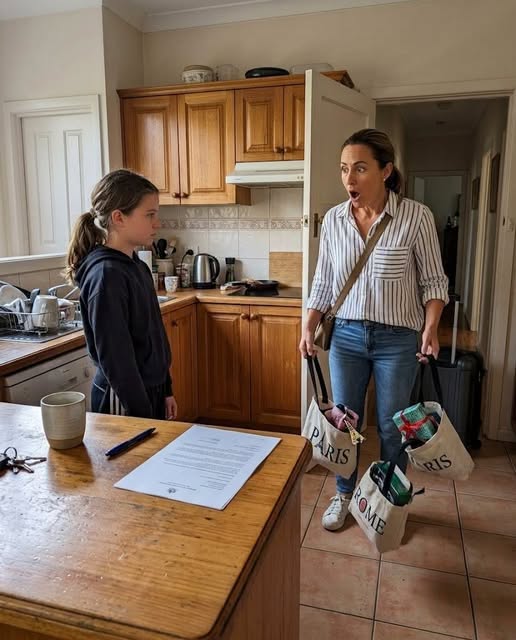
I didn’t look away. My mother stared at the paper as though the words might rearrange themselves if she waited long enough. They didn’t.
Her face had gone completely pale. “What is this?” she asked. Her voice was different now. Not the cheerful voice she had used at the airport.
Not the irritated voice she used when I asked too many questions. Not even the soft, distracted voice she sometimes used when talking to me without actually listening.
This voice was frightened. I folded my arms across my chest. “You told me to be independent.” Her eyes flicked toward me. “I—Sydney…”
“You left me twenty dollars.” She swallowed. “Ithought you were staying with—” “You didn’t tell anyone.”
My mom went to Europe for a month and left me with $20 …..
Nothing came out. I pointed toward the paper. “So I wrote everything down.” For several seconds, neither of us moved. Then she picked up the page.
Her fingers were trembling. At the top, in my careful eleven-year-old handwriting, were three words:
THIRTY DAYS ALONE.
Underneath was a list.
Day 1. Day 2. Day 3. Day 4.
Every day had a date beside it. Every day had what I had eaten. Every dollar I had spent. Every time I had tried calling her. Every night I had gone to bed hungry. Every sound that had frightened me.
Every time I had stood by the front window waiting for headlights. And at the very bottom, I had written something that made her stop breathing for a moment.
Day 27: I stopped waiting for Mom. Her eyes moved slowly down the page. Then she looked at me.
“You wrote all this?”
“Yes.”
“Why?”
I almost laughed.
Because the question was so ridiculous. “Because nobody else was keeping track.” She lowered the paper. “Sydney, I never meant for you to—”
“To what?”
My voice cracked.
For the first time since she had walked through the door, my mother looked directly at me.
I saw the guilt arrive.
It didn’t come all at once.
It started in her eyes.
Then her mouth tightened.
Then her shoulders dropped.
But I had imagined this moment so many times that the sight of her guilt didn’t make me feel better.
It made me feel tired.
“You left me here,” I said quietly.
“I know.”
“No. You don’t.”
She shook her head.
“I know I made a mistake.”
“You left me here for thirty days.”
“I thought—”
“You didn’t think.”
That silenced her.
I looked toward the kitchen table.
There was something else there.
Something I hadn’t told her about.
A small spiral notebook.
My mother noticed it.
“What’s that?”
I picked it up.
“This is the rest.”
Her expression changed again.
“The rest of what?”
“The things I didn’t put on the first page.”
She reached for it.
I didn’t give it to her.
“Not yet.”
She stared at me.
“Why?”
“Because there’s something you need to know first.”
“What?”
I took a breath.
“The first three days, I thought you were coming back.”
Her eyes filled with tears.
“I thought maybe the plane got delayed. Or you forgot something. Or maybe you were coming back early.”
She pressed her lips together.
“On the fourth day, I stopped sleeping upstairs.”
Her brow furrowed.
“Why?”
“Because I heard someone outside.”
Her face went still.
“What?”
“I heard someone walking around the house.”
She glanced toward the windows.
“It was probably an animal.”
“I thought so too.”
I looked at the notebook.
“Until I found the footprints.”
My mother’s face drained of color.
“What footprints?”
I finally handed her the notebook.
She opened it.
The first pages contained the same kind of notes as the sheet on the counter.
But then she reached Day 6.
There was a small drawing.
A crude sketch of the back door.
Beside it were three dark circles.
My mother frowned.
“What are these?”
“Fingerprints.”
She looked up.
“Fingerprints?”
“On the glass.”
Her hand began shaking again.
“I wiped them away.”
“Why didn’t you call the police?”
I stared at her.
“I didn’t know if I was allowed to.”
She looked horrified.
“You were allowed to call the police.”
“I was eleven.”
The words hit harder than anything else.
My mother closed the notebook.
For a moment, she seemed unable to speak.
Then she whispered, “Did someone come into the house?”
“I don’t know.”
“You don’t know?”
“I heard things.”
“What things?”
“Doors.”
She stared at me.
“What doors?”
“The basement door.”
Her expression changed instantly.
The basement.
I saw the exact moment she remembered something.
Not the vacation.
Not the suitcase.
Something else.
Her eyes moved toward the hallway.
The basement door was at the end of it.
Usually, it stayed locked.
Usually.
I watched her walk toward it.
“Sydney?”
“Yes?”
“Did you go downstairs?”
I didn’t answer.
She turned around.
“Did you?”
“I did once.”
Her face tightened.
“When?”
“Day nine.”
“Why?”
“Because I heard somebody crying.”
She froze.
“What?”
“I thought it was a cat.”
I looked down.
“But it wasn’t.”
The house suddenly seemed to become much quieter.
My mother stood in the hallway staring at the basement door.
Then she slowly reached for the handle.
“Sydney, stay here.”
I almost smiled.
It was the first time she’d said something that sounded like a mother.
But I followed her anyway.
She unlocked the door.
The basement smelled like dust, old wood, and something damp.
She switched on the light.
Nothing happened.
The bulb flickered.
Once.
Twice.
Then stayed on.
My mother stepped down the stairs.
I followed.
Halfway down, she stopped.
There was something taped to the wall.
A photograph.
Old.
Yellow around the edges.
She pulled it free.
Her fingers tightened around the paper.
I saw her expression change.
“Mom?”
She didn’t answer.
I moved closer.
It was a photograph of our house.
But it wasn’t the house I knew.
There was a little girl standing in front of it.
She looked about my age.
Eleven, maybe twelve.
She was wearing a white dress.
And on the back of the photograph, written in black ink, were four words.
SHE WAS LEFT HERE TOO.
My mother dropped the photograph.
Neither of us moved.
Then, from somewhere deeper in the basement, we heard a sound.
Three slow knocks.
Knock.
Knock.
Knock.
My mother grabbed my hand.
And this time, she didn’t tell me to be independent.
She whispered the only thing she could think of.
“Don’t make a sound.”
I didn’t look away.
My mother stared at the paper as though the words might rearrange themselves if she waited long enough.
They didn’t.
Her face had gone completely pale.
“What is this?” she asked.
Her voice was different now.
Not the cheerful voice she had used at the airport. Not the irritated voice she used when I asked too many questions. Not even the soft, distracted voice she sometimes used when talking to me without actually listening.
This voice was frightened.
I folded my arms across my chest.
“You told me to be independent.”
Her eyes flicked toward me.
“I—Sydney…”
“You left me twenty dollars.”
She swallowed.
“I thought you were staying with—”
“You didn’t tell anyone.”
Her mouth opened.
Nothing came out.
I pointed toward the paper.
“So I wrote everything down.”
For several seconds, neither of us moved.
Then she picked up the page.
Her fingers were trembling.
At the top, in my careful eleven-year-old handwriting, were three words:
THIRTY DAYS ALONE.
Underneath was a list.
Day 1.
Day 2.
Day 3.
Day 4.
Every day had a date beside it.
Every day had what I had eaten.
Every dollar I had spent.
Every time I had tried calling her.
Every night I had gone to bed hungry.
Every sound that had frightened me.
Every time I had stood by the front window waiting for headlights.
And at the very bottom, I had written something that made her stop breathing for a moment.
Day 27: I stopped waiting for Mom.
Her eyes moved slowly down the page.
Then she looked at me.
“You wrote all this?”
“Yes.”
“Why?”
I almost laughed.
Because the question was so ridiculous.
“Because nobody else was keeping track.”
She lowered the paper.
“Sydney, I never meant for you to—”
“To what?”
My voice cracked.
For the first time since she had walked through the door, my mother looked directly at me.
I saw the guilt arrive.
It didn’t come all at once.
It started in her eyes.
Then her mouth tightened.
Then her shoulders dropped.
But I had imagined this moment so many times that the sight of her guilt didn’t make me feel better.
It made me feel tired.
“You left me here,” I said quietly.
“I know.”
“No. You don’t.”
She shook her head.
“I know I made a mistake.”
“You left me here for thirty days.”
“I thought—”
“You didn’t think.”
That silenced her.
I looked toward the kitchen table.
There was something else there.
Something I hadn’t told her about.
A small spiral notebook.
My mother noticed it.
“What’s that?”
I picked it up.
“This is the rest.”
Her expression changed again.
“The rest of what?”
“The things I didn’t put on the first page.”
She reached for it.
I didn’t give it to her.
“Not yet.”
She stared at me.
“Why?”
“Because there’s something you need to know first.”
“What?”
I took a breath.
“The first three days, I thought you were coming back.”
Her eyes filled with tears.
“I thought maybe the plane got delayed. Or you forgot something. Or maybe you were coming back early.”
She pressed her lips together.
“On the fourth day, I stopped sleeping upstairs.”
Her brow furrowed.
“Why?”
“Because I heard someone outside.”
Her face went still.
“What?”
“I heard someone walking around the house.”
She glanced toward the windows.
“It was probably an animal.”
“I thought so too.”
I looked at the notebook.
“Until I found the footprints.”
My mother’s face drained of color.
“What footprints?”
I finally handed her the notebook.
She opened it.
The first pages contained the same kind of notes as the sheet on the counter.
But then she reached Day 6.
There was a small drawing.
A crude sketch of the back door.
Beside it were three dark circles.
My mother frowned.
“What are these?”
“Fingerprints.”
She looked up.
“Fingerprints?”
“On the glass.”
Her hand began shaking again.
“I wiped them away.”
“Why didn’t you call the police?”
I stared at her.
“I didn’t know if I was allowed to.”
She looked horrified.
“You were allowed to call the police.”
“I was eleven.”
The words hit harder than anything else.
My mother closed the notebook.
For a moment, she seemed unable to speak.
Then she whispered, “Did someone come into the house?”
“I don’t know.”
“You don’t know?”
“I heard things.”
“What things?”
“Doors.”
She stared at me.
“What doors?”
“The basement door.”
Her expression changed instantly.
The basement.
I saw the exact moment she remembered something.
Not the vacation.
Not the suitcase.
Something else.
Her eyes moved toward the hallway.
The basement door was at the end of it.
Usually, it stayed locked.
Usually.
I watched her walk toward it.
“Sydney?”
“Yes?”
“Did you go downstairs?”
I didn’t answer.
She turned around.
“Did you?”
“I did once.”
Her face tightened.
“When?”
“Day nine.”
“Why?”
“Because I heard somebody crying.”
She froze.
“What?”
“I thought it was a cat.”
I looked down.
“But it wasn’t.”
The house suddenly seemed to become much quieter.
My mother stood in the hallway staring at the basement door.
Then she slowly reached for the handle.
“Sydney, stay here.”
I almost smiled.
It was the first time she’d said something that sounded like a mother.
But I followed her anyway.
She unlocked the door.
The basement smelled like dust, old wood, and something damp.
She switched on the light.
Nothing happened.
The bulb flickered.
Once.
Twice.
Then stayed on.
My mother stepped down the stairs.
I followed.
Halfway down, she stopped.
There was something taped to the wall.
A photograph.
Old.
Yellow around the edges.
She pulled it free.
Her fingers tightened around the paper.
I saw her expression change.
“Mom?”
She didn’t answer.
I moved closer.
It was a photograph of our house.
But it wasn’t the house I knew.
There was a little girl standing in front of it.
She looked about my age.
Eleven, maybe twelve.
She was wearing a white dress.
And on the back of the photograph, written in black ink, were four words.
SHE WAS LEFT HERE TOO.
My mother dropped the photograph.
Neither of us moved.
Then, from somewhere deeper in the basement, we heard a sound.
Three slow knocks.
Knock.
Knock.
Knock.
My mother grabbed my hand.
And this time, she didn’t tell me to be independent.
She whispered the only thing she could think of.
“Don’t make a sound.”
For several seconds, neither of us breathed.
The basement seemed to hold its breath with us.
Then came another sound.
Knock.
Knock.
Knock.
My mother’s fingers tightened around mine.
“It’s probably a pipe,” she whispered.
But she didn’t sound like she believed it.
I stared into the darkness beyond the old shelves.
There was a narrow hallway down there that I had never noticed before. It disappeared behind a wall of wooden cabinets.
“Mom,” I whispered.
“What?”
“There’s a door.”
She looked where I was pointing.
At the end of the basement, almost completely hidden behind a stack of boxes, was a small gray door.
My mother stared at it.
Then she whispered something I couldn’t hear.
“What did you say?”
“Nothing.”
She moved toward the door.
I grabbed her sleeve.
“Don’t.”
She stopped.
“You said not to make a sound.”
“I know.”
“Then why are you going over there?”
She looked at me.
For the first time that night, I saw something in her expression that wasn’t guilt.
It was recognition.
“You’ve seen that door before, haven’t you?” I asked.
She didn’t answer.
“Mom.”
She looked away.
“I thought it was sealed.”
My stomach dropped.
“Sealed?”
She nodded slowly.
“Years ago.”
“How many years?”
She swallowed.
“Before you were born.”
The knocking stopped.
The silence afterward was worse.
My mother reached for the handle.
Locked.
She tried again.
Nothing.
Then she noticed something taped beneath the handle.
A small envelope.
Her name was written across it.
Not my name.
Not the family name.
Hers.
MARTHA.
My mother stepped backward.
I had never seen her look afraid of a piece of paper before.
“Open it,” I whispered.
“No.”
“Why?”
“Because I know who wrote it.”
My heart started pounding.
“Who?”
She looked at me.
“My sister.”
I had never heard her say those words before.
My mother had always told me she was an only child.
Always.
Whenever I asked about family, she would say there was nobody left.
No grandparents.
No aunts.
No uncles.
Just her.
And me.
“You have a sister?”
She closed her eyes.
“I did.”
“What happened to her?”
My mother didn’t answer.
I stepped closer.
“Mom, what happened?”
“She disappeared.”
“When?”
She looked at the envelope.
“Twenty-four years ago.”
The basement suddenly felt colder.
“Was she the girl in the photograph?”
My mother shook her head.
“No.”
“Then who was?”
She stared at me.
“I don’t know.”
I pointed at the photograph lying on the floor.
“You said your sister wrote the letter.”
“I said I know who wrote it.”
“That means she’s alive.”
My mother looked at me.
Her eyes filled with tears.
“I don’t know if she is.”
She picked up the envelope.
The paper was yellow and brittle.
Her hands shook as she opened it.
Inside was one folded sheet.
She read the first line.
Then stopped.
“What does it say?”
She didn’t respond.
“Mom.”
She handed it to me.
I unfolded it.
There were only six sentences.
Martha,
If you’re reading this, you finally came back.
I knew you would.
You always come back when you realize what you’ve done.
But this time, you brought her with you.
Don’t let Sydney open the red door.
I looked up.
“What red door?”
My mother didn’t answer.
Then I noticed something.
The wall behind her.
There was a narrow wooden door painted red.
I had never seen it before.
It wasn’t the gray door.
It was smaller.
Almost hidden behind the old shelving.
My mother turned.
Her face went white.
“No.”
“What?”
She rushed toward it.
She grabbed the shelf and tried pulling it away.
“Mom, what are you doing?”
“Stay back.”
She shoved harder.
The shelf moved.
Dust fell from the ceiling.
Behind it was the red door.
And carved into the wood were three letters.
S Y D
My initials.
I felt the blood drain from my face.
“Why is my name on it?”
My mother didn’t answer.
She grabbed my shoulders.
“Listen to me.”
“What?”
“Whatever happens, you do not open that door.”
“Why?”
“Because I made a promise.”
“To who?”
She looked toward the photograph.
“To my sister.”
A loud crash came from upstairs.
We both jumped.
Something had fallen.
My mother immediately pulled me toward the stairs.
“Come on.”
We hurried upstairs.
The front door was still locked.
The windows were closed.
Nothing seemed out of place.
Then I noticed the kitchen counter.
The paper I had left there was gone.
The notebook was gone too.
My mother stopped.
“No.”
I looked around.
“Where did it go?”
She didn’t answer.
Then we heard the sound of a page turning.
Slowly.
From the living room.
We walked toward it.
Nobody was there.
But the notebook was sitting open on the coffee table.
A page I had never written on was now covered in handwriting.
My handwriting.
Except I hadn’t written it.
There was one sentence.
DAY 30 IS NOT THE END.
My mother grabbed the notebook.
“What is this?”
“I didn’t write it.”
She turned the page.
Another sentence appeared.
ASK YOUR MOTHER WHAT HAPPENED TO EMILY.
My mother dropped the notebook.
I stared at her.
“Who is Emily?”
She didn’t move.
“Mom.”
Nothing.
“Who is Emily?”
Her face crumpled.
And then she said the name I would spend years wishing I had never heard.
“Your sister.”
I couldn’t breathe.
“My what?”
She covered her mouth.
“You had a sister.”
I shook my head.
“No.”
“You were supposed to have one.”
“Where is she?”
My mother began crying.
“I thought she was dead.”
The lights went out.
The house disappeared into darkness.
Then, from the basement, came three slow knocks.
Knock.
Knock.
Knock.
My mother grabbed my hand.
And this time, I understood.
The knocking wasn’t coming from the basement.
It was coming from behind the red door.
And someone on the other side whispered my name.
“Sydney…”
I froze.
My mother pulled me backward.
But the voice came again.
Older this time.
Broken.
Almost too quiet to hear.
“Sydney…”
Then it said something that made my mother scream.
“I’m sorry I left you, little sister.”
For several seconds, neither of us breathed.
The basement seemed to hold its breath with us.
Then came another sound.
Knock.
Knock.
Knock.
My mother’s fingers tightened around mine.
“It’s probably a pipe,” she whispered.
But she didn’t sound like she believed it.
I stared into the darkness beyond the old shelves.
There was a narrow hallway down there that I had never noticed before. It disappeared behind a wall of wooden cabinets.
“Mom,” I whispered.
“What?”
“There’s a door.”
She looked where I was pointing.
At the end of the basement, almost completely hidden behind a stack of boxes, was a small gray door.
My mother stared at it.
Then she whispered something I couldn’t hear.
“What did you say?”
“Nothing.”
She moved toward the door.
I grabbed her sleeve.
“Don’t.”
She stopped.
“You said not to make a sound.”
“I know.”
“Then why are you going over there?”
She looked at me.
For the first time that night, I saw something in her expression that wasn’t guilt.
It was recognition.
“You’ve seen that door before, haven’t you?” I asked.
She didn’t answer.
“Mom.”
She looked away.
“I thought it was sealed.”
My stomach dropped.
“Sealed?”
She nodded slowly.
“Years ago.”
“How many years?”
She swallowed.
“Before you were born.”
The knocking stopped.
The silence afterward was worse.
My mother reached for the handle.
Locked.
She tried again.
Nothing.
Then she noticed something taped beneath the handle.
A small envelope.
Her name was written across it.
Not my name.
Not the family name.
Hers.
MARTHA.
My mother stepped backward.
I had never seen her look afraid of a piece of paper before.
“Open it,” I whispered.
“No.”
“Why?”
“Because I know who wrote it.”
My heart started pounding.
“Who?”
She looked at me.
“My sister.”
I had never heard her say those words before.
My mother had always told me she was an only child.
Always.
Whenever I asked about family, she would say there was nobody left.
No grandparents.
No aunts.
No uncles.
Just her.
And me.
“You have a sister?”
She closed her eyes.
“I did.”
“What happened to her?”
My mother didn’t answer.
I stepped closer.
“Mom, what happened?”
“She disappeared.”
“When?”
She looked at the envelope.
“Twenty-four years ago.”
The basement suddenly felt colder.
“Was she the girl in the photograph?”
My mother shook her head.
“No.”
“Then who was?”
She stared at me.
“I don’t know.”
I pointed at the photograph lying on the floor.
“You said your sister wrote the letter.”
“I said I know who wrote it.”
“That means she’s alive.”
My mother looked at me.
Her eyes filled with tears.
“I don’t know if she is.”
She picked up the envelope.
The paper was yellow and brittle.
Her hands shook as she opened it.
Inside was one folded sheet.
She read the first line.
Then stopped.
“What does it say?”
She didn’t respond.
“Mom.”
She handed it to me.
I unfolded it.
There were only six sentences.
Martha,
If you’re reading this, you finally came back.
I knew you would.
You always come back when you realize what you’ve done.
But this time, you brought her with you.
Don’t let Sydney open the red door.
I looked up.
“What red door?”
My mother didn’t answer.
Then I noticed something.
The wall behind her.
There was a narrow wooden door painted red.
I had never seen it before.
It wasn’t the gray door.
It was smaller.
Almost hidden behind the old shelving.
My mother turned.
Her face went white.
“No.”
“What?”
She rushed toward it.
She grabbed the shelf and tried pulling it away.
“Mom, what are you doing?”
“Stay back.”
She shoved harder.
The shelf moved.
Dust fell from the ceiling.
Behind it was the red door.
And carved into the wood were three letters.
S Y D
My initials.
I felt the blood drain from my face.
“Why is my name on it?”
My mother didn’t answer.
She grabbed my shoulders.
“Listen to me.”
“What?”
“Whatever happens, you do not open that door.”
“Why?”
“Because I made a promise.”
“To who?”
She looked toward the photograph.
“To my sister.”
A loud crash came from upstairs.
We both jumped.
Something had fallen.
My mother immediately pulled me toward the stairs.
“Come on.”
We hurried upstairs.
The front door was still locked.
The windows were closed.
Nothing seemed out of place.
Then I noticed the kitchen counter.
The paper I had left there was gone.
The notebook was gone too.
My mother stopped.
“No.”
I looked around.
“Where did it go?”
She didn’t answer.
Then we heard the sound of a page turning.
Slowly.
From the living room.
We walked toward it.
Nobody was there.
But the notebook was sitting open on the coffee table.
A page I had never written on was now covered in handwriting.
My handwriting.
Except I hadn’t written it.
There was one sentence.
DAY 30 IS NOT THE END.
My mother grabbed the notebook.
“What is this?”
“I didn’t write it.”
She turned the page.
Another sentence appeared.
ASK YOUR MOTHER WHAT HAPPENED TO EMILY.
My mother dropped the notebook.
I stared at her.
“Who is Emily?”
She didn’t move.
“Mom.”
Nothing.
“Who is Emily?”
Her face crumpled.
And then she said the name I would spend years wishing I had never heard.
“Your sister.”
I couldn’t breathe.
“My what?”
She covered her mouth.
“You had a sister.”
I shook my head.
“No.”
“You were supposed to have one.”
“Where is she?”
My mother began crying.
“I thought she was dead.”
The lights went out.
The house disappeared into darkness.
Then, from the basement, came three slow knocks.
Knock.
Knock.
Knock.
My mother grabbed my hand.
And this time, I understood.
The knocking wasn’t coming from the basement.
It was coming from behind the red door.
And someone on the other side whispered my name.
“Sydney…”
I froze.
My mother pulled me backward.
But the voice came again.
Older this time.
Broken.
Almost too quiet to hear.
“Sydney…”
Then it said something that made my mother scream.
“I’m sorry I left you, little sister.”
My mother screamed.
I had never heard a sound like that come from her.
She pulled me against her chest so tightly that I could barely breathe.
“Don’t listen,” she whispered.
But I had already heard the voice.
“I’m sorry I left you, little sister.”
I stared toward the basement door.
“Mom…”
She was crying now.
Not the quiet tears I had seen earlier.
She was shaking.
“Emily?”
The house went silent.
Then came the answer.
“Yes.”
My mother closed her eyes.
For a moment, she looked like a completely different person.
Not the woman who had gone to Europe.
Not the mother who had handed an eleven-year-old girl twenty dollars and called it independence.
She looked like someone who had been carrying a secret for most of her life.
“Mom,” I whispered. “Open the door.”
“No.”
“Please.”
“No, Sydney.”
“You said she was dead.”
“I thought she was.”
“Then how is she talking to us?”
My mother looked toward the basement.
“I don’t know.”
The voice came again.
“It’s not what you think.”
My mother went completely still.
Then she slowly walked toward the basement.
I followed.
She stopped at the red door.
Her hand hovered over the handle.
“Emily?”
“I’m here.”
My mother’s knees nearly gave out.
She leaned against the wall.
“I thought you died.”
There was a long silence.
Then:
“I almost did.”
My mother began sobbing.
She reached for the lock.
This time, she didn’t stop me when I stepped beside her.
The lock clicked.
The red door opened.
Behind it was a tiny room.
There was an old mattress.
A wooden chair.
Several boxes.
And a small table covered with photographs.
But there was no Emily.
My mother stared around the room.
“Where are you?”
No answer.
Then I noticed something.
A narrow window at the back of the room was open.
Cold night air drifted through it.
On the table was another envelope.
My mother’s name was written on it.
She picked it up.
Inside was a letter.
She read it silently.
Then she handed it to me.
The handwriting was different this time.
Older.
Careful.
The letter explained everything.
Emily had been my mother’s older sister.
When they were teenagers, their parents had separated, and the family had fallen apart. Emily had been blamed for something she hadn’t done. Their father had sent her away to live with relatives.
Years later, Emily came back.
But by then, my mother had already convinced herself that Emily had abandoned the family.
They fought.
Emily left again.
And for years, neither sister knew the truth.
The photographs in the room were evidence that Emily had continued watching over the family from a distance.
She had even watched me grow up.
Then, when she discovered that my mother planned to leave me alone during the European trip, she tried to intervene.
She called.
She sent letters.
She contacted people who could help.
But my mother, embarrassed by her own family history, ignored every message.
Emily had eventually come to the house herself.
She had stayed nearby during the month I was alone.
The footsteps.
The fingerprints.
The sounds I had heard.
They hadn’t been from a stranger.
They had been from Emily checking on me.
She had left food outside the back door twice.
I hadn’t known where it came from.
She had also left emergency money underneath the loose floorboard in the pantry.
I had never found it.
Then I reached the final paragraph.
My hands began trembling.
I wanted to tell Sydney the truth myself. But I couldn’t bring myself to walk into her life after being gone so long. I was afraid she would hate me.
So I watched from a distance.
But Martha, you need to understand something.
Sydney doesn’t need another person who disappears.
She needs someone who stays.
My mother covered her face.
I looked at her.
For the first time, I didn’t see the mother I had been angry with.
I saw a woman who had made terrible choices.
But I also saw someone who still had a chance to make a better one.
“Where is she?” I asked.
My mother looked at the open window.
“I don’t know.”
Then something moved outside.
A figure stood beneath the backyard light.
A woman.
She looked older than my mother.
Her hair was streaked with gray.
She was holding a small paper bag.
My mother stepped toward the window.
“Emily?”
The woman froze.
Then she slowly lifted her face.
And smiled.
My mother ran.
She threw open the back door and crossed the yard.
The two sisters stood facing each other.
For several seconds, neither spoke.
Then my mother whispered:
“I’m sorry.”
Emily’s face crumpled.
“You always say that too late.”
“I know.”
“You left me.”
“I know.”
“And then you left her.”
My mother looked back at me.
“I know.”
Emily began crying.
Then my mother did something I had never seen her do.
She hugged her sister.
Not politely.
Not carefully.
She held her like she was afraid she might disappear again.
Emily finally hugged her back.
I stood in the doorway.
Then Emily looked at me.
“Sydney.”
I walked toward her.
She opened her arms.
I hesitated.
Then I stepped into them.
She smelled like rain and lavender.
“I wanted to meet you so many times,” she whispered.
“Why didn’t you?”
“Because I was scared.”
“Of me?”
She smiled sadly.
“Of being rejected.”
I thought about the month I had spent waiting for my mother to come home.
Then I understood something.
Adults could be afraid too.
They could make mistakes.
They could disappear.
But sometimes, if they were brave enough, they could come back.
That night, we sat around the kitchen table.
For the first time in a month, there were three people eating together.
Emily had brought groceries.
My mother ordered more.
Then she did something even more important.
She called the authorities and admitted exactly what she had done.
There were consequences.
There were difficult conversations.
There were people who were angry with her.
And she deserved to face them.
But I was never left alone again.
My mother also started therapy.
She apologized to me every day for a while.
Eventually, she stopped saying, “I’m sorry.”
Instead, she started proving it.
She came to my school events.
She learned what food I liked.
She asked whether I was frightened.
And when I answered honestly, she listened.
A few months later, Emily moved into a little apartment nearby.
She became part of my life slowly.
She came to birthday parties.
She helped me with homework.
She taught me how to make pancakes without burning them.
And she never once called me “independent” when what she really meant was “you have to handle this alone.”
Years later, I still kept the crumpled twenty-dollar bill.
Not because it represented what my mother had done.
But because it reminded me of the girl I had been.
The girl who had been terrified.
The girl who had survived.
The girl who had learned that being abandoned wasn’t the same thing as being unworthy of love.
One evening, when I was much older, I found my mother sitting beside me on the porch.
She looked at the old twenty-dollar bill in my hand.
“I wish I could go back,” she said.
“I know.”
“I would do everything differently.”
I smiled.
“But you can’t.”
She nodded.
“No.”
Then I slipped the bill back into its envelope.
“But you can keep going forward.”
My mother took my hand.
And she did.
She spent the rest of her life making sure I never had to wonder whether someone was coming home.
And the mystery of the red door?
I eventually understood why Emily had kept it.
It wasn’t a prison.
It wasn’t haunted.
It wasn’t hiding some terrible secret.
It was simply the place where two sisters had hidden the truth from each other for far too many years.
The red door had represented everything they were afraid to say.
And once it was opened, the family finally began healing.
I never forgot the month my mother left me with twenty dollars.
But that month stopped being the ending of my childhood.
It became the beginning of something else.
A life where I chose who I would become.
A life where love wasn’t measured by promises.
It was measured by who stayed.
And in the end, that was the real thing my mother finally learned.
Independence was never supposed to mean being alone.
It meant knowing you could survive.
And knowing that, when you finally found your people, you were allowed to let them stay.
The End.
My mother screamed.
I had never heard a sound like that come from her.
She pulled me against her chest so tightly that I could barely breathe.
“Don’t listen,” she whispered.
But I had already heard the voice.
“I’m sorry I left you, little sister.”
I stared toward the basement door.
“Mom…”
She was crying now.
Not the quiet tears I had seen earlier.
She was shaking.
“Emily?”
The house went silent.
Then came the answer.
“Yes.”
My mother closed her eyes.
For a moment, she looked like a completely different person.
Not the woman who had gone to Europe.
Not the mother who had handed an eleven-year-old girl twenty dollars and called it independence.
She looked like someone who had been carrying a secret for most of her life.
“Mom,” I whispered. “Open the door.”
“No.”
“Please.”
“No, Sydney.”
“You said she was dead.”
“I thought she was.”
“Then how is she talking to us?”
My mother looked toward the basement.
“I don’t know.”
The voice came again.
“It’s not what you think.”
My mother went completely still.
Then she slowly walked toward the basement.
I followed.
She stopped at the red door.
Her hand hovered over the handle.
“Emily?”
“I’m here.”
My mother’s knees nearly gave out.
She leaned against the wall.
“I thought you died.”
There was a long silence.
Then:
“I almost did.”
My mother began sobbing.
She reached for the lock.
This time, she didn’t stop me when I stepped beside her.
The lock clicked.
The red door opened.
Behind it was a tiny room.
There was an old mattress.
A wooden chair.
Several boxes.
And a small table covered with photographs.
But there was no Emily.
My mother stared around the room.
“Where are you?”
No answer.
Then I noticed something.
A narrow window at the back of the room was open.
Cold night air drifted through it.
On the table was another envelope.
My mother’s name was written on it.
She picked it up.
Inside was a letter.
She read it silently.
Then she handed it to me.
The handwriting was different this time.
Older.
Careful.
The letter explained everything.
Emily had been my mother’s older sister.
When they were teenagers, their parents had separated, and the family had fallen apart. Emily had been blamed for something she hadn’t done. Their father had sent her away to live with relatives.
Years later, Emily came back.
But by then, my mother had already convinced herself that Emily had abandoned the family.
They fought.
Emily left again.
And for years, neither sister knew the truth.
The photographs in the room were evidence that Emily had continued watching over the family from a distance.
She had even watched me grow up.
Then, when she discovered that my mother planned to leave me alone during the European trip, she tried to intervene.
She called.
She sent letters.
She contacted people who could help.
But my mother, embarrassed by her own family history, ignored every message.
Emily had eventually come to the house herself.
She had stayed nearby during the month I was alone.
The footsteps.
The fingerprints.
The sounds I had heard.
They hadn’t been from a stranger.
They had been from Emily checking on me.
She had left food outside the back door twice.
I hadn’t known where it came from.
She had also left emergency money underneath the loose floorboard in the pantry.
I had never found it.
Then I reached the final paragraph.
My hands began trembling.
I wanted to tell Sydney the truth myself. But I couldn’t bring myself to walk into her life after being gone so long. I was afraid she would hate me.
So I watched from a distance.
But Martha, you need to understand something.
Sydney doesn’t need another person who disappears.
She needs someone who stays.
My mother covered her face.
I looked at her.
For the first time, I didn’t see the mother I had been angry with.
I saw a woman who had made terrible choices.
But I also saw someone who still had a chance to make a better one.
“Where is she?” I asked.
My mother looked at the open window.
“I don’t know.”
Then something moved outside.
A figure stood beneath the backyard light.
A woman.
She looked older than my mother.
Her hair was streaked with gray.
She was holding a small paper bag.
My mother stepped toward the window.
“Emily?”
The woman froze.
Then she slowly lifted her face.
And smiled.
My mother ran.
She threw open the back door and crossed the yard.
The two sisters stood facing each other.
For several seconds, neither spoke.
Then my mother whispered:
“I’m sorry.”
Emily’s face crumpled.
“You always say that too late.”
“I know.”
“You left me.”
“I know.”
“And then you left her.”
My mother looked back at me.
“I know.”
Emily began crying.
Then my mother did something I had never seen her do.
She hugged her sister.
Not politely.
Not carefully.
She held her like she was afraid she might disappear again.
Emily finally hugged her back.
I stood in the doorway.
Then Emily looked at me.
“Sydney.”
I walked toward her.
She opened her arms.
I hesitated.
Then I stepped into them.
She smelled like rain and lavender.
“I wanted to meet you so many times,” she whispered.
“Why didn’t you?”
“Because I was scared.”
“Of me?”
She smiled sadly.
“Of being rejected.”
I thought about the month I had spent waiting for my mother to come home.
Then I understood something.
Adults could be afraid too.
They could make mistakes.
They could disappear.
But sometimes, if they were brave enough, they could come back.
That night, we sat around the kitchen table.
For the first time in a month, there were three people eating together.
Emily had brought groceries.
My mother ordered more.
Then she did something even more important.
She called the authorities and admitted exactly what she had done.
There were consequences.
There were difficult conversations.
There were people who were angry with her.
And she deserved to face them.
But I was never left alone again.
My mother also started therapy.
She apologized to me every day for a while.
Eventually, she stopped saying, “I’m sorry.”
Instead, she started proving it.
She came to my school events.
She learned what food I liked.
She asked whether I was frightened.
And when I answered honestly, she listened.
A few months later, Emily moved into a little apartment nearby.
She became part of my life slowly.
She came to birthday parties.
She helped me with homework.
She taught me how to make pancakes without burning them.
And she never once called me “independent” when what she really meant was “you have to handle this alone.”
Years later, I still kept the crumpled twenty-dollar bill.
Not because it represented what my mother had done.
But because it reminded me of the girl I had been.
The girl who had been terrified.
The girl who had survived.
The girl who had learned that being abandoned wasn’t the same thing as being unworthy of love.
One evening, when I was much older, I found my mother sitting beside me on the porch.
She looked at the old twenty-dollar bill in my hand.
“I wish I could go back,” she said.
“I know.”
“I would do everything differently.”
I smiled.
“But you can’t.”
She nodded.
“No.”
Then I slipped the bill back into its envelope.
“But you can keep going forward.”
My mother took my hand.
And she did.
She spent the rest of her life making sure I never had to wonder whether someone was coming home.
And the mystery of the red door?
I eventually understood why Emily had kept it.
It wasn’t a prison.
It wasn’t haunted.
It wasn’t hiding some terrible secret.
It was simply the place where two sisters had hidden the truth from each other for far too many years.
The red door had represented everything they were afraid to say.
And once it was opened, the family finally began healing.
I never forgot the month my mother left me with twenty dollars.
But that month stopped being the ending of my childhood.
It became the beginning of something else.
A life where I chose who I would become.
A life where love wasn’t measured by promises.
It was measured by who stayed.
And in the end, that was the real thing my mother finally learned.
Independence was never supposed to mean being alone.
It meant knowing you could survive.
And knowing that, when you finally found your people, you were allowed to let them stay.