“There are three accounts connected to your profile,” he finally said. “One personal checking account. One savings account. And an older account that hasn’t been touched in quite some time.”
“I only have two.” “That’s what I thought you’d say.”
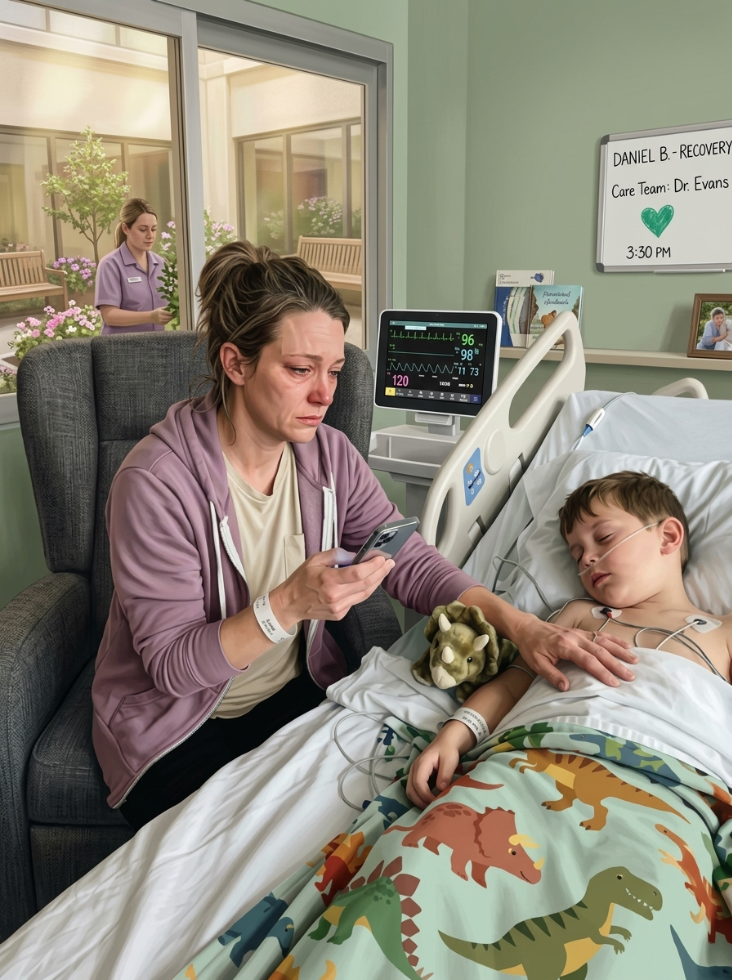
I stared through the ICU window. Caleb hadn’t moved.
His dinosaur blanket was pulled up beneath his chin. One tiny hand rested beside his cheek, fingers curled as though he were still holding mine.
“Mr. Lawson,” I whispered, “what is the third account?” “That’s the problem.” His voice became quieter. “We don’t believe it’s yours.”
My heart stopped. “What?” “We believe someone has been using your identity to access an account you may have never known existed.” I looked down at my phone. There were no new messages from Mom.
No messages from Vanessa either. That was strange.
They had spent the last three years calling me selfish whenever I said no. Now, suddenly, they were silent. “What was in the account?” Mr. Lawson hesitated. “Approximately eighty-seven thousand dollars.” My knees weakened. I leaned against the wall. “Eighty-seven thousand?”
“Yes.”
“Whose money?”
“That is what we’re trying to determine.”
I closed my eyes.
For years, I’d believed my mother was simply terrible with money.
I had accepted every explanation.
The rent was late.
Vanessa’s car needed repairs.
The wedding venue required another deposit.
Mom’s insurance had gone up.
Someone needed groceries.
Someone needed a prescription.
There was always someone.
And somehow, that someone was always me.
But eighty-seven thousand dollars?
That wasn’t a missed bill.
That wasn’t a desperate mother.
That was something else.
“Why were they able to access it?”
Mr. Lawson lowered his voice.
“Because the account was opened years ago using documentation that appears to have been connected to you.”
“When?”
He paused.
“Fourteen years ago.”
I felt cold.
Fourteen years.
I had been nineteen.
Vanessa had been sixteen.
My father was still alive.
And Mom had still been telling everyone that our family was inseparable.
“Who opened it?”
“We’re not certain.”
“But you know someone tried to empty it.”
“Yes.”
“Who?”
“Your mother.”
I swallowed.
“And my sister.”
“Yes.”
“Did they know I had frozen the other accounts?”
“They knew enough to be angry.”
“What did they say?”
Mr. Lawson was quiet again.
Then he said something that made the hairs rise on my arms.
“Your mother told me the money belonged to Vanessa.”
I stared at him.
“Why would she say that?”
“I don’t know.”
“Did she explain?”
“She said your father had left instructions.”
My breath caught.
“My father?”
“Yes.”
My father’s name seemed to change the temperature of the hallway.
He had been gone for six years.
A heart attack.
That’s what we’d been told.
He died suddenly, and Mom had fallen apart.
I had stepped into the role of the responsible daughter almost overnight.
I helped with bills.
I paid for repairs.
I covered Vanessa’s expenses.
I became the person everyone called when something went wrong.
And when I asked questions about Dad’s estate, Mom always said the same thing.
“There wasn’t much left.”
I’d believed her.
Because grief makes you stupid sometimes.
It makes you desperate to believe the people who are supposed to protect you.
“Mr. Lawson,” I said, “what exactly did my father leave?”
“I can’t discuss the full account until our legal department verifies the ownership.”
“Then why did you call me?”
“Because something happened this morning that we can’t explain.”
My fingers tightened around the coffee cup.
“What?”
“We found a second signature.”
“Whose?”
“We’re not sure.”
“Then why are you telling me?”
“Because it matches the signature on a document your father filed fourteen years ago.”
My mouth went dry.
“What document?”
He lowered his voice.
“A beneficiary designation.”
I looked through the glass again.
Caleb’s chest rose.
Fell.
Rose.
Fell.
The rhythm was almost hypnotic.
I suddenly remembered the morning before his surgery.
His little fingers around mine.
“Tell Aunt Vanessa I wasn’t scared.”
I had thought he was asking me to pass along a child’s message.
Now it felt like something else.
Like a warning I hadn’t understood.
“Mr. Lawson,” I whispered, “who was the beneficiary?”
He looked toward the ICU doors.
Then back at me.
“Your son.”
I couldn’t breathe.
“My son?”
“Caleb.”
I shook my head.
“That can’t be possible.”
“Why not?”
“Because Caleb is seven.”
“I know.”
“And the account was opened fourteen years ago.”
“Yes.”
“So how could he be the beneficiary?”
Mr. Lawson looked at me with an expression I couldn’t read.
“That is exactly what we need to find out.”
Before I could respond, my phone vibrated.
One message.
From Patricia.
Mom: Stop asking questions at the bank.
I stared at the screen.
A second message appeared.
Mom: You don’t know what your father left behind.
Then a third.
Mom: And you really don’t want to find out.
My heart pounded.
For six years, my mother had never once mentioned my father’s financial records.
Not once.
And now, within seconds of the bank manager calling me, she knew exactly what I was asking about.
I looked at Mr. Lawson.
“She knows.”
His expression changed.
“Knows what?”
“That you called me.”
He slowly shook his head.
“We haven’t contacted her.”
“Then how does she know?”
He didn’t answer.
Neither of us needed to.
Someone had warned her.
Someone inside the bank.
Someone who knew what was happening.
And suddenly the eighty-seven thousand dollars wasn’t the thing that scared me most.
It was the possibility that my family had been planning this for years.
I pushed away from the wall.
“I need to see the documents.”
“You can’t right now.”
“Why?”
“Because our fraud team has placed a hold on the account.”
“I don’t care about the hold.”
“You should.”
He reached into his briefcase and removed a thin folder.
He didn’t hand it to me.
Instead, he placed his palm over it.
“There is one thing you need to understand before you see these.”
“What?”
“This may change what you believe about your father’s death.”
The hallway seemed to disappear around me.
I stared at the folder.
My father’s death.
The account.
My mother.
Vanessa.
Caleb.
Fourteen years.
Too many pieces were suddenly moving at once.
“What are you saying?”
Mr. Lawson looked toward the ICU room.
“I’m saying your father may have known this was coming.”
I couldn’t speak.
Then the ICU door opened.
A nurse stepped out.
“Mrs. Whitaker?”
I turned instantly.
“Is Caleb okay?”
“He’s stable.”
The relief almost knocked me over.
Then she looked at the folder in Mr. Lawson’s hand.
Her expression changed.
“That’s strange.”
“What?”
She pointed toward the ICU room.
“Your son woke up a few minutes ago.”
I rushed inside.
Caleb’s eyes were barely open.
His face looked pale against the pillow.
I took his hand.
“Hey, buddy.”
His fingers moved weakly.
“Mom?”
“I’m here.”
He swallowed.
Then he looked past me.
Straight at the folder in Mr. Lawson’s hands.
For several seconds, he said nothing.
Then, in a voice so faint I almost missed it, he whispered:
“Grandpa said you weren’t supposed to let Grandma have it.”
I froze.
The room went silent.
Mr. Lawson slowly lowered the folder.
I stared at my son.
“What did you say?”
Caleb blinked sleepily.
“Grandpa.”
My heart hammered.
“Caleb, honey, Grandpa has been gone for six years.”
He frowned.
“I know.”
“Then how did Grandpa tell you that?”
He looked confused.
“He told me before.”
“Before what?”
Caleb’s eyes drifted toward the ceiling.
“Before Grandma came to my room.”
I felt every muscle in my body go rigid.
“Grandma came here?”
He nodded.
“When?”
“Last night.”
My blood turned cold.
“Caleb…”
He squeezed my hand.
“She told me not to tell you.”
Mr. Lawson and I exchanged a look.
“What did she say?”
Caleb’s eyes closed.
His lips barely moved.
“She said if I told you…”
He paused.
Then whispered:
“…you’d find out why Grandpa really died.”
I couldn’t move.
The monitor continued its steady rhythm.
Beep.
Beep.
Beep.
And somewhere outside the ICU room, my mother’s phone began ringing.
Not mine.
Hers.
Because for the first time in six years, someone had finally found the secret she had been paying everyone to forget.
The Account — Part 3: The Truth About GrandpaPart 3: The Truth About Grandpa
For several seconds, nobody moved.
The monitor beside Caleb’s bed continued its steady rhythm.
Beep.
Beep.
Beep.
I looked at my seven-year-old son, then at Mr. Lawson, then at the folder in his hands.
“Grandma came here last night?”
Caleb nodded weakly.
“What did she say to you?”
He swallowed.
“She said Grandpa didn’t want you to know.”
My throat tightened.
“Know what?”
Caleb’s eyes opened.
“That he didn’t die because of his heart.”
The room seemed to tilt.
My father had died at fifty-two.
A sudden heart attack.
That was the story I had heard so many times that eventually it stopped feeling like a story and became a fact.
But Caleb was looking at me with the innocent certainty only a child could have.
“Who told you that?”
“Grandma.”
“When?”
“Last night.”
“Why would Grandma tell you that?”
He shrugged.
“She was mad.”
“At me?”
He shook his head.
“At Grandpa.”
I couldn’t speak.
Mr. Lawson finally stepped forward.
“Mrs. Whitaker, you need to see these documents.”
I took the folder.
Inside was a copy of an account agreement dated fourteen years earlier.
My father’s signature was at the bottom.
I recognized it immediately.
The account had been opened in my name.
But the beneficiary wasn’t Vanessa.
It wasn’t Patricia.
It wasn’t even me.
It was Caleb.
Impossible.
My son hadn’t even been born.
I turned the page.
There was another document.
A handwritten letter.
My father’s handwriting.
My hands began shaking before I even read the first line.
If you’re reading this, something happened that I hoped never would.
I stopped breathing.
Mr. Lawson looked away.
I continued.
I created this account because I discovered that Patricia had been moving money without my knowledge.
My vision blurred.
The next paragraph was worse.
She believes I don’t know. She is wrong.
I pressed my hand against my mouth.
For years, I’d blamed myself for supporting my mother.
For trusting her.
For never keeping better records.
But my father had known.
He had known something was wrong before he died.
The letter continued.
I have transferred what I can into an account protected from Patricia’s control. I named my future grandchild as beneficiary because I don’t know what Patricia will do after I’m gone.
Future grandchild.
Caleb.
My eyes filled with tears.
Then I reached the final paragraph.
If Patricia ever tries to take this money, do not confront her alone. Give this letter to the bank and ask them to review my death records.
My hands went numb.
Death records.
I looked at Mr. Lawson.
“What does that mean?”
He took a slow breath.
“There was an inconsistency.”
“What kind?”
“The original death certificate listed natural causes.”
“I know.”
“But the insurance company requested additional medical documentation.”
My heart began pounding.
“And?”
“The hospital records indicate your father arrived with injuries that weren’t consistent with a simple cardiac event.”
I stared at him.
“What kind of injuries?”
He hesitated.
“Bruising around his wrists.”
The room went silent.
I remembered the funeral.
My mother crying beside the coffin.
Vanessa holding her hand.
And me standing there believing I had lost the one person who would have protected me.
My father had been right.
He had known.
And somehow, before he died, he’d tried to protect the child he hadn’t even met.
My phone vibrated.
Patricia.
I answered.
“Where are you?”
Her voice was cold.
“You’ve been talking to the bank.”
“Yes.”
“You need to stop.”
“No.”
A pause.
Then she whispered:
“You have no idea what you’re doing.”
“I think I finally do.”
“You’re destroying this family.”
I looked at Caleb.
“No, Mom.”
My voice shook.
“You did that.”
She started crying.
For years, that sound would have broken me.
This time, it didn’t.
“Please,” she said. “Don’t open that account.”
“Why?”
Silence.
“Because your father didn’t leave that money for you.”
“I know.”
“He left it for Caleb.”
Another silence.
Then I heard something in her voice I’d never heard before.
Fear.
Real fear.
“Mom,” I said, “what happened to Dad?”
She didn’t answer.
“Mom?”
Finally, she whispered:
“He found out.”
“Found out what?”
“That I had borrowed money.”
“How much?”
Another silence.
“Everything.”
I closed my eyes.
“How much is everything?”
She began crying.
“Your father’s life insurance. His retirement. The savings. Everything.”
“And when he found out?”
“He was going to report me.”
My heart broke.
“What did you do?”
“I didn’t kill him.”
Her words came too quickly.
“I didn’t kill your father.”
I said nothing.
She continued.
“I only wanted to scare him.”
My stomach turned.
“What does that mean?”
“He wouldn’t listen.”
“What did you do?”
“I called someone.”
“Who?”
“I don’t know his name.”
“Mom.”
“He came to the house.”
My hand tightened around the phone.
“What happened?”
“I told him to frighten your father.”
Her voice cracked.
“But something went wrong.”
I looked at Mr. Lawson.
He was already reaching for his phone.
“Mom,” I whispered, “what did you mean when you said something went wrong?”
She began sobbing.
“He fell.”
“From where?”
“The stairs.”
I couldn’t breathe.
“You left him there?”
“I panicked.”
“You left Dad there?”
“He was alive.”
My eyes burned.
“You knew he was alive?”
“I called an ambulance.”
“But you told everyone it was a heart attack.”
“I was afraid.”
“You let me believe my father died naturally.”
“I was afraid they’d take Vanessa too.”
I stared at the wall.
All those years.
All those birthdays.
All those holidays.
Every time my mother had hugged me and said, We’re all we have.
She had known.
She had known the truth.
And she had let me spend six years grieving a lie.
Then she said something that made everything worse.
“There was another reason I couldn’t let you find the account.”
“What?”
“Because your father left evidence.”
“Where?”
She didn’t answer.
“Mom.”
“I don’t know.”
“You just said there was evidence.”
“I know he hid something.”
“Where?”
Her voice became barely audible.
“In the house.”
“What house?”
“Your childhood home.”
I froze.
The house had been sold two years after Dad died.
Or so I thought.
I looked at Mr. Lawson.
He was already shaking his head.
“No,” he mouthed.
“What?”
He pointed at the final page in the folder.
There was an address.
My childhood home.
And beneath it, a handwritten note.
Do not sell the house until Caleb turns eight.
My blood ran cold.
Caleb had turned seven three months ago.
I looked at the date.
Then at the note.
Then at my son.
“Mr. Lawson…”
He stepped closer.
“What?”
“This isn’t an account instruction.”
“What is it?”
I handed him the paper.
His expression changed.
“This is a trust condition.”
“For what?”
He looked at me.
“The house.”
I felt dizzy.
“My mother sold it.”
“No.”
“What?”
“She couldn’t.”
He pointed to the document.
“Your father placed the property into the same trust.”
I stared at him.
“So who owns it?”
He didn’t answer.
He didn’t need to.
I already knew.
Caleb.
My son.
The child my father had never met.
The child my mother had tried to use to frighten me.
The child whose surgery she couldn’t be bothered to attend.
My phone vibrated again.
This time it was a text from Vanessa.
Mom told me everything.
A second message arrived.
I’m sorry.
Then another.
The house isn’t empty.
I stared at the screen.
A final message appeared.
Someone has been living there since Dad died.
I felt the blood drain from my face.
I typed:
Who?
The reply came almost immediately.
I don’t know.
Then:
But I found Dad’s old bedroom door locked from the inside.
I looked at Caleb.
He was sleeping peacefully now.
His dinosaur blanket was tucked beneath his chin.
For six years, I’d believed my family had abandoned me because they didn’t care.
I had been wrong.
They had stayed away because they were afraid.
Afraid of the truth.
Afraid of the account.
Afraid of my father’s evidence.
And most of all, afraid that one day I would stop paying for their silence.
That day had finally come.
I stood beside my son’s bed and kissed his forehead.
Then I called the police.
Not because I wanted revenge.
Not because I wanted my mother’s money.
I called because my father had spent his final days trying to protect us.
And because whatever was behind that locked bedroom door had been waiting for someone to finally come looking.
Three days later, Caleb was moved out of ICU.
He still had a long recovery ahead, but he smiled when I brought his dinosaur blanket from home.
“Mom?”
“Yeah, buddy?”
“Is Grandma coming?”
I sat beside him.
“No.”
He thought about it.
“Are you sad?”
I smiled through my tears.
“I was.”
“And now?”
I looked at my son.
“Now I’m grateful.”
“For what?”
I took his little hand.
“For finally knowing the truth.”
That afternoon, Mr. Lawson called.
The account was officially secured.
The money belonged to Caleb’s trust.
The house had been placed under legal protection.
And investigators had found evidence inside the locked bedroom.
Enough evidence to reopen my father’s death investigation.
My mother was arrested two weeks later.
Vanessa cooperated with investigators.
And the woman who once threatened to empty my account before my son left ICU never got another dollar from me.
But the strangest part came months later.
When we finally opened my father’s bedroom door, there was no stranger inside.
There was only a wooden desk, an old tape recorder, and a single envelope addressed to me.
Inside was one final note.
I knew you would forgive too easily.
So I left you something you couldn’t forgive away.
Beneath those words was a photograph.
My father was holding a newborn baby.
Caleb.
Taken the day after he was born.
On the back, my father had written:
For the boy I never got to meet.
I held the photograph against my chest and cried.
Not because I had lost my father again.
But because, after six years of believing he had left us without a word, I finally understood.
He hadn’t.
He had been talking the entire time.
We just hadn’t known where to listen.
And sometimes the people who say “family is everything” are the very people who teach you the hardest lesson:
Love does not mean giving someone unlimited access to destroy you.
Sometimes love means drawing the line.
Sometimes it means freezing the account.
And sometimes, when someone threatens to take everything from you—
the most powerful thing you can do is finally refuse to give them anything else.