The Sentence That Silenced the Courtroom “You ran the house, Amelia.” “I ran your life.” The words hung between us. For the first time since Preston had entered the breakfast room, he looked directly at me. His expression was not angry. It was cautious. That should have warned me. “What exactly are you accusing me of?” he asked. I stared at him across the marble-topped table. “Nothing.”
He frowned. “Then why are you making this difficult?” I almost laughed. Difficult. That was another word his family loved. Whenever I asked questions at dinner, I was difficult. Whenever I refused to attend one of Vivian’s charity events because I had work, I was difficult. Whenever I reminded Preston that certain documents required my signature, I was difficult.
Never Told My In-Laws I Was A Military Lawyer.,..
Apparently, a wife became difficult the moment she stopped being convenient.
I folded the petition carefully.
“You’ve already made your decision.”
“Yes.”
“Then why are you nervous?”
His face changed.
Only for a second.
But I saw it.
The hesitation.
The slight tightening around his eyes.
Then the door opened.
Vivian walked in.
She was wearing cream-colored trousers, a silk blouse, and the expression of a woman arriving to inspect a room she already owned.
“Preston,” she said, “your father is waiting.”
Then she looked at me.
“Oh.”
One syllable.
One tiny sound.
But I knew exactly what it meant.
She had expected me to be crying.
Begging.
Perhaps threatening to expose myself as something I had never allowed them to know.
Instead, I was sitting quietly with the divorce petition in front of me.
Vivian walked closer.
“I hope you’re taking this maturely.”
I looked at her.
“Maturely?”
“Yes.” She smiled. “This doesn’t need to become ugly.”
I almost asked her what she thought ugly looked like.
Instead, I said, “I agree.”
Her smile widened.
She believed she had won.
That was the moment I understood how carefully they had planned everything.
They weren’t simply divorcing me.
They were removing me.
Piece by piece.
My name from the accounts.
My access to the company.
My claim to the properties.
My credibility.
And, if they could manage it, my voice.
What they didn’t know was that I had spent years learning exactly how people like them operated.
Not because of Preston.
Not because of his father.
Not because of Vivian.
Because of my career.
A career none of them knew existed.
A career I had deliberately kept separate from my marriage.
For seven years, Preston believed I worked from home occasionally, attended “consulting meetings,” and spent far too much time reading boring legal documents.
He had never asked what kind.
His family never asked either.
They assumed my work was small.
Unimportant.
Something a woman did between household errands.
That assumption had protected me.
Until now.
I opened the second page of the petition.
There it was.
The sentence that had made my stomach turn.
“No meaningful contribution by the respondent to the acquisition, development, or preservation of marital assets.”
I read it twice.
Then a third time.
“You’re sure about this?” I asked.
Preston’s eyes narrowed.
“About what?”
“This statement.”
“Yes.”
“You’re claiming I made no meaningful contribution.”
“I’m stating what our attorneys advised.”
“No.”
His expression hardened.
“You asked me a question. I answered.”
I slid the petition across the table.
“You didn’t answer it.”
He looked down.
“You’re saying I contributed nothing?”
“Yes.”
“Then you’re saying the person who reviewed every contract before you signed it contributed nothing?”
Silence.
His fingers stopped moving.
Vivian’s expression changed.
I continued.
“The person who warned you not to purchase the Westbridge property because the title history was defective contributed nothing?”
Preston slowly looked up.
“The person who told you that your acquisition agreement with Hale Meridian contained an indemnification clause that would have personally exposed you to millions in liability contributed nothing?”
Vivian’s face went pale.
I watched her carefully.
She knew.
Not everything.
But enough.
“Where did you learn all that?” she whispered.
I stood.
“I told you.”
“What?”
“I work from home.”
That was all I said.
I walked upstairs.
Behind me, Preston called my name.
I didn’t turn around.
That evening, I opened the locked drawer in my study.
Inside was a black leather identification wallet.
I hadn’t touched it in months.
I removed the card.
The photograph showed a woman who looked like me but somehow seemed harder.
More distant.
Underneath my photograph was my full professional title.
Military Attorney.
I stared at it for several seconds.
Then I placed it beside the divorce petition.
For the first time in seven years, I realized I might have to bring the two halves of my life together.
My marriage.
And the woman I had kept hidden from it.
The next morning, Preston’s attorney sent me a settlement proposal.
It was insulting.
They offered me the house for six months.
A modest monthly payment.
A vehicle.
And nothing connected to Preston’s business interests.
At the bottom was a clause requiring me to waive “any present or future claims arising from undisclosed professional activity.”
I read that sentence three times.
Then I smiled.
Because now I knew exactly what they were afraid of.
They didn’t know what I had done.
They were afraid of what I might know.
I signed nothing.
Instead, I called an old colleague.
“Major?” he answered.
“Yes.”
“You’re calling me from your personal number.”
“I need a favor.”
There was a pause.
“What happened?”
“My husband filed for divorce.”
Another pause.
“Do you need representation?”
“No.”
“Then what do you need?”
I looked at the settlement agreement.
“I need someone to tell me whether a civilian court can compel disclosure of certain military legal records.”
The silence on the other end lasted longer this time.
“Amelia,” he said carefully, “what exactly is going on?”
“I think my husband has been hiding assets.”
“Then hire a civilian attorney.”
“I can’t.”
“Why?”
“Because I think they expect me to.”
He exhaled.
“That’s a dangerous game.”
“I know.”
“Do they know what you do?”
“No.”
“Does anyone in that family know?”
“No.”
“Then keep it that way.”
I looked toward the window.
Across the street, a black SUV had been parked outside our house for nearly an hour.
“I don’t think I can.”
“Why not?”
“Because they already filed.”
“And?”
“And they don’t know who they’re taking to court.”
He was quiet.
Then he asked the question I had been avoiding.
“When is the hearing?”
“Tomorrow.”
“Amelia.”
“Yes?”
“Whatever happens, don’t underestimate them.”
I looked down at the petition.
“I won’t.”
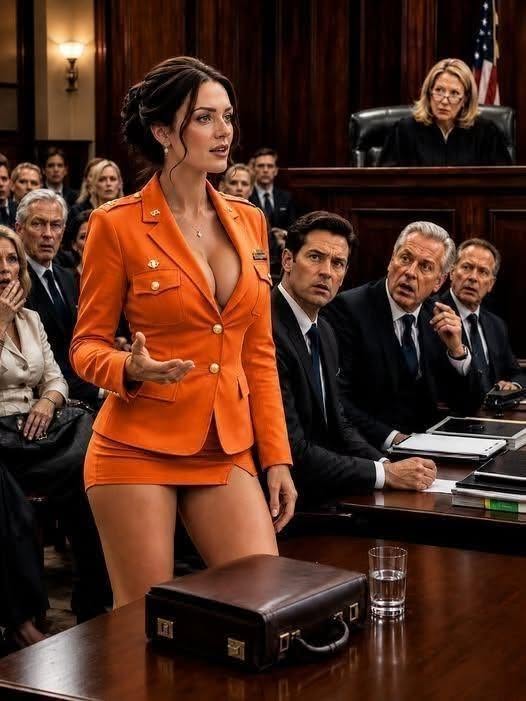
The following morning, I walked into court carrying one leather briefcase.
No attorney.
No assistant.
No family member.
Just me.
Vivian saw me first.
Her smile returned.
Preston sat beside his attorneys.
His father leaned toward him and whispered something.
Then he looked at me.
He smirked.
“You couldn’t even afford a lawyer.”
Several people around him laughed.
Judge Morrison entered.
Everyone stood.
The courtroom settled.
The clerk called the case.
“Preston Hale versus Amelia Hale.”
My heart beat once.
Hard.
Then the judge looked at me.
“Mrs. Hale, you understand that you have the right to retain counsel?”
“Yes, Your Honor.”
“And you are choosing to represent yourself?”
“I am.”
Voss stood.
He began explaining how complicated the case was.
How the marital estate was substantial.
How my lack of counsel could cause unnecessary delay.
How his clients wished only to resolve the matter efficiently.
Judge Morrison listened.
Then she looked at me.
“Mrs. Hale, do you have anything to add?”
I stood.
My hands were steady.
My voice was calm.
“Yes, Your Honor.”
The room became quiet.
I looked at Preston.
Then at his three attorneys.
Then at Vivian.
And finally at the judge.
“My husband is correct that this case involves complicated financial matters.”
Voss smiled faintly.
Until I continued.
“But he is incorrect about one thing.”
The judge leaned forward.
“What is that?”
I placed my briefcase on the table.
Opened it.
And removed a single document.
“My husband has represented to this court that I have no meaningful knowledge of his business affairs.”
Voss shifted.
“I do.”
I placed the document on the table.
“And I can prove it.”
No one moved.
I looked directly at Judge Morrison.
“Because for the last seven years, while my husband believed I was merely his unemployed wife, I was serving as a military attorney handling complex federal matters.”
The courtroom went completely silent.
Not quiet.
Silent.
Even Vivian stopped breathing.
Preston stared at me as though I had become a stranger.
His lead attorney slowly lowered himself into his chair.
And then Judge Morrison looked at the document in front of her.
Her expression changed.
“Mrs. Hale,” she said carefully, “are you telling this court that you are an attorney?”
I nodded.
“Yes, Your Honor.”
“An active attorney?”
“Yes.”
“Then why did you represent yourself as having no professional income?”
I looked at Preston.
“I never did.”
His face drained of color.
Because suddenly, everyone in that courtroom understood something his family had missed.
I hadn’t been hiding because I was ashamed.
I had been hiding because I had a reason.
And now that reason was about to become the most dangerous piece of evidence in the entire case.
I opened my briefcase again.
“There is one more thing, Your Honor.”
The judge looked at me.
“What?”
I slid a second folder across the table.
“This divorce petition contains several statements that are not merely inaccurate.”
I paused.
“They are demonstrably false.”
Preston’s attorney stood immediately.
“Your Honor—”
I turned toward him.
“And I believe I know why they were written that way.”
His voice faltered.
“Mrs. Hale—”
I met his eyes.
“Because the moment the truth comes out, this stops being a divorce case.”
Nobody laughed anymore.
I looked at Preston.
He was staring at the folder.
And for the first time since he had handed me that white envelope in the breakfast room, I saw fear in his eyes.
Real fear.
The judge reached for the folder.
“Let’s find out,” she said, “what exactly you believe your husband has been hiding.”
I pushed the folder toward her.
And waited.
Because the first secret was about to come out.
But it wasn’t Preston’s biggest one.
Part 3 — The Truth They Never Expected
Part 3
Judge Morrison opened the folder.
The first page was only two paragraphs long.
She read it once.
Then again.
Her expression became unreadable.
Voss stood.
“Your Honor, before we proceed, I respectfully request a brief recess.”
“No,” Judge Morrison said.
He froze.
She turned another page.
“Mr. Voss, you told this court that Mrs. Hale had no meaningful involvement in the financial affairs of the marriage.”
“Yes, Your Honor.”
“You also represented that Mr. Hale’s business assets were separate property.”
“That is our position.”
Judge Morrison looked at me.
“Mrs. Hale, how do you know otherwise?”
I took a breath.
“Because I reviewed the original acquisition documents.”
Voss frowned.
“When?”
“Before Preston signed them.”
“Why would you have reviewed them?”
“Because he asked me to.”
Preston finally spoke.
“I never asked you to do anything.”
I turned toward him.
“You did.”
“I would remember.”
“You wouldn’t.”
His face tightened.
“Why?”
“Because you didn’t know who you were asking.”
The courtroom became still again.
I opened the second folder.
Inside were copies of emails, transaction records, legal memoranda, and signed documents.
Not copies I had gathered yesterday.
Copies I had kept for years.
I placed them one by one before the judge.
“The Westbridge acquisition was financed through a company Preston claimed was independently owned.”
I slid another document forward.
“It wasn’t.”
Voss picked it up.
His eyes moved rapidly across the page.
I continued.
“The company was created three months before the acquisition. The funding came through two intermediary entities.”
Judge Morrison looked at Voss.
“Is this accurate?”
Voss didn’t answer immediately.
“That document requires authentication.”
“I can authenticate it,” I said.
“How?”
“I drafted the memorandum attached to it.”
Voss stared at me.
Judge Morrison’s eyebrows lifted.
“You drafted it?”
“Yes.”
“When?”
“Six years ago.”
Preston suddenly stood.
“This is ridiculous.”
“Sit down, Mr. Hale,” the judge said.
He sat.
I could see Vivian watching me.
The woman who had spent years calling me ordinary now looked at me as though she was trying to solve a puzzle.
“You knew,” she whispered.
I looked at her.
“I knew enough.”
She shook her head.
“You lived in our house.”
“Yes.”
“You attended our dinners.”
“Yes.”
“You let us think—”
“That I was nothing?”
Her lips parted.
No answer came.
I turned back toward the judge.
“I didn’t hide my career to deceive them.”
I paused.
“I hid it because I wanted one place in my life where I wasn’t treated like an attorney.”
The courtroom was silent.
“For seven years, I was simply Amelia.”
My voice nearly broke.
“I cooked dinner. I remembered birthdays. I sat beside Preston when his father was sick. I moved houses when his company expanded. I gave up opportunities because he said his career needed stability.”
I looked at Preston.
“And I believed marriage meant we were building something together.”
He looked down.
“But apparently,” I continued, “I was only building something for him.”
Judge Morrison lowered the papers.
“Mrs. Hale, there is something I need to clarify.”
“Yes, Your Honor?”
“Are you alleging fraud?”
I looked at the documents.
“No.”
I shook my head.
“Not yet.”
Voss looked relieved.
Then I continued.
“I am saying there are discrepancies that deserve investigation.”
His relief disappeared.
Judge Morrison nodded slowly.
“That is a reasonable distinction.”
She turned toward Preston.
“Mr. Hale, do you dispute these documents?”
He didn’t answer.
“Mr. Hale?”
“I… need to speak with my attorney.”
Judge Morrison’s expression hardened.
“You have three attorneys sitting beside you.”
Preston swallowed.
“I understand.”
“Then one of them should be able to answer.”
None did.
For several seconds, nobody moved.
Then Judge Morrison ordered a temporary halt to the financial portion of the proceedings and directed both sides to provide complete financial disclosures.
The courtroom began to stir.
People whispered.
Chairs moved.
Papers shuffled.
But I remained still.
I had expected relief.
Instead, I felt exhausted.
As I gathered my documents, Preston approached me.
His attorneys tried to stop him.
He ignored them.
“Amelia.”
I kept packing.
“Please.”
I looked up.
His face was different.
Not arrogant.
Not angry.
Afraid.
“Did you ever love me?”
The question struck harder than I expected.
I stared at him.
“For seven years.”
His eyes filled with something I had not seen in years.
Regret.
“Then why didn’t you tell me?”
“Because I was afraid you’d love the title more than the woman.”
He looked away.
I closed my briefcase.
“You were right about one thing, Preston.”
“What?”
“You didn’t marry a poor woman.”
He swallowed.
“You married a woman who never needed your money.”
Then I walked away.
Outside the courthouse, rain had begun falling.
Vivian stood beneath the stone awning.
She was alone.
No bracelet.
No smile.
No carefully arranged expression.
Just an older woman staring at me.
“I owe you an apology,” she said.
I stopped.
“Yes.”
She looked surprised.
I waited.
She struggled for words.
“I was wrong about you.”
I nodded.
“You were.”
“I thought you were beneath him.”
“I know.”
“I thought you had nothing.”
I looked at her.
“You were looking at the wrong thing.”
She lowered her eyes.
“I was.”
Then she stepped aside.
I walked into the rain.
For the first time in seven years, I wasn’t walking toward Preston’s house.
I wasn’t walking toward his family.
I wasn’t walking toward the life they had chosen for me.
I was walking toward my own.
Three weeks later, the financial investigation was complete.
The court found that several assets had been improperly characterized as separate property.
The settlement changed dramatically.
But the money wasn’t what mattered anymore.
What mattered was the final conversation.
Preston came to see me one last time.
He stood outside my apartment holding a small box.
Inside was the brass clock his mother had given us on our fifth anniversary.
“I thought you should have this,” he said.
I took it.
“Why?”
“Because you were the one who actually made that house a home.”
I looked at him.
“I’m sorry.”
I believed him.
But forgiveness wasn’t the same as going back.
“I know.”
He nodded.
“Is there any chance?”
I shook my head.
“No.”
He closed his eyes.
Then he walked away.
I watched him disappear down the sidewalk.
The brass clock ticked softly in my hands.
For years, I had believed silence was weakness.
I finally understood that it wasn’t.
Sometimes silence was simply patience.
Sometimes it was protection.
And sometimes it was the only way to let people reveal exactly who they were.
My in-laws thought I was too broke to hire a lawyer.
My husband thought I was too insignificant to fight him.
His attorneys thought I would be terrified sitting alone in court.
They were all wrong.
I hadn’t stood up because I suddenly became powerful.
I stood up because I finally realized I had never been powerless.
I had simply been quiet.
And when I finally spoke, the entire courtroom listened.