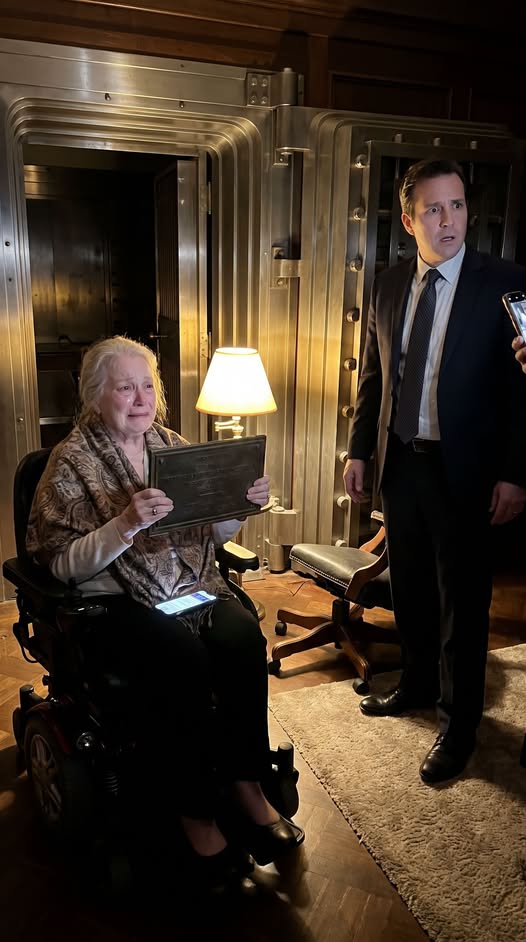
The injury wasn’t catastrophic, but it damaged my hip badly enough that walking became extremely difficult. After several weeks of therapy, the doctor told me I needed a wheelchair temporarily. Temporarily. That word became important to me. I repeated it whenever I felt ashamed. Temporary.
I wasn’t helpless.
I wasn’t useless.
I simply needed help.
And there was one person I thought I could turn to.
My son, Daniel. Daniel was thirty-eight and lived about two hours away with his wife, Rachel, and their two children. I’d spent years helping Daniel. I babysat when he was young. I helped pay for his college textbooks.
When he married Rachel, I gave them the money they’d needed for their first apartment deposit. When their daughter was born, I stayed with them for three weeks. When Daniel lost his job during a difficult year, Arthur and I quietly paid several months of his bills. We never asked for anything in return.
He was our son.
That’s what parents do.
So when my doctor said I needed someone to help me during my recovery, I called Daniel. “Mom,” he said after I’d explained everything, “of course we’ll figure something out.” I cried when I heard those words.
I thought my son still cared.
Two weeks later, I packed a small suitcase.
My house was becoming too difficult to manage, and I had no family nearby. Daniel told me I could stay with them “for a little while.” So I sold what I could, put the rest into storage, and hired a small van to take me and my belongings to Daniel’s house. It was raining when I arrived.
I remember that detail because the rain soaked the blanket covering my legs.
Daniel opened the front door.
He looked at my wheelchair.
Then he looked at the boxes behind me. His expression changed. Not dramatically. Just enough for a mother to notice.
“Mom,” he said.
I smiled.
“Surprise.”
He didn’t smile back.
Rachel appeared behind him.
Her eyes went straight to the wheelchair. Then to the boxes. “How long is she staying?” Rachel asked.
I pretended not to hear.
Daniel stepped outside and lowered his voice. “Mom, we talked about temporary.” “I know.” “How temporary?” “I don’t know, Daniel. The doctor thinks I’ll improve.” Rachel crossed her arms. “We don’t have room.” I looked past them into the house. There was a perfectly comfortable guest room upstairs. “I can sleep downstairs,” I said quickly.
Daniel shook his head.
“It’s not that simple.”
“I won’t be any trouble.”
“You need help getting around.”
“I can manage most things myself.”
Rachel laughed quietly.
“With that?”
Her eyes dropped toward my wheelchair.
Something inside me broke.
But I still defended my son.
“She’s just worried,” I whispered.
Daniel sighed.
“Mom, you should have called before coming.”
“I did.”
“I mean before making arrangements.”
“I thought you said I could stay.”
“I said we’d figure something out.”
He looked uncomfortable.
Then he glanced toward the driveway.
“I think you should go back.”
I stared at him.
“Go back where?”
He didn’t answer.
“Daniel…”
“I’m sorry.”
The rain grew heavier.
My hands tightened around the wheels.
“You can’t mean that.”
He looked away.
“Mom, we have our own lives.”
I felt the words like a physical blow.
“I gave you everything I had.”
“I know.”
“I took care of you.”
“I know.”
“I never asked you for anything.”
“Mom…”
“So I’m asking now.”
My voice trembled.
“Please.”
For a moment, I thought he might change his mind.
Instead, Daniel stepped backward.
“I’m sorry.”
Then he closed the door.
Right in front of me.
I sat there in the rain.
Alone.
A neighbor eventually found me and helped me get to a small motel nearby.
I spent that night staring at the ceiling.
I didn’t cry.
Not at first.
I was too stunned.
Around three in the morning, I finally whispered into the darkness:
“Arthur, what am I supposed to do?”
Of course, there was no answer.
The next morning, I went through my suitcase looking for my insurance papers.
That’s when I found the card.
It was an old bank card.
Brown around the edges.
Faded.
Arthur’s name was printed across the front.
I hadn’t seen it in years.
I almost threw it away.
Then I remembered something Arthur had said shortly before he died.
“If anything ever happens to me, Margaret, don’t throw away the old things without checking them first.”
At the time, I had laughed.
“Arthur, you save everything.”
He had smiled.
“Sometimes the things people think are worthless are the things that matter most.”
I stared at the card.
There was an account number printed on it.
I didn’t recognize it.
And suddenly I remembered that Arthur had once mentioned a bank account he called his “rainy day fund.”
I’d assumed he meant our savings.
Maybe I was wrong.
I called the bank printed on the card.
They told me the branch still existed.
It was only twenty minutes away.
So I asked the motel receptionist to call me a taxi.
When I arrived, I wheeled myself inside.
The bank was quiet.
An older manager approached the desk.
“How can I help you, ma’am?”
I placed the old card on the counter.
“This belonged to my late husband.”
He picked it up.
His eyes moved over the numbers.
Then his expression changed.
He looked at me.
Then at the card.
Then back at me.
“Arthur Whitmore?”
“Yes.”
The manager suddenly stood so quickly that his chair rolled backward and crashed against the wall.
He leaned toward me.
“Ma’am…”
His voice had dropped to a whisper.
“There is something you need to see.”
I frowned.
“What is it?”
He looked toward the security camera.
Then toward the employees behind the counter.
Finally, he said:
“Your husband specifically instructed us to show this to you only after his death.”
My heart began pounding.
“Show me what?”
The manager picked up the phone.
“Close Conference Room Two.”
Then he looked directly at me.
“And please don’t tell anyone you’re here yet.”
I felt a chill run through me.
“Why?”
He hesitated.
“Because the account your husband left behind isn’t what you think it is.”
He pushed my wheelchair toward the private office.
And as the door closed behind us, he placed a thick envelope on the table.
Written across the front, in Arthur’s unmistakable handwriting, were five words:
## Part 2 — The Secret Behind Arthur’s Card
The bank manager closed the office door behind him.
For several seconds, he simply stared at the old card lying on his desk.
I had never seen a grown man look so shaken by a piece of plastic.
“Ma’am,” he finally said, lowering himself into his chair, “where did you get this?”
“It belonged to my husband.”
“Arthur?”
I nodded.
The manager swallowed.
“How long has Arthur been dead?”
“Eight months.”
He looked down at the card again.
“Then there’s something you need to know.”
My hands tightened around the arms of my wheelchair.
“What is it?”
He turned his computer toward me.
“Arthur maintained an account here for more than thirty years. But this wasn’t an ordinary checking account.”
My heart began pounding.
“What kind of account was it?”
“A private trust account.”
I stared at him.
“Arthur never told me about any trust.”
“I believe he intended to.”
The manager clicked through several screens.
“Your husband made regular deposits into this account for decades. Some were small. Some were extremely large.”
“How large?”
He hesitated.
“The last recorded balance was $2.8 million.”
I stopped breathing.
“Two point eight…”
“Million dollars.”
I almost laughed because the number sounded absurd.
Arthur and I had lived modestly. We had never owned an expensive car. We rarely traveled. He always told me that retirement would be difficult, but we’d manage.
And now a bank manager was telling me my husband had hidden millions of dollars.
“But why?” I whispered.
The manager leaned forward.
“There’s more.”
He pulled an old folder from a locked drawer.
“This account has a beneficiary.”
My stomach tightened.
“Who?”
He opened the folder.
“Your name.”
I stared at him.
“My name?”
“Yes. But there’s a condition.”
“What condition?”
He slid a document across the desk.
“The funds become fully accessible to you only after Arthur’s death.”
I looked at the date.
It had been signed nearly twenty years earlier.
Arthur had planned this long before either of us knew he was sick.
Then I noticed something else.
A handwritten note was attached to the document.
My husband’s handwriting.
I recognized it instantly.
My eyes filled with tears as I read:
**“If you are reading this, I failed to tell you everything. Trust no one who suddenly remembers they love you.”**
I read the sentence twice.
Then a third time.
The manager watched me carefully.
“Was there anyone in particular Arthur didn’t trust?”
I thought about my son, Daniel.
The night before, I had arrived at Daniel’s house in my wheelchair, carrying one small suitcase.
I had begged him for somewhere to stay.
He hadn’t even invited me inside.
“Mom, you can’t expect me to take care of you,” he’d said.
Then he’d closed the door.
I had spent the night in a cheap motel, crying until I finally fell asleep.
Now Arthur’s warning echoed in my mind.
**Trust no one who suddenly remembers they love you.**
I looked at the manager.
“Can I access the money today?”
He shook his head.
“Not yet.”
My heart sank.
“There is a second requirement.”
“What?”
He opened another file.
“Your husband established a legal instruction. Before the funds can be released, you must meet with his attorney.”
“Where is the attorney?”
The manager gave me an address.
Then he looked at me strangely.
“There’s something else.”
“What?”
“Arthur left instructions that if you ever came into this bank using this card, I was supposed to call a specific number.”
“Whose number?”
He handed me a slip of paper.
I recognized the area code.
It was local.
The manager picked up his phone.
Before he could dial, my own phone began ringing.
Unknown number.
I answered.
“Hello?”
A man’s voice spoke quietly.
“Mrs. Whitmore?”
“Yes.”
“I’m calling about Arthur.”
My entire body went cold.
“Who are you?”
There was a pause.
“Someone your husband trusted.”
I looked at the manager.
He had gone pale.
The voice continued.
“You need to leave the bank immediately.”
“Why?”
“Because Daniel knows about the account.”
My heart dropped.
“How?”
“He has known for months.”
I couldn’t speak.
The man continued.
“And if you stay there, he will know exactly where you are.”
I looked toward the bank’s glass doors.
Outside, cars moved through the parking lot.
Then I saw a familiar vehicle.
A black SUV.
My son’s.
Daniel stepped out.
He looked directly through the glass.
Straight at me.
He smiled.
Not the smile of a worried son.
The smile of someone who had finally found what he was looking for.
The manager stood up.
“Ma’am,” he whispered, “we need to get you somewhere secure.”
But before he could move, the bank’s front doors opened.
Daniel walked inside.
“Mom,” he called.
His voice sounded strangely warm.
“Why didn’t you tell me you were coming here?”
I looked at him.
For the first time in my life, I realized I didn’t recognize my own son.
And then Daniel saw the folder on the manager’s desk.
His smile disappeared.
“You found it,” he whispered.
The room went silent.
I looked at the manager.
Then at my son.
“What exactly did I find, Daniel?”
He didn’t answer.
Instead, he slowly reached into his coat.
And pulled out a document bearing my husband’s signature.
“Mom,” he said quietly, “before you do anything with that money, you need to hear the truth about your husband.”
I stared at the document.
Because beneath Arthur’s signature was another name.
**Daniel Whitmore.**
And suddenly I understood.
The $2.8 million wasn’t the secret.
It was only the beginning.