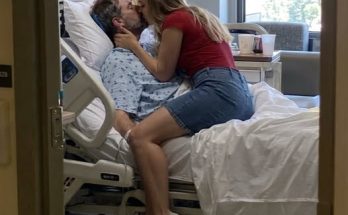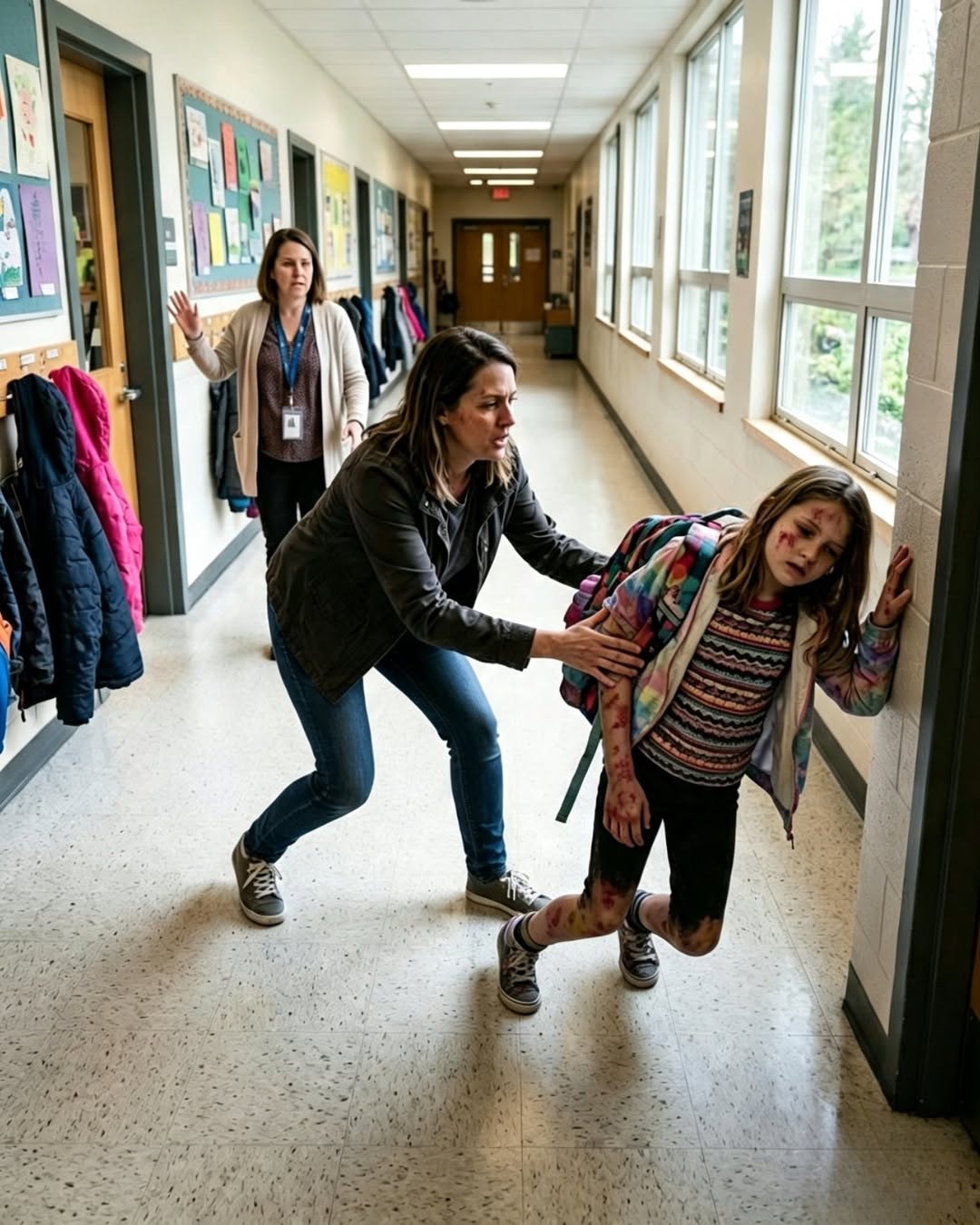
The doctor pulled the chair closer to us.
“Mr. and Mrs. Johnson,” he said quietly, “Emma’s initial bloodwork shows that this isn’t simply exhaustion or dehydration.” My stomach tightened. “What is it?” He glanced at Michael before looking back at me.
“Your daughter has a severe blood abnormality. Her body has been under significant strain for some time.”
Michael stepped forward.
“What does that mean?”
“We need more tests before we can give you a definitive diagnosis. But there’s something else.” The doctor hesitated. That hesitation frightened me more than the words. “What else?” I asked. “Emma’s results indicate she has been exposed to something she should not have been exposed to.”
The room seemed to shrink.
“Exposed to what?”
“We don’t know yet.”
Michael looked at me.
I looked at him.
For several seconds, neither of us spoke.
Then the doctor said something that changed everything. “We found traces of a medication in her system that was not prescribed to her.” My mind went completely blank. “What medication?”
“We’re still identifying the exact substance. But it appears to be something that could cause weakness, dizziness, headaches, and loss of consciousness in a child.”
I stared at the doctor.
“No.”
The word came out before I could stop it. “No. Emma doesn’t take anything except what I give her.” “I understand.”
“I mean it. She doesn’t take medication.”
The doctor nodded.
“That’s why we’re investigating.”
Michael’s face had become pale.
I turned toward him.
He wasn’t looking at me.
He was staring at the floor.
And suddenly, the nurse’s words came rushing back. Call your husband right now. Not call your husband because your daughter might be sick. Call your husband because he needed to hear what the doctors were about to say.
“Michael?”
He looked up.
“What?”
“Why did you look like that?”
“I’m scared.”
“So am I.”
“No, I mean…”
He stopped.
The doctor noticed.
“Mr. Johnson, is there anything you haven’t told us?”
Michael swallowed.
“No.”
The doctor studied him for a moment. “If you remember anything unusual—anything at all—tell us. Even something that seems insignificant.” Michael nodded. The doctor left. The door clicked shut. I turned toward my husband. “What medication does Emma have access to?”
“None.”
“Then why did you look like you knew something?”
“I didn’t.”
“Michael.”
“I said I didn’t.”
His voice was sharper now.
I had known Michael for sixteen years.
I knew every version of his voice.
That one wasn’t anger.
It was fear.
And I knew immediately that he was hiding something.
Before I could ask again, another nurse entered.
“Mrs. Johnson?”
“Yes?”
“We need to speak with you privately for a moment.”
Michael stood.
“I’m her father.”
“I understand, sir. But your wife needs to answer some questions first.”
He looked at me.
I could see something in his eyes.
A warning.
Or a plea.
I couldn’t tell which.
The nurse led me into a small consultation room.
She closed the door.
“Has Emma recently complained about headaches?”
“Yes.”
“How long?”
“Several weeks.”
“Fatigue?”
“Yes.”
“Changes in appetite?”
“Yes.”
“Anything else?”
I thought about it.
Then I remembered.
“She said she felt dizzy twice.”
“When?”
“Once about three weeks ago. Again last Thursday.”
The nurse wrote something down.
“Did she ever say she felt sick after spending time somewhere specific?”
I frowned.
“No.”
“Think carefully.”
I did.
And then something surfaced.
“Emma mentioned feeling strange after staying at her father’s office.”
The nurse looked up.
“His office?”
“Yes.”
“When was that?”
“About two weeks ago.”
“Why was she there?”
“Michael had a late meeting. I was working. He said she could stay with him for an hour.”
The nurse nodded.
“Was anyone else there?”
“I don’t know.”
“Does your husband have access to prescription medication?”
I opened my mouth.
Then stopped.
Michael had always kept a small medicine cabinet in our bathroom.
Pain relievers.
Cold medicine.
Things like that.
But I suddenly remembered something else.
A locked drawer in his home office.
I’d seen it many times.
I’d never asked what was inside.
“I’m not sure,” I said.
The nurse closed her notebook.
“That’s okay. The doctors will handle the medical investigation.”
I returned to Emma’s room.
Michael was standing beside her bed.
His hand rested on her blanket.
He looked broken.
But when he saw me, his expression changed.
“What did they ask you?”
I stared at him.
“About your office.”
His hand froze.
“What about it?”
“Emma was there two weeks ago.”
“I know.”
“What happened that day?”
“Nothing.”
“Michael.”
“Nothing happened.”
“Then why are you afraid?”
He didn’t answer.
I stepped closer.
“What’s in the locked drawer in your office?”
His eyes met mine.
And for the first time in sixteen years, my husband looked at me like I was a stranger.
“I need to tell you something.”
My heart sank.
“Then tell me.”
He sat down.
“I’ve been keeping something from you.”
I almost laughed.
Not because anything was funny.
Because suddenly everything made sense.
The late meetings.
The private phone calls.
The way he’d been distant.
The unexplained withdrawals.
The excuses.
I had spent months wondering if my husband was having an affair.
I had been wrong.
The truth was worse.
Michael looked toward Emma.
“She wasn’t supposed to be involved.”
My blood ran cold.
“Involved in what?”
He lowered his voice.
“I was helping someone.”
“Who?”
He hesitated.
“Someone from work.”
“What did you do?”
“I didn’t hurt Emma.”
“I didn’t ask whether you hurt her.”
He looked at me.
“I asked what you did.”
He rubbed his hands together.
“I’ve been taking medication home from the office.”
“Why?”
“Because someone asked me to.”
“Who?”
“Dr. Alan Reeves.”
I recognized the name.
Michael’s supervisor.
A senior physician who worked in a private research program affiliated with the hospital.
“What medication?”
“I don’t know exactly.”
My voice rose.
“You don’t know?”
“I was told it was part of a study.”
“A study?”
“Yes.”
“You gave our daughter something from a medical study?”
“No!”
He stood quickly.
“I never gave it to her.”
“Then how did it get into her system?”
“I don’t know.”
The monitor beside Emma continued its steady rhythm.
She was still asleep.
I looked at my husband.
“You’d better start telling me the truth.”
He sat down again.
“I brought some samples home because Reeves told me they were supposed to be destroyed. He said he needed help disposing of them properly.”
“And you kept them?”
“For a while.”
“Why?”
“Because I thought they were valuable.”
The words hung in the room.
“Valuable?”
Michael looked ashamed.
“I thought I could sell information about the study.”
My mouth went dry.
“What kind of information?”
“I don’t know.”
“You’re lying.”
“No.”
“You are.”
He looked away.
I stepped toward him.
“Did someone pay you?”
He didn’t answer.
“Michael.”
“Yes.”
“How much?”
“Twenty thousand dollars.”
I stared at him.
Twenty thousand dollars.
Suddenly, all those unexplained expenses made sense.
But one question remained.
“How did Emma get exposed?”
“I don’t know.”
“Then find out.”
He looked at me.
“I will.”
“No.”
I pointed toward the door.
“You’re going to tell the doctors everything.”
“I will.”
“Now.”
He nodded.
Then he left.
I sat beside Emma.
I took her small hand in mine.
She opened her eyes.
“Mom?”
“I’m here.”
“Am I in trouble?”
My heart broke.
“No, sweetheart.”
“Dad looked scared.”
“He’s worried.”
“Did I do something wrong?”
“No.”
Her eyes filled with tears.
“Then why did everyone look at me like that?”
I leaned forward.
“You didn’t do anything wrong.”
She squeezed my hand.
“Promise?”
“I promise.”
She closed her eyes again.
And I stayed there.
For the next six hours, doctors ran more tests.
Michael spoke with investigators.
The hospital contacted specialists.
And slowly, the pieces began to fit together.
The substance found in Emma’s blood wasn’t something she had accidentally swallowed.
It had come from an experimental medication connected to a private research project.
The medication was never approved for children.
It was never supposed to leave the research facility.
And according to the records, only a handful of people had access to it.
Michael was one of them.
But there was something nobody understood.
Why Emma?
The investigators searched our house.
They found nothing.
They searched Michael’s office.
That’s where they found the locked drawer.
Inside were several envelopes.
A flash drive.
And a notebook.
The notebook contained dates.
Names.
Amounts of money.
And one name appeared repeatedly.
Alan Reeves.
But another name appeared even more often.
Michael Johnson.
My husband.
I sat in the hospital corridor while two investigators questioned him.
I couldn’t hear everything.
But I heard enough.
“You were paid to transport samples.”
“Yes.”
“You were paid to alter records.”
“I didn’t alter patient records.”
“You signed forms.”
“I was told they were administrative.”
“You’re a nurse, Mr. Johnson. You knew what you were signing.”
“I made mistakes.”
“Did you give the medication to your daughter?”
“No.”
“Did you knowingly allow her access to it?”
“No.”
“Then explain how it got into her system.”
Silence.
I stood.
The investigator noticed me.
“Mrs. Johnson, please sit down.”
“I want to know.”
He looked at Michael.
Then at me.
“We’re still investigating.”
“No. I want to know what happened to my daughter.”
Michael closed his eyes.
“I know.”
“Then tell me.”
He opened them.
“I brought one sample home.”
My body went cold.
“Where?”
“In my office.”
“Did Emma enter your office?”
“Once.”
“When?”
“Three weeks ago.”
“You told me she wasn’t there.”
“I was wrong.”
“Why?”
“I forgot.”
“You forgot our daughter was in your office?”
“I was distracted.”
“What happened?”
“She was looking for a charger.”
“And?”
“I told her to check the cabinet.”
I stared at him.
“The cabinet?”
“Yes.”
“Where the samples were?”
“I didn’t know they were there.”
The investigator interrupted.
“Mr. Johnson, the sample container was damaged.”
Michael looked at him.
“What?”
“The investigators found evidence that one of the containers had been opened.”
Michael’s face changed.
“I didn’t open it.”
“We know.”
I looked between them.
“Then who did?”
The investigator didn’t answer immediately.
“We believe someone else entered the office.”
“Who?”
“Your daughter.”
I shook my head.
“Emma wouldn’t touch medication.”
“We don’t think she knowingly did.”
“What happened?”
“She may have handled the outside of the container. There was residue on a cabinet handle.”
My stomach turned.
“But how did that cause her collapse?”
The doctor explained later that the exposure was enough to make her seriously ill, especially because it happened more than once.
Not a deliberate act.
Not an attack.
A terrible chain of irresponsible decisions.
A container that never should have been there.
A drawer that should have been locked.
A father who was chasing money.
A workplace that had ignored safety rules.
And a child who happened to be standing in the wrong room.
But there was another revelation.
The investigators discovered that Michael hadn’t been acting alone.
Someone had been pressuring him.
Someone who had threatened to expose the money he had taken.
Someone who knew about our family.
Someone who knew about Emma.
That person was Alan Reeves.
The research program had been hiding safety violations.
Several samples had disappeared.
Records had been changed.
And Michael had become their easiest target.
When he tried to stop cooperating, Reeves threatened him.
Michael had been terrified.
Instead of telling me, he had kept digging himself deeper.
The twenty thousand dollars wasn’t payment for helping the research program.
It was hush money.
And Michael had spent almost all of it trying to fix the damage.
But the money couldn’t fix what happened to Emma.
Nothing could.
Three days later, Emma was stable.
The doctors said she needed rest and follow-up care.
When she woke that morning, sunlight filled the hospital room.
“Can I go home?”
I smiled through tears.
“Soon.”
“Is Dad coming?”
I paused.
Michael had been gone since the previous evening.
He had voluntarily stayed at the hospital while investigators questioned him.
“He’s here.”
“Is he in trouble?”
I sat beside her.
“Adults sometimes make choices that have consequences.”
“Did Dad make a bad choice?”
I looked at my daughter.
There was no reason to burden her with details she couldn’t understand.
“Yes,” I said softly.
“But he’s trying to make it right.”
She thought for a moment.
“Does that mean he’s still my dad?”
My eyes filled.
“Yes.”
“Then I want to see him.”
Michael entered a few minutes later.
He looked exhausted.
He stood near the door.
“Hi, Em.”
Emma smiled.
“Hi, Dad.”
He walked toward her.
He didn’t touch her until she reached out first.
Then he held her hand.
“I’m sorry,” he whispered.
“For what?”
“For not telling the truth sooner.”
Emma looked at him.
“Are you going to tell the truth now?”
Michael closed his eyes.
“Yes.”
She nodded.
“Okay.”
That one word nearly destroyed him.
He cried.
I had never seen Michael cry like that.
Not when his father died.
Not when we lost our first pregnancy.
Not at our wedding.
Never.
He sat beside our daughter and held her hand.
And I realized that whatever happened next, our marriage would never return to what it had been.
Two weeks later, the hospital discharged Emma.
We brought her home.
The house looked exactly the same.
Her shoes were still by the stairs.
Her backpack was still hanging from the chair.
Her unfinished math worksheet was still on the kitchen counter.
But everything felt different.
The ordinary life we had believed in had cracked.
Michael and I slept in separate rooms.
We spoke mostly about Emma.
Appointments.
School.
Meals.
Medicine.
Rest.
The things parents discuss when they are trying to keep a child’s world stable while their own is collapsing.
Then one evening, I found Emma sitting on the back porch.
She was watching the sunset.
“Mom?”
“Yes?”
“Are you and Dad getting divorced?”
I sat beside her.
“I don’t know.”
“Is it because of me?”
My heart broke.
“No.”
“Are you sure?”
“Absolutely.”
She leaned against me.
“Good.”
We sat silently.
Then she said something I would never forget.
“I don’t want our house to be quiet.”
I looked at her.
“What do you mean?”
“I like when Dad makes pancakes.”
I smiled.
“He burns them.”
“I know.”
“And he always puts too much syrup.”
“I know.”
She smiled.
“I still like them.”
I hugged her.
“Sometimes people can love each other and still hurt each other.”
“Can they fix it?”
“Sometimes.”
“Will you?”
I didn’t answer immediately.
“I don’t know yet.”
She nodded.
That was enough.
Because for the first time, I understood something.
Forgiveness wasn’t the same as pretending nothing happened.
Trust wasn’t something you promised.
It was something someone earned.
Michael would have to earn it.
And he knew that.
Months passed.
The investigation became public.
The research company faced multiple investigations.
Reeves lost his position and eventually faced criminal charges related to the unauthorized handling of research materials and falsification of records.
Michael cooperated fully.
He turned over everything.
Emails.
Bank statements.
Messages.
Names.
He admitted what he had done.
He didn’t excuse it.
He didn’t blame Reeves.
He didn’t blame fear.
He didn’t blame money.
He simply told the truth.
And that was the first honest thing he had done in a long time.
As for our marriage, I didn’t make a decision immediately.
I started counseling.
Michael did too.
Separately.
Then, eventually, together.
It was difficult.
There were days when I couldn’t look at him.
There were days when Emma asked whether Dad was coming to dinner.
There were days when I wanted to pack a suitcase and disappear.
But there were also moments when I saw the man I had married beneath all the lies.
Not an innocent man.
Not a victim.
A flawed man who had made serious choices and finally decided to accept responsibility for them.
That distinction mattered.
One year after Emma collapsed, we returned to the hospital.
Not because she was sick.
Because the hospital had invited her to participate in a small family safety event.
Emma hated the idea.
“Do I have to talk?”
I laughed.
“No.”
“Good.”
The event was about medication safety.
Parents.
Children.
School nurses.
Doctors.
Everyone listened as the hospital explained how dangerous medications could become when they were stored incorrectly or removed from approved settings.
At the end, Emma tugged on my sleeve.
“Mom.”
“What?”
“Can we go home?”
I smiled.
“Absolutely.”
As we walked outside, Michael was waiting beside the car.
Emma ran toward him.
He opened his arms.
I stood several feet away.
Watching.
Thinking.
A year earlier, a nurse had run toward me with a pale face.
Call your husband right now.
At the time, I thought those words meant our daughter might die.
Instead, they became the beginning of a truth that saved our family from living inside a lie.
Emma recovered.
Slowly.
She returned to school.
Her headaches disappeared.
Her energy came back.
She started laughing loudly again.
She worried about math tests again.
She forgot her homework again.
Normal things.
Beautiful things.
One afternoon, she came running into the kitchen.
“Mom!”
“What?”
“I got an A!”
I dropped the dish towel.
“On your math test?”
“Yes!”
She jumped into my arms.
“I told you you’d do great.”
She laughed.
Then Michael walked through the door.
“I heard somebody got an A.”
Emma ran to him.
He lifted her carefully.
I watched them.
And I realized that the greatest ending wasn’t getting back the life we had before.
We couldn’t.
Too much had happened.
The old version of our family was gone.
But perhaps that wasn’t the point.
Maybe some families don’t survive because nothing breaks them.
Maybe they survive because, after something breaks, the people inside finally stop pretending the cracks aren’t there.
Michael and I never forgot what happened.
We never pretended his choices didn’t matter.
There were consequences.
There were apologies.
There were difficult conversations.
And there were boundaries.
But there was also honesty.
For Emma.
For ourselves.
For whatever future remained.
A few months later, I found the hospital nurse who had stopped me that terrible afternoon.
She was walking down a corridor when she recognized me.
“How’s Emma?”
I smiled.
“She’s doing wonderfully.”
The nurse smiled back.
“I’m so glad.”
I hesitated.
“Can I ask you something?”
“Of course.”
“When you told me to call my husband… did you already know?”
She looked thoughtful.
“We knew something was wrong.”
“But you knew he needed to be there.”
“Yes.”
“Why?”
She smiled gently.
“Because sometimes the truth belongs to the whole family.”
I thought about that for a long time.
The truth.
That was what almost destroyed us.
And somehow, it was also what gave us a chance to rebuild.
That night, I went home and found Emma asleep on the couch.
Her math book was open beside her.
Michael was sitting nearby.
He looked at me.
“She’s out.”
I nodded.
He stood.
“I made dinner.”
“What did you make?”
“Pancakes.”
I smiled.
“It’s seven at night.”
“I know.”
“Too much syrup?”
He smiled.
“Probably.”
For the first time in months, I laughed.
A real laugh.
Not because everything was perfect.
It wasn’t.
Not because the past had disappeared.
It hadn’t.
But because Emma was home.
Safe.
Laughing.
Growing.
And sometimes, after the worst day of your life, the most precious thing isn’t a miracle.
It’s an ordinary evening.
A child sleeping peacefully.
A kitchen light glowing through the window.
And the quiet realization that tomorrow is still yours to choose.
I walked over to the couch and kissed Emma’s forehead.
She stirred.
“Mom?”
“I’m here.”
“Is Dad here?”
“Yes.”
She smiled without opening her eyes.
“Good.”
Then she went back to sleep.
I looked at Michael.
He looked at me.
Neither of us said anything.
We didn’t need to.
Because a year ago, we had been sitting in a hospital room waiting for a doctor to tell us the truth.
Tonight, the truth was much simpler.
Our daughter was alive.
Our daughter was healing.
And whatever happened to our marriage, we would never again build our family on silence.
The house was quiet.
But it wasn’t empty.
It was full of the sound of breathing.
Full of second chances.
Full of consequences we would carry.
And, finally, full of truth.