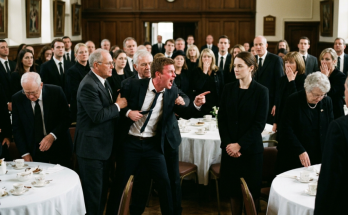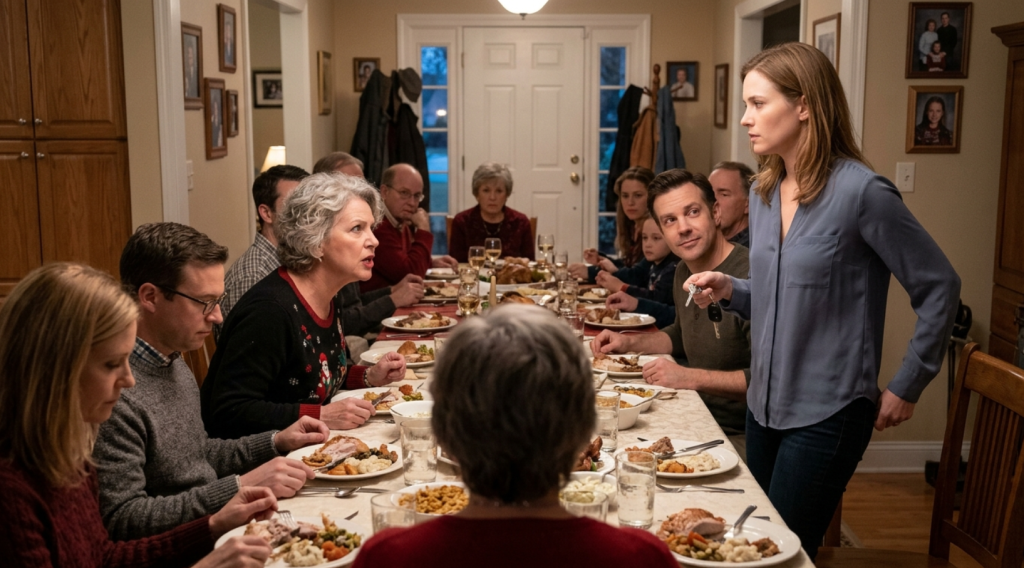
PART 3: I looked at her. “I’m not the one who announced in front of twenty people that my son’s wife wasn’t welcome at Thanksgiving.” Her expression hardened. “You knew exactly what you were doing when you walked out.”
“Yes.”
“And now you’ve caused this entire family to panic.” I almost laughed. “Interesting.” “What is that supposed to mean?” “It means that last night nobody seemed worried about me.” Richard rubbed his forehead. “Can we please stop going in circles?”
“No.”
He looked at me. I could see the frustration in his eyes. But beneath the frustration was something else.
Fear.
That was when I knew the phone calls hadn’t been about Thanksgiving. They hadn’t been about hurt feelings. Something had happened after I left. Something involving the folder. Something involving money.
Something involving the life I had spent seventeen years maintaining while everyone else treated it like something that simply existed.
Richard finally pulled his hand away.
“Fine. What do you want?” “I want the truth.” “The truth about what?” “Why did you say my mother’s word is law?”
He sighed.
“Because I didn’t want to argue with her.” “After seventeen years of marriage?”
“Yes.”
“You didn’t want to argue with your mother, so you were willing to humiliate your wife?” He looked away. Evelyn answered for him. “Richard was trying to keep the family together.” I turned toward her. “You weren’t keeping a family together.” “What were we doing, then?” “You were keeping a system together.”
She frowned.
“What system?”
“The one where everybody gets to make demands and I quietly pay for them.”
Silence.
Richard’s face changed. Evelyn’s did too. I opened the folder. Inside were copies of bank statements, insurance documents, property records, credit card statements, utility accounts, and several emails.
Richard immediately recognized the first page.
“Where did you get those?”
“They’re mine.”
“No, I mean—why do you have them?”
“Because they’re connected to our household.”
He swallowed.
I turned the first page toward him.
“This is the mortgage.”
He nodded slowly.
“I’m aware.”
“Your name is on it.”
“Yes.”
“So is mine.”
“I know.”
I turned another page.
“The property tax account.”
Another.
“Home insurance.”
Another.
“Utilities.”
Then another.
“The joint credit card.”
Richard’s face was getting paler.
I continued.
“Your car payment.”
He stared at me.
“That isn’t your business.”
I looked at him.
“It’s paid from our joint account.”
“So?”
“So half the money comes from me.”
He opened his mouth.
Nothing came out.
Evelyn suddenly stepped closer.
“Claire, whatever happened yesterday, surely you’re not going to start throwing financial accusations around.”
“I’m not accusing anyone.”
I closed the folder.
“I’m documenting.”
That word changed the room.
Richard pulled out a chair.
“Sit down.”
“No.”
“Claire.”
“No.”
He stood.
“Then what do you want?”
I looked at him for a long moment.
“I want you to understand something.”
His expression softened slightly.
“What?”
“I’m done being the person everyone remembers only when something needs to be paid.”
Evelyn folded her arms.
“You’re making yourself sound like some victim.”
I looked at her.
“Last night you told me I wasn’t family.”
“I said Thanksgiving was family only.”
“And this morning?”
“What about this morning?”
“Who called me fifty-two times?”
Nobody answered.
I looked at Richard.
“You did.”
“I was worried.”
“No.”
He shook his head.
“I was.”
“You were worried because something stopped working.”
His eyes narrowed.
“What does that mean?”
I picked up the folder.
“You’ll find out.”
I turned toward the hallway.
Richard moved in front of me.
“Claire, don’t walk away.”
I stopped.
“Why?”
“Because we’re married.”
I looked at him.
“For seventeen years, I’ve been your wife when you needed something.”
His face tightened.
“And yesterday?”
He didn’t answer.
“Yesterday I wasn’t even allowed to sit at your table.”
I stepped around him.
“I’m going to my room.”
He followed me.
“Claire.”
I kept walking.
“Claire, please.”
That word stopped me.
Please.
I hadn’t heard him say it to me like that in years.
I turned.
“What?”
He looked exhausted.
“I don’t understand what’s happening.”
“I know.”
“What did you do?”
I stared at him.
“Nothing.”
“Then why is everything suddenly falling apart?”
I gave him a tired smile.
“Maybe it isn’t falling apart.”
“What?”
“Maybe you’re finally seeing how it was held together.”
I walked upstairs.
Behind me, I heard Evelyn say something in a low voice.
Richard answered her.
Then their voices stopped.
I entered our bedroom and closed the door.
For the first time in years, I opened the closet and looked at my belongings as though I were seeing them from the outside.
My clothes.
My shoes.
The photographs.
The jewelry Richard had given me.
The wedding album.
The framed picture from our tenth anniversary.
I sat on the edge of the bed.
Seventeen years.
I thought about our first apartment.
The cheap furniture.
The secondhand dining table.
Richard promising that one day we’d have a beautiful home where everyone would gather for holidays.
We eventually did.
But somewhere along the way, I had become the person arranging the gatherings while everyone else took ownership of the dream.
I opened the nightstand.
Inside was an envelope I had kept for years.
It contained an old handwritten note from Richard.
I unfolded it.
One day I’ll give you the life you deserve.
I stared at the sentence.
Then I quietly put it back.
Some promises don’t become lies because they were never fulfilled.
They become lies because the person who made them eventually stops remembering they said them.
That afternoon, I packed a suitcase.
Not everything.
Just enough.
When I came downstairs, Richard was sitting alone at the table.
Evelyn was gone.
He looked at the suitcase.
“You’re leaving?”
“For a few days.”
“Where?”
“A hotel.”
“You can’t keep running away.”
“I didn’t run away yesterday.”
He looked down.
“I know.”
“I walked away.”
He nodded.
“What happens now?”
“I don’t know.”
He stood.
“Can we fix this?”
I looked at him.
“That depends.”
“On what?”
“Whether you actually want to fix the marriage or whether you just want your life to go back to being convenient.”
He looked hurt.
“I love you.”
“Then why was it so easy for you to let your mother humiliate me?”
He had no answer.
I picked up my suitcase.
At the front door, he spoke again.
“Claire.”
I turned.
“I’m sorry.”
It was the first time he had said it without adding an excuse.
I nodded.
“Thank you.”
Then I left.
The following morning, I received another message.
This time it wasn’t from Richard.
It was from the bank.
There had been an attempted change to one of the household accounts.
I stared at the notification.
My stomach tightened.
I opened the account.
A pending request had been submitted the previous evening.
Someone had attempted to remove one of the authorized users.
Me.
I sat completely still.
Then I called the bank.
After several minutes of verification, the representative confirmed what I already suspected.
“Yes,” she said. “A request was submitted.”
“Who submitted it?”
“I can’t disclose that over this channel.”
“I understand.”
“There is also a note on the account.”
“What note?”
She paused.
“It says the account holder is reviewing financial arrangements following a separation.”
I closed my eyes.
Separation.
I had never requested a separation.
I hadn’t told anyone I was leaving my marriage.
I had simply walked out of Thanksgiving dinner.
Someone had already decided what my departure meant.
And that someone wasn’t me.
I opened the folder again.
There was something I hadn’t looked at closely enough.
A property document.
I read it twice.
Then a third time.
The house wasn’t simply jointly owned.
There was a line I had never paid attention to.
A transfer had been filed six months earlier.
My signature appeared on the document.
I stared at it.
I knew that signature.
But I had never signed that paper.
My hands began to shake.
I called the attorney whose name appeared on the document.
She answered after two rings.
“Ms. Bennett?”
“Yes.”
“This is Claire.”
There was silence.
“Claire, I’ve been expecting your call.”
My heart started pounding.
“Why?”
“Because Richard contacted our office yesterday.”
I gripped the phone.
“What did he ask you?”
“He asked about the transfer document.”
“Did he say why?”
“He said you were considering moving out.”
“I wasn’t.”
Another pause.
“Claire, I think you should come into the office.”
“Why?”
“Because there are several documents here that you need to see in person.”
My mouth went dry.
“Were they signed by me?”
She didn’t answer immediately.
“That’s what I want to discuss.”
I looked through the hotel window.
Cars moved along the street below.
People walked past coffee shops carrying paper cups.
The world continued as though nothing had changed.
But my entire understanding of my marriage had just shifted.
“I’ll come in this afternoon,” I said.
When I arrived at the attorney’s office, she was waiting with a thick file.
Her name was Margaret Ellis.
I had met her once, years earlier, when we refinanced the house.
She closed the door behind me.
“Claire, I want you to remain calm.”
I sat down.
“That usually means something is very wrong.”
She gave me a careful look.
“There are several financial documents connected to your household.”
“Which ones?”
“The home.”
“The accounts.”
“Some investment arrangements.”
I frowned.
“I don’t have investments.”
Margaret looked at the file.
“You do.”
I stared at her.
“What?”
She turned the folder around.
A brokerage statement sat on top.
The account was in my name.
The balance made my breath stop.
I looked at the number again.
Then again.
“That can’t be right.”
“It is.”
“I’ve never seen this.”
Margaret nodded.
“I suspected that.”
“Who opened it?”
“That’s part of the problem.”
She turned another page.
“Most of the contributions came from a business account.”
I looked at the account information.
Richard’s business.
I felt cold.
“What is this?”
Margaret leaned back.
“Claire, did Richard ever ask you to sign blank financial forms?”
I thought about it.
Years ago.
There had been refinancing paperwork.
Insurance renewals.
Tax documents.
Business documents.
He often brought things home after dinner.
“Sometimes.”
“Did you ever sign documents without reading every page?”
I didn’t answer.
Margaret didn’t need me to.
She slowly closed the file.
“I want you to understand something. I’m not accusing Richard of anything.”
“Then what are you saying?”
“I’m saying you should not sign another document until you’ve had independent legal advice.”
I stared at her.
“Why?”
“Because some of these documents appear to have been prepared with the assumption that you had agreed to financial changes.”
“I didn’t.”
“I know.”
The words hit me harder than they should have.
“You know?”
“I’ve reviewed the signatures.”
My heart pounded.
“And?”
Margaret looked directly at me.
“I don’t believe you knowingly signed some of these documents.”
I sat back.
For several seconds, neither of us spoke.
Then I asked the question I had been avoiding.
“What was Richard trying to do?”
Margaret shook her head.
“I can’t tell you what he intended.”
“But you can tell me what the documents would do.”
“Yes.”
“And?”
She opened the file again.
“One document would reduce your ownership interest in the house.”
My stomach dropped.
“Another changes access to certain funds.”
“And the third?”
She hesitated.
“The third appears to establish that you voluntarily agreed to a separation of finances.”
I laughed once.
Not because anything was funny.
Because the alternative was crying.
“So he was preparing for me to leave.”
“Possibly.”
“Or preparing to make it look like I chose to leave.”
Margaret didn’t answer.
She didn’t have to.
I looked down at the documents.
For seventeen years, I had believed my biggest mistake was staying quiet.
Now I wondered if my biggest mistake had been trusting someone with my signature.
I left Margaret’s office carrying copies of everything.
Outside, I sat in my car.
My phone rang.
Richard.
I let it ring.
It stopped.
Then rang again.
Then again.
Finally, a text appeared.
“Please come home. We need to talk.”
I stared at the words.
Then another message arrived.
“Mom knows everything.”
My eyes narrowed.
A third message.
“You need to understand what she did.”
I read it twice.
What she did?
I called Richard.
He answered immediately.
“Claire.”
“What did your mother do?”
Silence.
“Richard?”
“She shouldn’t have said anything.”
“What did she do?”
“She found some paperwork.”
“What paperwork?”
“I don’t know.”
“You just told me she knows everything.”
“I meant—”
“You meant what?”
His voice lowered.
“Claire, there are things you don’t understand.”
“Then explain them.”
“I can’t do this over the phone.”
“Then do it in person.”
“Come home.”
“No.”
“Please.”
“No.”
“Where are you?”
I hung up.
Five minutes later, another number called.
Evelyn.
I answered.
“Claire.”
“What?”
“You’ve misunderstood everything.”
“Then explain.”
“You’re destroying this family.”
I almost laughed.
“I was excluded from Thanksgiving, Evelyn.”
“You’re making this about a dinner.”
“No.”
“Then what?”
“My name was placed on documents I didn’t knowingly approve.”
She went silent.
That silence told me more than any explanation could have.
“Evelyn?”
“What documents?”
“You know.”
“I don’t.”
“Then why did you go quiet?”
“I didn’t.”
“You did.”
She breathed heavily.
Then she said something that I would remember for the rest of my life.
“You were never supposed to see those.”
My hand tightened around the phone.
“See what?”
She realized her mistake.
“Nothing.”
“No.”
I stood up.
“What was I never supposed to see?”
“Claire, listen to me.”
“No. You listen to me.”
My voice was shaking now.
“I spent seventeen years believing your son and I were building a life together.”
“We were.”
“No.”
I looked at the folder on the passenger seat.
“You were building something around me.”
She didn’t respond.
“And I was the one paying for it.”
“That’s not fair.”
“Maybe not.”
I ended the call.
That evening, I returned to the house.
Not to stay.
To collect the rest of my belongings.
The house was unusually quiet.
Richard was in the living room.
He stood when I entered.
“Claire.”
I walked past him.
“Wait.”
I stopped.
“What?”
He looked different.
Less angry.
More frightened.
“I need to tell you something.”
“You should have told me yesterday.”
“I was scared.”
“Of what?”
He looked toward the hallway.
“My mother.”
I stared at him.
“What did she do?”
Richard swallowed.
“She has been controlling things for years.”
I almost smiled.
“That’s what you want me to believe?”
“No.”
“Then tell me everything.”
He sat down.
I remained standing.
Richard rubbed his hands together.
“Three years ago, Mom had financial problems.”
“I know she had the car loan.”
“That’s not what I mean.”
He looked at me.
“She had debts.”
“How much?”
“More than you knew.”
“How much?”
“Almost two hundred thousand dollars.”
I stared at him.
“And you paid them?”
He shook his head.
“Not directly.”
“Then who did?”
He looked down.
“You.”
The room became completely silent.
I couldn’t breathe for a second.
“What?”
Richard closed his eyes.
“Some of the money came through the household.”
“How?”
“Loans.”
“What loans?”
“Transfers.”
“To your mother?”
“Yes.”
I thought about the recurring payments.
The unexplained transfers.
The expenses I had always assumed were repairs, insurance, or family emergencies.
“How long?”
“About three years.”
“And you never told me?”
“I was going to.”
“When?”
“I don’t know.”
“Before or after she told me I wasn’t family?”
His face crumpled.
“Claire.”
“No.”
I stepped closer.
“You let me believe I was helping my husband build our future.”
“I know.”
“You were using our money to rescue your mother.”
“I was trying to protect her.”
“And who was protecting me?”
He looked at me.
No answer.
I turned away.
Then I remembered something.
“Richard.”
“Yes?”
“Why did she say I wasn’t supposed to see the documents?”
His face changed.
“I don’t know.”
“Don’t lie to me.”
“I swear.”
I watched him carefully.
Then I asked:
“What happens if I don’t sign them?”
He froze.
“Which ones?”
“The separation documents.”
He didn’t answer.
“Richard.”
He finally whispered:
“I don’t know.”
That was when I knew there was more.
Much more.
I walked upstairs.
In the closet, behind an old storage box, I found a second envelope.
It wasn’t mine.
It had Richard’s handwriting on it.
The envelope was dated six months earlier.
My name was written across the front.
I opened it.
Inside was a single page.
A plan.
Not a plan for a vacation.
Not a plan for a business.
A plan for what would happen if I ever discovered the truth.
The first line made my blood run cold.
If Claire leaves, make sure she believes she chose to leave voluntarily.
I read the sentence again.
Then again.
My hands stopped shaking.
Something inside me became very still.
At the bottom of the page were two signatures.
Richard’s.
And Evelyn’s.
I stood there alone in the bedroom where I had slept beside my husband for seventeen years.
And for the first time, I wasn’t wondering whether my marriage could be saved.
I was wondering how much of it had ever been real.
Then I heard footsteps behind me.
Richard was standing in the doorway.
His eyes went directly to the paper in my hand.
He stopped breathing.
I held it up.
“What is this?”
He didn’t answer.
“Richard.”
His face went pale.
“Claire…”
“Who wrote this?”
He looked at the floor.
“Who wrote this?”
Finally, he whispered:
“My mother.”
I stared at him.
“And you signed it.”
He closed his eyes.
“I was afraid.”
“Of her?”
“Yes.”
I nodded slowly.
Then I folded the paper.
“You should have been afraid of losing me.”
He looked at me.
“I am.”
“No.”
I put the paper back inside the envelope.
“You’re afraid of what happens when I stop protecting you.”
He began to cry.
I had seen Richard angry.
I had seen him frustrated.
I had seen him exhausted.
But I had never seen him cry like that.
“I love you,” he said.
I looked at him for a long time.
“Maybe you do.”
He looked hopeful.
“But love without honesty becomes something else.”
“What?”
“Something that looks like love from the outside.”
I picked up my suitcase.
“And feels like a trap from the inside.”
I walked past him.
This time, he didn’t stop me.
At the front door, I turned around.
The house looked exactly the same.
The furniture.
The photographs.
The Thanksgiving decorations.
The dining table where everyone had watched me leave.
Nothing had changed.
Except me.
I stepped outside.
Behind me, Richard whispered my name.
I didn’t turn around.
My phone vibrated as I reached the car.
A message from an unknown number.
I opened it.
There was one sentence.
Claire, you need to know what happened before you married Richard.
Then another message arrived.
This one contained a photograph.
An old photograph.
Richard.
Evelyn.
And another woman I had never seen before.
I stared at the picture.
Then I noticed the date written beneath it.
Three months before my wedding.
My heart began pounding.
Because the woman standing beside Richard was wearing the same necklace I had seen in one of my wedding photographs.
And suddenly, I realized the Thanksgiving dinner wasn’t where this story had started.
It was only where the truth had finally decided to come looking for me.
PART 4
I stared at the photograph.
For several seconds, I couldn’t make sense of what I was seeing.
Richard was younger.
Evelyn looked almost exactly the same, except for the darker hair and sharper expression.
And between them stood a woman I had never seen before.
She was smiling at the camera.
Richard wasn’t.
His arm was around her waist.
I zoomed in.
The necklace around her neck was unmistakable.
A thin gold chain with a small oval pendant.
I had seen that necklace many times.
It had belonged to me.
Or at least, I had always thought it did.
Richard had given it to me on our first anniversary.
He told me he’d found it in an antique jewelry shop and that the little pendant reminded him of a promise.
I had treasured it for seventeen years.
My fingers tightened around the phone.
Then I noticed something else.
The woman was wearing a wedding ring.
Not on her left hand.
On her right.
I looked at Richard’s hand in the photograph.
He wasn’t wearing a wedding ring.
The picture had been taken before our wedding.
I knew that.
But there was something about the woman’s face.
Something familiar.
Not familiar enough to recognize.
But familiar enough to disturb me.
I called the number that had sent the photograph.
A woman answered.
“Claire?”
“Who are you?”
“My name is Natalie.”
“Why are you sending me pictures of my husband?”
There was a long pause.
“Because I think you deserve to know the truth.”
“What truth?”
“The truth about why Richard married you.”
My stomach tightened.
“What does that mean?”
“It means you weren’t the first woman he planned to marry.”
I closed my eyes.
“Who were you?”
“I was Richard’s fiancée.”
The world seemed to go quiet.
I looked at the photograph again.
“You’re the woman in the picture.”
“Yes.”
“What happened?”
“He left me.”
“Why?”
“Because your mother-in-law made him.”
I said nothing.
Natalie continued.
“Richard and I were engaged for almost two years.”
I leaned against my car.
“Then why did he leave?”
“Because Evelyn found out I was pregnant.”
My breath caught.
“Pregnant?”
“Yes.”
I looked at the photograph again.
“How far along?”
“Six months.”
I couldn’t speak.
Natalie’s voice became softer.
“I lost the baby.”
Something inside me sank.
“I’m sorry.”
“I was devastated.”
“What happened afterward?”
“Richard disappeared.”
“And Evelyn?”
“She came to my apartment.”
“What did she say?”
Natalie laughed bitterly.
“She told me that if I ever contacted Richard again, she’d make sure everyone knew I had been unstable and that the baby hadn’t even been his.”
I felt sick.
“Was it his?”
“Yes.”
“Are you certain?”
“He knew.”
Silence filled the line.
Then Natalie said:
“Three months later, Richard met you.”
I stared at the road.
Cars passed in front of me.
People were going home.
People were buying groceries.
People were making plans for tomorrow.
My entire life suddenly felt like something I had been watching from outside.
“Why are you telling me this now?”
“Because I saw what happened at Thanksgiving.”
My head lifted.
“You were there?”
“No.”
“Then how do you know?”
“Evelyn told someone.”
“Who?”
“Someone who told someone else.”
I almost laughed.
Even now, the family had a way of turning private cruelty into public information.
Natalie continued.
“Claire, I don’t want anything from you.”
“Then what do you want?”
“I want you to understand that Richard has spent years allowing his mother to make decisions for him.”
“That doesn’t explain the financial documents.”
“No.”
She paused.
“That part came later.”
“What part?”
“The plan.”
I tightened my grip on the phone.
“What do you know about it?”
“I know Evelyn has done this before.”
My heart stopped.
“What?”
“She tried to control Richard’s previous relationships.”
“Previous relationships?”
“Yes.”
“How many?”
“I don’t know.”
“Then how do you know?”
“Because after I left, I started looking into her.”
I frowned.
“Why?”
“Because I wanted to know why someone could convince the man I loved to abandon his own child.”
Her voice cracked slightly.
“I found things.”
“What things?”
“Letters.”
“From Evelyn?”
“Yes.”
“To Richard.”
“About me?”
“About you.”
My stomach turned.
“What did they say?”
“She told him you were financially stable.”
I went completely still.
“She told him you had a good career.”
I couldn’t breathe.
“She told him you would make a reliable wife.”
My eyes closed.
Natalie continued.
“She told him you would be the perfect person to help him rebuild after the business problems.”
The phone nearly slipped from my hand.
“What business problems?”
“He had debt.”
“I know.”
“No, Claire.”
Her voice became very quiet.
“Not the debt you know about.”
I waited.
“He had already lost almost everything before he met you.”
I looked at my car.
At the house across the street.
At the life I had spent seventeen years believing we built together.
“Then why did he have me?”
Natalie answered:
“Because Evelyn believed you could save him.”
I hung up.
I couldn’t listen anymore.
I sat in my car for nearly an hour.
I didn’t cry.
I didn’t scream.
I simply sat there.
Every strange moment from the last seventeen years came back.
Richard saying he was between opportunities.
Evelyn asking for “temporary” help.
The business that never quite became profitable.
The expenses I couldn’t explain.
The sudden emergencies.
The family members who always needed something.
The way Richard praised my reliability.
The way Evelyn called me “the responsible one.”
I had always taken those words as compliments.
Now they sounded like descriptions of a resource.
That night, I stayed at the hotel.
I didn’t sleep.
At 6:14 the next morning, someone knocked on my door.
I froze.
Another knock.
“Claire?”
Richard.
I didn’t answer.
“It’s me.”
I walked to the door but didn’t open it.
“What do you want?”
“I need to tell you the truth.”
“You’ve had seventeen years.”
“I know.”
“You’ve had enough time.”
“I know.”
I looked through the peephole.
He was standing alone.
No Evelyn.
No relatives.
No excuses.
Just Richard.
“Go home.”
“I can’t.”
“Why?”
“Because my mother is packing.”
I opened the door slightly.
“What?”
“She knows I told you.”
I stared at him.
“She told me to choose.”
“Choose what?”
“Her or you.”
“And?”
He looked at me.
“I chose you.”
I didn’t answer.
He stepped closer.
“She told me if I left her, she’d expose everything.”
“What everything?”
“The money.”
I frowned.
“What money?”
“The money she took.”
My heart sank.
“How much?”
He looked down.
“More than three hundred thousand dollars.”
I stared at him.
“From where?”
“From accounts connected to the family.”
“Family?”
“My father left a trust.”
I had never heard about a trust.
Richard continued.
“My father died when I was young. There was money.”
“How much?”
“Enough.”
“Enough for what?”
“Enough that my mother never had to work again.”
“And she took it?”
“Over the years.”
“How?”
“She convinced me to sign documents.”
I looked at him.
“Just like you convinced me to sign documents.”
He flinched.
“Yes.”
The honesty hurt more than another lie would have.
“You helped her.”
“Yes.”
“Why?”
“Because I was afraid.”
“Again.”
He nodded.
“I was afraid she’d destroy the family.”
“You keep saying that.”
“I know.”
“Richard, your mother didn’t destroy your family.”
He looked at me.
“You did.”
His eyes filled with tears.
“I know.”
For the first time, I believed him.
Not because his words were perfect.
But because there was nothing left for him to gain by pretending.
I opened the door.
“Come in.”
He entered.
We sat across from each other.
For the first time in seventeen years, we didn’t sit beside each other.
We sat opposite each other.
Two people forced to look directly at what they had become.
Richard took a deep breath.
“There is something else.”
“What?”
“The house.”
I stiffened.
“What about it?”
“The transfer document.”
“What about it?”
“It was never completed.”
I stared at him.
“What?”
“My mother filed it.”
“But?”
“But the title company rejected it.”
“Why?”
“There was a problem with the signature.”
I looked at him.
“My signature.”
“Yes.”
“You knew?”
“I found out yesterday.”
“Then why did you panic?”
“Because my mother had already told several people you agreed to leave the house.”
I slowly understood.
She had been preparing a story.
A story where I was the unstable wife.
A story where I voluntarily walked away.
A story where Richard kept the house.
A story where the money disappeared before I knew it existed.
And Thanksgiving had been the beginning of the final act.
“You were going to make me look like I abandoned everything.”
Richard nodded.
“I didn’t know how far she’d gone.”
“But you knew enough.”
“Yes.”
“And you signed.”
“Yes.”
I looked away.
“I don’t know if I can forgive you.”
“I don’t expect you to.”
That answer surprised me.
He continued.
“But I want you to know that I’m finally going to tell the truth.”
I looked at him.
“What truth?”
“All of it.”
“What about your mother?”
“I’ll deal with her.”
“No.”
He looked confused.
“You won’t deal with her for me.”
“I won’t.”
“You’ll deal with her because you finally have to deal with your own choices.”
He nodded.
“You’re right.”
I stood.
“You should leave.”
He stood too.
“Can I see you again?”
“Maybe.”
“When?”
“When I know who I am without you.”
He looked devastated.
But he nodded.
“Okay.”
He walked to the door.
Before leaving, he turned.
“Claire?”
“Yes?”
“Happy Thanksgiving.”
I almost smiled.
“It’s over.”
“I know.”
He left.
Three days later, I met with Margaret.
She had already begun reviewing everything.
She found inconsistencies.
Unauthorized transfers.
Improperly prepared documents.
Financial arrangements Richard had never disclosed.
And evidence that Evelyn had been moving money between accounts for years.
The most important discovery was hidden in an old trust document.
Richard’s father had created a protected inheritance for his children.
Evelyn had controlled the account while Richard was young.
When he became an adult, some of the money was supposed to transfer to him.
It never did.
Instead, Evelyn had used portions of it to pay debts, purchase property, and cover personal expenses.
Richard had known pieces of the truth.
He had never confronted her.
And when his own finances collapsed, he became dependent on her.
Then he met me.
I became the stable part of his life.
The person who earned.
The person who paid.
The person who fixed.
The person who stayed.
And because I stayed, the system worked.
Until Thanksgiving.
Margaret eventually helped me secure the accounts and protect my ownership interests.
The house remained legally mine and Richard’s jointly until everything could be resolved.
The marriage itself took longer.
There was no dramatic courtroom scene.
No screaming.
No public revenge.
Just paperwork.
Meetings.
Hard conversations.
And the slow realization that sometimes a marriage doesn’t end because love disappears.
Sometimes it ends because truth finally becomes more important than comfort.
Six months later, Richard moved into a small apartment.
Evelyn sold her car.
Several accounts were frozen pending investigation.
The family stopped speaking about Thanksgiving.
Not because they had forgotten.
Because they finally understood what they had witnessed.
One cousin eventually apologized.
Then another.
Then another.
The cousin who had stared at his phone during the dinner came to my house one Saturday afternoon.
“I should have said something,” he told me.
“Yes.”
He looked ashamed.
“I was afraid of your mother-in-law.”
I shook my head.
“She wasn’t my mother-in-law anymore by then.”
He smiled sadly.
“You know what I mean.”
“I do.”
He apologized.
I accepted.
Not because what he did was okay.
But because I no longer wanted other people’s cowardice taking up space in my life.
A year after Thanksgiving, I hosted dinner again.
Not at the old house.
I had moved into a smaller place.
It was quieter.
Brighter.
Mine.
There were only eight people at the table.
No twenty-person performance.
No one controlling the seating.
No one tapping a fork against a glass.
My closest friends sat around the table.
We laughed.
We argued about football.
Someone burned the rolls.
Everyone made fun of the person who had done it.
And nobody cared.
Before dinner, I stepped outside.
The evening air was cool.
The sky was turning orange.
I heard footsteps behind me.
Richard.
We had remained in contact during the divorce process.
Not as husband and wife.
Not anymore.
But as two people trying to understand seventeen years of shared history.
He stood beside me.
“Can I ask you something?”
“Sure.”
“Do you ever regret leaving?”
I thought about it.
“No.”
He nodded.
“I figured.”
I looked at him.
“Do you?”
He smiled sadly.
“Every day.”
“Why?”
“Because I finally understand what I had.”
I shook my head.
“No, Richard.”
He looked at me.
“You understand what you lost.”
He nodded.
“That too.”
For a moment, we stood quietly.
Then he handed me an envelope.
“What is that?”
“Something my father wrote.”
I looked at it.
“Why are you giving it to me?”
“Because it was addressed to you.”
My eyebrows rose.
“How could your father have written something to me before we met?”
“He didn’t.”
I opened the envelope.
Inside was a letter written by Richard.
Not his father.
Richard.
The first line read:
Claire, I spent seventeen years confusing being loved with being rescued.
I kept reading.
He apologized.
Not for leaving.
Not for his mother.
Not for the money.
For choosing comfort over courage.
He admitted that I had carried responsibilities that should have been shared.
He admitted that he had allowed his mother to disrespect me because confronting her required more courage than apologizing to me afterward.
And at the end he wrote:
You once told me that a home is not a building. It’s the place where you know you belong.
I finally understand.
You belonged with me.
I just didn’t know how to make myself worthy of belonging beside you.
I folded the letter.
“Thank you.”
He nodded.
“I don’t expect anything.”
“I know.”
He looked toward the house.
“Are they waiting for you?”
“Yes.”
“Then go.”
I smiled.
“You’re not coming?”
He smiled back.
“No.”
He paused.
“I think that’s the point.”
I watched him walk down the driveway.
Then I went inside.
The dining room was warm.
The table was full.
Someone called my name.
“Claire! We’re waiting for you!”
I looked around.
Nobody was telling me where to sit.
Nobody was deciding whether I belonged.
Nobody was measuring my usefulness.
I simply walked to the table.
And sat down.
That night, after everyone left, I washed the last glass and turned off the kitchen light.
For years, I had thought walking away meant losing everything.
I finally understood something different.
Sometimes walking away is how you find out what was never truly yours.
The house hadn’t been the family.
The money hadn’t been the security.
The marriage hadn’t been the promise.
The promise was the part of me that had survived seventeen years of being told to stay quiet.
And that part of me was still there.
Stronger.
Wiser.
Free.
I stood at the window and looked outside.
My phone was silent.
No demands.
No emergencies.
No accusations.
No one telling me where I belonged.
For the first time in a very long time, the silence didn’t feel lonely.
It felt like peace.
And when Thanksgiving came around again the following year, I didn’t think about the twenty people who had watched me leave.
I thought about the one woman who had finally learned to stop asking for permission to belong.
Me.
I had spent seventeen years helping build a home where everyone else felt comfortable.
It took one humiliating Thanksgiving dinner to teach me that I deserved a place at the table too.
And if the table didn’t have a seat for me?
I could always build my own.
This time, I would choose who sat beside me.
THE END