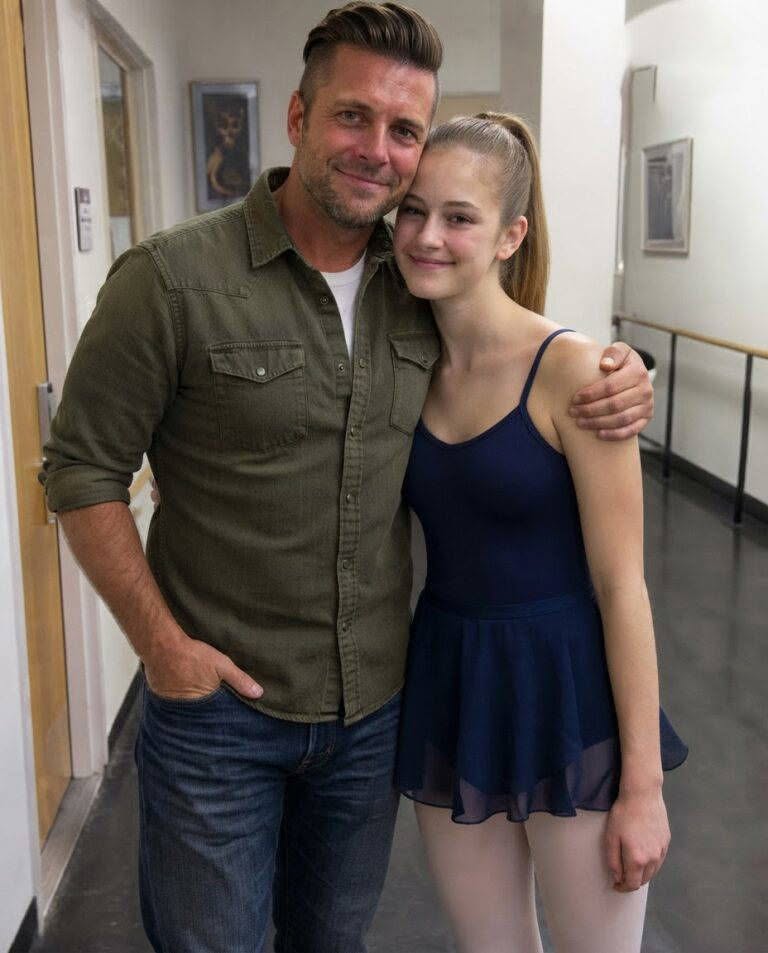
“Mrs. Bennett, your daughter hasn’t told you what’s been happening, has she?” Ms. Alvarez’s question hung in the quiet hallway. I stared at Audrey’s ballet instructor, trying to understand why she looked as though she were preparing to deliver terrible news.
“What do you mean?” I whispered. She glanced toward the classroom, then back at me. “Your daughter has been arriving here three times a week, but she hasn’t attended a single class in almost a month.” For several seconds, I couldn’t move.
“That’s impossible,” I finally managed. “Derek drives her here. He drops her off before class begins.” Ms. Alvarez’s expression softened.
“I’m sure he does. But Audrey leaves before the lessons start. At first, she told me she was sick. Then she asked me not to contact you because she was afraid of what might happen if you found out.”
My hands went cold.
“What might happen?”
Ms. Alvarez took a slow breath.
“I think you need to hear the truth from your daughter. But there’s something else you should know. Audrey has been trying to tell me that she feels trapped in a situation she doesn’t know how to escape.”
I gripped the edge of the desk beside me.
“Who is trapping her?”
The instructor hesitated.
Then she said the name I never expected to hear.
“Derek.”
My husband’s best friend.
The man who had held my daughter when she was a newborn.
The man who had promised to drive her to ballet because he knew how much her dream meant to her.
For nearly thirty years, we had trusted him.
And now I was standing in a dance studio, wondering whether I had made the biggest mistake of my life.
“Please,” I said, my voice trembling. “Tell me everything you know.”
Ms. Alvarez pulled out a chair.
What she told me next would change our family forever.
Audrey had been accepted into the advanced teen ballet program eight months earlier.
It was the happiest day of her sixteen-year-old life.
She had worked toward that opportunity since she was six, practicing in our cramped kitchen and stretching beside the living-room sofa.
When the scholarship email arrived, she ran downstairs so quickly that she nearly tripped over the last step.
“Mom! I got in!”
I remember holding her while she cried against my shoulder.
“You did it, sweetheart.”
“I really did it!”
Scott came home early that evening, and we celebrated with her favorite pasta and a homemade chocolate cake.
For once, Audrey didn’t complain about the frosting being uneven.
She was too happy to care.
But the studio was almost fifty minutes away, and the evening classes made transportation difficult.
Scott supervised construction sites. I worked as a hospital administrator. Neither of us could consistently leave work early enough to drive her there and back three times a week.
That was when Derek offered to help.
He had been Scott’s best friend since high school. Our families celebrated holidays together, and his wife, Laura, was one of the people I called whenever I needed advice.
Their daughter, Mia, was Audrey’s age.
Derek knew Audrey’s passion for ballet and understood how important the scholarship was.
“Let me handle the driving,” he said over Sunday dinner. “My office is close to the studio. It makes sense.”
I hesitated.
“Three evenings every week is a big commitment.”
He laughed.
“Claire, if Mia had an opportunity like this, you’d help her, wouldn’t you?”
“Of course.”
“Then stop worrying. Audrey deserves a chance.”
Scott clapped him on the shoulder.
“You’re a good man, Derek.”
I believed that.
I believed it so completely that I never questioned the arrangement.
For the first few weeks, Audrey came home smiling. She talked about her instructor, her classmates, and the difficult combinations she was learning.
Then, almost without warning, everything changed.
She stopped talking about ballet.
She stopped practicing.
And whenever Derek’s name came up, she became strangely quiet.
I had mistaken her silence for teenage moodiness.
Now Ms. Alvarez was telling me that my daughter had been hiding something far more complicated.
“About four weeks ago,” Ms. Alvarez explained, “Audrey arrived at the studio, but she never came inside.”
“What?”
“One of the receptionists saw her sitting outside near the parking area. When I went to speak with her, she said she needed to leave.”
“Why?”
“She wouldn’t tell me at first.”
Ms. Alvarez paused.
“Eventually, she explained that Derek had been asking her to do things she wasn’t comfortable with.”
My stomach tightened.
“What things?”
“She said he wanted her to keep certain conversations secret. He would ask questions about your family, your finances, and whether you and your husband argued.”
I frowned.
“Why would he ask a sixteen-year-old about our finances?”
“I don’t know. Audrey didn’t understand it either.”
Ms. Alvarez continued carefully.
“She told me that he sometimes complained about Scott, saying your husband didn’t appreciate him enough. He also told her that adults had complicated relationships and that she was mature enough to understand things other teenagers couldn’t.”
A horrible feeling settled in my chest.
“Did he threaten her?”
“She told me he never directly threatened to hurt her. But he repeatedly reminded her how much he had done for her, especially by providing transportation. He made her feel guilty for questioning him.”
I remembered Audrey standing beside his car, gripping his sleeve.
But you promised you’d talk to her.
I swallowed.
“What did she want him to talk to me about?”
Ms. Alvarez opened a folder.
“That’s where things become more concerning.”
She showed me a printed message Audrey had shared with her.
It was from Derek.
Your mom doesn’t need to know everything. Just keep things between us until I can explain.
Another message read:
Remember who made your ballet opportunity possible.
I felt sick.
“He sent these to my daughter?”
Ms. Alvarez nodded.
“There were more. Audrey eventually showed me a few.”
I read them twice.
None contained an explicit threat. None explained exactly what Derek wanted.
But together, they revealed a pattern of secrecy, pressure, and manipulation.
I thought of all the times Audrey had returned home looking exhausted.
All the times I’d asked what was wrong and received a quiet, frightened answer.
She hadn’t simply been losing interest in ballet.
She had been trying to tell someone that she was uncomfortable.
And the person making her uncomfortable was someone we had invited into our lives.
“Where is she now?” I asked.
“She left the studio early today. She said she wanted to go home, but she was afraid Derek would be angry.”
I stood immediately.
“I’m going to find her.”
Ms. Alvarez gently touched my arm.
“Mrs. Bennett, please remember something. If Audrey has been afraid to tell you the truth, she may need reassurance more than questions. Let her know she hasn’t done anything wrong.”
I nodded, struggling to breathe normally.
Then I asked for copies of the messages and the dates Audrey had spoken with her.
Before leaving, I thanked Ms. Alvarez.
“I should have noticed sooner,” I said.
She shook her head.
“Your daughter has been trying to protect the people she loves. That doesn’t mean you failed her. What matters now is that she knows she doesn’t have to handle this alone.”
I carried those words with me all the way home.
Audrey was sitting on her bedroom floor when I arrived.
Her ballet bag lay beside her, unopened.
She looked up as I entered.
“Mom? Why are you home?”
I sat down several feet away from her.
“I went to the studio.”
Her face drained of color.
For a moment, she looked as though she might run.
Then she lowered her head.
“I’m sorry.”
Those two words nearly broke my heart.
I moved closer, but I didn’t touch her until she reached for my hand.
“Sweetheart, what are you apologizing for?”
She began to cry.
“I ruined everything.”
“No.”
“I should have told you.”
I squeezed her hand.
“You can tell me now.”
She shook her head.
“You’re going to be so angry.”
“I’m not angry with you.”
“You will be when you know.”
I waited.
Finally, Audrey whispered, “Derek told me you and Dad were having money problems.”
I stared at her.
“What?”
“He said Dad had been borrowing money from people and hiding it from you. He said you might lose the house if things got worse.”
My heart pounded.
“Did your father borrow money from Derek?”
“I don’t know. Derek said he was trying to help our family, and he needed me to do something for him.”
“What did he ask you to do?”
Audrey wiped her cheeks.
“He wanted me to tell him when Dad received certain work payments. He asked whether Dad kept documents in his office at home. He wanted to know if you had any papers about the house.”
I felt a chill run down my spine.
“Did you tell him?”
“A little. At first, I thought he was trying to help Dad.”
She looked at me with miserable eyes.
“Then he asked me to take pictures of some papers in Dad’s study.”
“Did you?”
She nodded.
“Only one page. I didn’t understand what it was. When I asked him why he couldn’t ask Dad himself, he got upset.”
I took a breath.
“What did he say?”
“He told me Dad would be embarrassed if I told him. He said I could destroy their friendship and that it would be my fault if our family fell apart.”
Audrey began crying harder.
“I didn’t want to lie to you, Mom. But he kept saying he’d helped me get into ballet. He said if I told anyone, he might stop driving me, and I would lose everything.”
I pulled her into my arms.
“Oh, sweetheart.”
“I stopped going to class because I didn’t want to see him. But I was scared to tell you why.”
She clung to me.
“I thought you would believe him instead of me.”
That was the sentence that hurt most.
Not because she had doubted me, but because someone had made her believe she couldn’t trust her own parents to protect her.
I held her until her breathing settled.
Then I looked at her.
“Listen carefully. You are not responsible for Derek’s choices. You are not responsible for protecting his friendship with your father. And you have not ruined anything.”
“But ballet—”
“Ballet can wait. You cannot.”
She stared at me.
For the first time in weeks, I saw a small change in her expression.
Not happiness.
Relief.
Scott arrived home forty minutes later.
I asked him to sit down with us.
Audrey immediately stiffened.
I took her hand.
“Your father is here to listen. You don’t have to explain anything you’re not ready to explain, but we need him to understand.”
Scott looked between us.
“What’s going on?”
I told him what Ms. Alvarez had said.
Then Audrey explained the messages, the questions about our finances, and the request for photographs of documents in his study.
Scott’s face changed with every sentence.
At first, he looked confused.
Then angry.
Finally, he looked devastated.
“Derek did this?”
Audrey nodded.
Scott stood and walked to the window.
For several seconds, he said nothing.
Then he turned around.
“Why didn’t you tell me?”
Audrey flinched.
I immediately spoke.
“Scott.”
He stopped.
I could see the realization on his face.
He had asked the question too sharply.
He sat down again.
“I’m sorry, sweetheart,” he said quietly. “I shouldn’t have said it like that.”
Audrey looked at her hands.
“I thought you’d be angry with him, and then you’d stop being friends.”
Scott’s eyes filled with tears.
“Honey, he made those choices. Not you.”
“But he’s been your best friend forever.”
Scott shook his head slowly.
“Being my friend for thirty years doesn’t give him permission to frighten my daughter.”
He moved beside her and wrapped an arm around her shoulders.
“I should have noticed you were unhappy. I kept telling your mother she was worrying too much.”
I had never heard Scott admit something like that so plainly.
He looked at me.
“I was wrong.”
I reached for his hand.
We had both missed the signs.
But now we were listening.
And we weren’t going to ignore them again.
The next morning, Scott called Derek.
He didn’t argue or threaten him.
He simply told him that Audrey would no longer be riding in his car and that he was not to contact her privately.
Derek’s response was immediate.
“What is this about?”
“You know what it’s about.”
“Scott, I think there’s been a misunderstanding.”
“Then explain why you asked my daughter to photograph documents in my study.”
Silence.
Scott continued.
“She showed us the messages.”
Derek sighed.
“She’s sixteen. She doesn’t understand adult business.”
Scott’s jaw tightened.
“You used her to get information from me?”
“I was trying to help you.”
“By going through my daughter?”
“Listen to me. You have no idea how much I’ve done for your family.”
Scott closed his eyes.
There it was again.
The same guilt Audrey had described.
“You offered to drive her,” Scott said. “We thanked you. We trusted you. None of that gave you the right to pressure her.”
Derek’s voice hardened.
“After everything I’ve done for you, you’re taking a teenager’s side against me?”
“I’m taking my daughter’s side because she needed an adult to protect her.”
Scott ended the call.
Then he blocked Derek from contacting Audrey through his phone.
We also saved copies of every message and wrote down what Audrey remembered, without pressuring her to reconstruct details she couldn’t recall.
We contacted a local youth-support service for guidance on reporting the behavior and arranging appropriate support. Because Derek had requested private family documents and used secrecy to pressure a minor, we decided not to handle the matter as an ordinary disagreement between friends.
We sought professional advice about the safest next steps.
I also contacted Laura, Derek’s wife.
That conversation was harder than I expected.
She answered cheerfully.
“Claire! How are you? Is Audrey enjoying her classes?”
I closed my eyes.
“Laura, we need to talk about Derek.”
Her voice changed.
“What happened?”
I explained what Audrey had told us and described the messages.
Laura didn’t interrupt.
When I finished, she was silent for so long that I wondered whether the call had disconnected.
Finally, she whispered, “I knew something was wrong.”
My heart sank.
“What do you mean?”
“Derek has been acting strangely for months. He’s been asking Scott questions about work. He keeps saying your husband has opportunities he should be sharing.”
She paused.
“I thought they were just having a disagreement.”
“Did you know he was involving Audrey?”
“No.” Her answer came immediately. “Claire, I swear I didn’t know.”
I believed her.
She began to cry.
“I can’t believe he would do this to her.”
Neither could I.
But I was beginning to understand that knowing someone for thirty years didn’t mean knowing every part of them.
Sometimes, familiarity made it easier to overlook behavior we would question immediately in a stranger.
Two days later, Scott discovered why Derek had been so interested in our documents.
He was reviewing paperwork in his home office when he noticed a folder was out of place.
Inside were copies of estimates, payment schedules, and preliminary documents related to a construction contract Scott had been supervising.
One sheet was missing.
It wasn’t a bank statement or anything that gave Derek direct access to our accounts.
But it contained details about an upcoming project and a proposed subcontracting arrangement.
Scott called his employer’s compliance department.
They reviewed the documents and discovered that Derek had recently contacted a subcontractor about the same project.
He had presented himself as someone with inside knowledge and suggested that he could help the company secure work.
The subcontractor had declined to proceed without formal authorization.
Nothing had been awarded to Derek.
But the situation was serious enough that Scott’s employer began an internal review.
Scott was furious.
“He wasn’t trying to help me,” he told me that evening. “He was trying to get information he could use for himself.”
We still didn’t know everything Derek had intended to do.
We didn’t need to invent a more dramatic explanation.
The messages, the pressure on Audrey, and the attempt to obtain confidential documents were troubling enough.
Scott provided the information his employer requested.
We also followed the guidance we’d received about reporting Derek’s conduct toward Audrey.
I worried about what would happen next.
Would he deny everything?
Would he tell our friends that Audrey had misunderstood?
Would people believe us?
Scott took my hand.
“We have the messages. We have the timeline. And most importantly, we have Audrey.”
For the first time since entering the dance studio, I felt that we were moving in the right direction.
We weren’t trying to destroy Derek’s life.
We were trying to protect our daughter’s.
Whatever consequences followed would be the result of the choices he had made.
The hardest part was telling Audrey that the situation was being taken seriously.
She worried constantly about what would happen to Derek’s wife and daughter.
“What if Mia hates me?” she asked one evening.
I sat beside her on the couch.
“You haven’t done anything wrong.”
“But she might think I did.”
“Then we will explain the truth as gently as we can. You are not responsible for controlling what other people believe.”
Audrey looked toward the staircase.
“I still miss ballet.”
I hadn’t expected that.
For weeks, I had focused so intensely on getting her away from Derek that I had forgotten something important.
She hadn’t stopped loving dance.
She had stopped feeling safe enough to enjoy it.
“Do you want to return someday?” I asked.
She nodded.
“But I don’t want to go back there yet.”
“Then you don’t have to.”
“What if Ms. Alvarez thinks I’m weak?”
I shook my head.
“Your instructor knows you’ve been dealing with something difficult. Asking for time doesn’t make you weak.”
Audrey leaned against me.
“Can I take a break?”
“Absolutely.”
For the next several weeks, we arranged counseling with a professional experienced in supporting teenagers through difficult experiences.
Audrey gradually began talking more openly about the pressure she had felt.
She learned that she could set boundaries, ask for help, and refuse requests that made her uncomfortable, even when they came from someone she had known for years.
We never forced her to retell the story more than necessary.
We never asked her to confront Derek.
And we didn’t make returning to ballet a condition of her recovery.
For a while, she wanted nothing to do with the studio.
We respected that.
Then, one Saturday morning, I found her standing in the hallway with her ballet shoes in her hands.
“Mom?”
I turned from the kitchen.
“What’s up, sweetheart?”
“Do you think Ms. Alvarez would let me visit without taking a class?”
I smiled gently.
“I think we can ask.”
She looked down at her shoes.
“I just want to see the room again.”
So we contacted the instructor.
Ms. Alvarez welcomed Audrey back for a quiet visit, with me accompanying her.
When we entered the studio, Audrey stood near the barre.
The music was off.
The mirrors reflected the empty room.
She took a slow breath.
“I thought I’d never come back,” she whispered.
I slipped my arm around her shoulders.
“You can take this one step at a time.”
She nodded.
Then she placed her ballet shoes carefully into her bag.
She wasn’t ready to dance that day.
But she had walked through the door.
And that was enough.
Several weeks later, Laura called me.
Derek had moved out of their home temporarily while they worked through what had happened.
She had also learned that he had been pursuing business opportunities without Scott’s knowledge.
She didn’t know every detail of his plans, but the situation had damaged their marriage.
“I keep thinking about how easily I could have missed it,” she said. “How easily I could have told Audrey to stop being dramatic.”
I listened quietly.
“That’s what scares me most,” Laura continued. “We trusted him so completely.”
I understood.
Trust wasn’t the mistake.
The mistake was allowing trust to become a reason to ignore the evidence in front of us.
Laura apologized for not recognizing the situation sooner.
I told her I knew she hadn’t arranged any of it.
We didn’t become close overnight again. There were too many complicated feelings, and Audrey needed time away from anything connected to Derek.
But we agreed on one thing.
Neither of us would pressure our daughters to protect an adult’s reputation.
Not again.
As for Scott, he never resumed his friendship with Derek.
He mourned it, though he rarely admitted that aloud.
One evening, I found him looking at an old photograph from their high-school graduation.
“You miss him,” I said.
Scott nodded.
“I miss the person I thought he was.”
I sat beside him.
“You can miss the good memories without pretending the bad things didn’t happen.”
He looked at me.
“I should have listened to you when you said something was wrong.”
I took his hand.
“We both needed to listen to Audrey.”
He nodded.
And for the first time, I think he understood that protecting a family sometimes means accepting that someone you love has become someone you can no longer trust.
Three months after my visit to the studio, Audrey returned to ballet.
Not to the same advanced program immediately, and not three evenings a week.
She started with one class on Saturday mornings at a different studio recommended by Ms. Alvarez.
We arranged transportation ourselves.
Scott adjusted his schedule when he could, and I drove her when he couldn’t.
We also established clear rules about who could collect her, where she could go, and how she could contact us if she ever felt uncomfortable.
Most importantly, Audrey knew she could change her mind without disappointing us.
On her first morning back, I waited outside the classroom.
I heard the music begin.
Then I heard the instructor count the dancers through their first combination.
I watched through the window.
Audrey stood at the barre, her shoulders tense.
For a moment, she looked uncertain.
Then she lifted her chin and began to move.
Her first turn was imperfect.
Her second was better.
By the third, a small smile appeared on her face.
I pressed my fingers against the glass.
There she was.
Not the carefree little girl who had practiced between the refrigerator and the kitchen table.
Not the frightened teenager who had hidden her shoes in a bag.
Just Audrey.
A young person finding her way back to something she loved.
When class ended, she came running outside.
“Mom!”
I opened my arms.
She hugged me.
“I forgot how much I missed that.”
I smiled through my tears.
“I know, sweetheart.”
She looked back at the studio.
“I want to keep going.”
“Then we’ll figure it out together.”
She took my hand, and we walked toward the car.
On the drive home, she talked about the music, the instructor, and the combination she wanted to practice next week.
Her voice grew more animated with every sentence.
I listened to every word.
Because I had learned something I would never forget.
Sometimes, a child doesn’t need a parent to solve every problem immediately.
Sometimes, a child needs to know that the truth won’t cost them the love and protection they depend on.
And sometimes, the person who makes a family feel unsafe isn’t a stranger waiting outside the door.
Sometimes, it’s the person everyone has known for years.
The person whose name is spoken with affection.
The person who has earned so much trust that nobody thinks to question him.
Derek had once been welcome at our dinner table.
He had once been someone Scott would have trusted with anything.
And he had once been the man I thanked for helping our daughter pursue her dream.
I couldn’t change those memories.
But I could change what happened next.
I could listen when Audrey said she was uncomfortable.
I could protect her even when the truth was painful.
And I could teach her that no favor, friendship, or family connection gives anyone the right to demand secrecy from her.
That evening, Audrey left her ballet shoes beside the front door instead of hiding them inside her bag.
I noticed them when I went to turn off the hallway light.
One shoe had fallen onto its side.
I picked it up, brushed away a little dust, and placed it beside the other.
Then I stood there for a moment, looking at them.
For weeks, I had believed our biggest problem was finding someone to drive our daughter to ballet.
I had been so grateful when Derek volunteered that I never considered what it meant to place our trust in him without question.
I thought he was helping us protect Audrey’s future.
I never imagined that protecting her would require us to take the keys away from him.
But the most important thing wasn’t that we had uncovered his secrets.
It wasn’t that his business dealings were being reviewed or that his friendship with Scott had ended.
It was that Audrey had finally learned she didn’t have to carry someone else’s wrongdoing on her shoulders.
She could speak.
She could say no.
And she could come home.
Because no dream was worth more than her safety, and no friendship was worth more than our daughter’s trust.
The man we’d trusted for thirty years had nearly convinced Audrey that protecting him mattered more than telling us the truth.
He was wrong.
And the day I walked into that ballet studio without warning was the day our family finally began to understand what had really been happening.
Not because we discovered every secret Derek had kept.
But because, at last, we listened to the person who had been afraid to tell us.