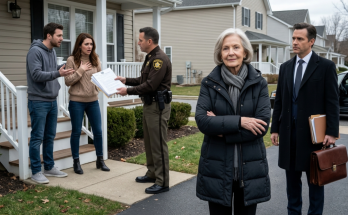
My parents said they couldn’t afford to take both daughters to Italy, so they chose my sister and told me, “You’re 29. You can take your own vacation.” I smiled, helped them pack, and waved goodbye. Two weeks later, they came home to a nearly empty house—and my father’s first message wasn’t asking where I was. It was threatening to call the police…
“They already did.” For several seconds, I couldn’t speak. I sat completely still at the little wooden table inside my mountain cabin, staring at the pine trees outside my window. “What do you mean, they already did?” I finally whispered.
My attorney, Jonathan Mercer, exhaled slowly.
“Your father contacted the police department about forty minutes ago. He reported that you removed approximately thirty thousand dollars’ worth of household property without permission.”
I felt my stomach tighten.
“Thirty thousand?”
“Yes.”
“That furniture isn’t worth anywhere near thirty thousand dollars.”
“I know.”
“And most of it belongs to me.”
“I know that too, Victoria.”
I pressed my fingers against my forehead.
My father had actually done it.
The man whose mortgage I’d helped save.
The man whose credit card payments I’d covered.
The man who hadn’t even bothered to ask whether I was happy before excluding me from the family vacation.
He had called the police on his own daughter.
All because I had finally stopped paying for his life.
“What happens now?” I asked.
Jonathan’s voice remained calm.
“First, you’re not going to panic. Second, you’re not going to argue with your family. And third, you’re going to let the documents we’ve already prepared do their job.”
I glanced at the thick folder sitting beside my laptop.
Across its cover, in black marker, was one word.
REALITY.
For ten years, I’d kept receipts, paid bills, and made excuses.
Now those records were about to matter.
“Have the police contacted you?” Jonathan asked.
“Not yet.”
“They may. If they do, get their names and contact information and refer them to me. Don’t make any assumptions about what they know.”
I swallowed.
“Do you think they’ll arrest me?”
“Based on the ownership records you’ve shown me, I don’t see grounds to conclude you stole your own belongings. But we still need to cooperate with the investigation and establish the facts.”
I looked down at my father’s message.
You have exactly one hour to call us.
He still thought he could command me.
Even now.
Even after everything.
Jonathan continued.
“Victoria, listen carefully. You legally purchased the television, the furniture you brought from your old apartment, and the other personal belongings we identified. You documented their removal. You left behind disputed items. That’s important.”
I nodded, though he couldn’t see me.
“Okay.”
“And there’s something else.”
His tone changed.
I sat straighter.
“What?”
“Your father’s report includes an allegation I wasn’t expecting.”
My chest tightened.
“He claims you took money from a family account.”
I stared at the wall.
“What family account?”
“He says you withdrew funds intended for household expenses.”
For a moment, I was completely confused.
Then I understood.
The shared household account.
The one I’d opened years earlier so my parents could contribute to groceries and utilities.
The one I’d funded almost entirely myself.
The one they’d stopped depositing money into eighteen months ago.
I closed my eyes.
“Jonathan, that was my money.”
“I know. We have the statements.”
“How much does he say I took?”
“Six thousand eight hundred dollars.”
I nearly dropped the phone.
That was the exact balance I’d transferred into my personal savings account before moving.
Money from my paycheck.
Money I’d been saving for my own emergency fund.
My father had reported it as stolen.
And suddenly, I realized the police report wasn’t just an angry reaction.
It was an attempt to make me afraid enough to return.
The Call From My Father
My phone began vibrating again.
Dad.
I stared at his name.
Jonathan asked, “Is that him?”
“Yes.”
“Don’t engage in an argument. Let it go to voicemail.”
I did.
Seconds later, another call came.
Then another.
Finally, a voicemail notification appeared.
I played it on speaker.
“Victoria, this is your father. You have made a very serious mistake. The police have been informed, and unless you return everything immediately, this is going to get much worse for you.”
His voice grew louder.
“You think because you’re twenty-nine you can do whatever you want? You have stolen from your own family. Call me back.”
The message ended.
I sat silently.
Jonathan spoke first.
“Save that.”
“I will.”
“Also preserve every message they’ve sent since returning.”
I opened my screenshots folder.
There were already thirty-four messages.
Mom had sent photographs of the nearly empty living room.
Lily had accused me of destroying the family.
Dad had threatened arrest.
Not one message asked where I lived.
Not one asked whether I was safe.
They were furious about the belongings.
But not about losing me.
And that hurt more than the police report.
I had been their daughter for twenty-nine years.
Their unpaid cook.
Their financial backup plan.
Their emergency contact.
Their problem solver.
Apparently, I only became a problem when I stopped solving theirs.
The First Officer Who Called
At 10:42 that morning, an unfamiliar local number appeared on my screen.
I answered.
“Hello?”
“May I speak with Victoria Bennett?”
“This is Victoria.”
“My name is Officer Daniel Harris. I’m calling from the police department regarding a property complaint filed by Mark Bennett.”
My hands went cold.
“Yes, Officer.”
“I understand you’ve recently moved out of your parents’ residence.”
“That’s correct.”
“And your father reports that several household items were removed without permission.”
I took a breath.
“Officer, I have ownership records for the belongings I removed, and my attorney has the complete documentation.”
There was a pause.
“You have an attorney?”
“Yes. His name is Jonathan Mercer. May I give you his contact information?”
“Certainly.”
I provided the number.
Officer Harris wrote it down.
Then he said, “I want to clarify something. Are you claiming all the removed property was personally owned by you?”
“Yes. I took only items my attorney and I had identified as my property. I left anything that was disputed or that I had given to my family as a gift.”
“Do you have receipts?”
“Yes.”
“Purchase dates?”
“Yes.”
“Photographs or records showing the property before removal?”
“Yes.”
Another pause.
“That’s helpful. Your father gave a somewhat different account.”
I almost laughed.
“I imagine he did.”
Officer Harris remained professional.
“We’ll review the documentation before determining whether any criminal offense occurred.”
“Thank you.”
“And Ms. Bennett?”
“Yes?”
“Your father also claims you withdrew money from a shared account.”
I explained the account.
How it had been funded.
Why it existed.
And why I’d transferred the remaining money.
“I have the deposit records,” I added. “My attorney can provide them.”
“Understood.”
Before ending the call, Officer Harris said something that stayed with me.
“Family disputes can become complicated, Ms. Bennett. The important thing is that we establish who owns what.”
I thanked him.
Then I hung up.
For the first time that morning, I let myself cry.
Not because I thought I’d done something wrong.
Because my own father had turned a family argument into a police matter.
And even when the facts were cleared up, I knew our relationship would never be quite the same.
The Numbers They Never Wanted to See
That afternoon, Jonathan and I held a video meeting.
He appeared on my laptop screen wearing a dark suit and reading glasses.
“Let’s go through the records one more time.”
I opened the folder.
The first section contained the furniture receipts.
The second contained appliance purchases.
The third contained bank transfers.
The fourth contained the shared household account.
And the final section held the ten-year summary.
$112,419.
Jonathan looked at the figure.
“Victoria, this amount is substantial.”
I smiled sadly.
“I know.”
“Were all these payments loans?”
“No.”
“Were some gifts?”
“Yes.”
“Were some household expenses you voluntarily shared?”
“Yes.”
He nodded.
“Then we need to be precise. This number documents how much you’ve contributed. It doesn’t automatically mean your parents owe you every dollar.”
“I understand.”
That was something I’d already accepted.
I wasn’t trying to recover ten years of birthday gifts, groceries, or payments I’d voluntarily made.
I simply wanted to stop.
But seeing the number still made my chest ache.
One hundred twelve thousand dollars.
I thought about the trips I’d never taken.
The apartment I’d never rented.
The savings I’d postponed.
The weekends I’d spent repairing my parents’ problems.
My father had said I could afford my own vacation.
He was right.
I could have.
If I hadn’t spent most of my twenties paying for everyone else’s.
Jonathan continued reviewing the documents.
Then he stopped.
“Victoria, what’s this eight-thousand-dollar payment from four years ago?”
“The mortgage refinance.”
“Was that a gift?”
I hesitated.
“No.”
He looked up.
“Explain.”
I remembered that winter perfectly.
Dad had fallen behind on several payments after a medical leave.
Mom was terrified of losing the house.
They’d asked me to contribute eight thousand dollars to cover expenses and help complete the refinance.
Dad promised to pay me back after his finances stabilized.
“Do you have that promise in writing?” Jonathan asked.
“I think so.”
I searched my email.
Three minutes later, I found it.
A message from Dad.
Vicki, thank you for covering the $8,000. Once the refinance is complete and things settle down, I’ll start paying you back. I promise.
Jonathan read the message.
Then leaned back.
“Well.”
I stared at him.
“What?”
“This may be a documented personal loan. We’d need to examine the full circumstances, any payments already made, and the relevant time limits. But it’s worth reviewing.”
My heart beat faster.
For years, I’d considered that money gone.
Dad never mentioned repayment again.
And I’d been too afraid of upsetting him to ask.
Jonathan closed the document.
“Let’s finish addressing the police complaint first. Then we’ll decide whether there are any legitimate financial claims worth pursuing.”
I nodded.
But something had shifted.
My parents weren’t the only people who could produce paperwork.
The Truth About Lily’s Car
Two days later, the police matter took an unexpected turn.
Jonathan called me around noon.
“Victoria, have you spoken to your sister?”
“No.”
“Good. I have a question about the vehicle loan you co-signed.”
I frowned.
“What about it?”
“Do you know the current status?”
“I’ve been making payments whenever Lily doesn’t. Why?”
“Let’s verify the loan records directly.”
I logged into the lender’s portal.
The balance was higher than I expected.
Then I saw why.
Lily had missed payments during a period when I’d assumed the account was current.
Late fees and interest had accumulated.
My stomach tightened.
I had co-signed because my parents assured me she only needed help establishing credit.
I’d been twenty-four.
Lily was twenty-one.
She wanted a new car.
I wanted to help.
For years, I’d told myself I could manage the obligation.
Now I realized how much risk I’d accepted.
Jonathan asked, “Is the vehicle titled jointly?”
I checked the documents.
“No. Lily is listed as the owner. I’m only a co-borrower on the loan.”
He nodded.
“Then you can’t simply take the vehicle or demand ownership. But you are exposed if she fails to pay. We need to work with the lender to understand your options.”
I felt sick.
“I’ve been paying three hundred fifty dollars a month.”
“For how long?”
“Almost three years.”
Jonathan made a note.
“And Lily has been using the car the entire time?”
“Yes.”
He looked at me.
“Have you ever told her you can’t continue paying?”
“Several times.”
“What does she say?”
I stared at the screen.
“She says family helps family.”
Jonathan was quiet for a moment.
Then he said, “Victoria, there’s a difference between helping someone and becoming financially responsible for choices you never agreed to keep funding indefinitely.”
I looked away.
I knew he was right.
But knowing something intellectually and accepting it emotionally were two very different things.
The Letter That Reached the Police
By the end of the week, Jonathan had delivered a detailed response to the investigating officer.
It included receipts, purchase confirmations, photographs, moving records, and bank statements.
He also supplied a copy of the letter I’d left on the kitchen counter.
The letter clearly stated that I had moved out voluntarily, taken my own belongings, and left everything whose ownership was uncertain.
I’d even included a list of the items removed.
The movers had signed an inventory.
There were photographs of each major item before it was loaded.
I hadn’t anticipated my father filing a police report.
I’d simply wanted to avoid another family argument.
But those precautions made a difference.
Officer Harris contacted Jonathan after reviewing the materials.
The allegations did not establish clear evidence of theft.
The disputed account transfer also appeared to involve funds traceable to my own deposits, though any ownership disagreement could still be addressed through civil channels.
The officer informed my attorney that the criminal investigation would be closed unless new evidence emerged.
When Jonathan called to tell me, I sat down on my porch steps.
“So it’s over?”
“The criminal matter is closed based on the information reviewed. That doesn’t mean your family can’t raise a genuine civil dispute, but there is no criminal charge against you.”
I closed my eyes.
For a moment, all I could hear was the wind.
Then I whispered, “Thank you.”
Jonathan’s voice softened.
“You did the right thing by documenting everything.”
I looked toward the mountains.
“No,” I said quietly. “I did the right thing by leaving.”
He didn’t argue.
When Dad Found Out
My father called that evening.
I didn’t answer.
He left a voicemail.
“Victoria, your lawyer has made this much more complicated than it needed to be.”
I stared at the message.
Even now, he couldn’t admit what he’d done.
He continued.
“The police say it’s a civil matter. Fine. But that doesn’t change the fact that you stripped this house.”
I deleted nothing.
I saved the recording.
Then another message arrived.
You should be ashamed of yourself.
I put the phone down.
Ten minutes later, Mom called.
I answered.
“Hello, Mom.”
Her voice was trembling.
“Vicki, sweetheart, what is happening to our family?”
I looked out the window.
“You tell me.”
She began crying.
“Your father is beside himself. Lily hasn’t stopped complaining. The house feels empty.”
I waited.
Then she said the words I’d been expecting.
“We need you to come home.”
I closed my eyes.
There it was.
Not we miss you.
Not we’re sorry.
Not are you happy?
Just another request.
“Mom, I’m not coming back.”
She sobbed.
“But this is your home.”
“No, Mom. It was where I lived. There’s a difference.”
She was quiet.
Then she whispered, “What are we supposed to do?”
I thought about the one hundred twelve thousand dollars.
About the years of unpaid labor.
About the Italy trip.
About my father’s police report.
And I answered honestly.
“Figure it out.”
She gasped softly.
“Victoria!”
“You and Dad are adults. Lily is an adult. You can make a budget, replace the furniture you need, and decide what expenses you can afford.”
“But everything costs money.”
“I know.”
“You don’t understand how difficult this is.”
I almost laughed.
“Mom, I’ve spent ten years paying those bills. I understand exactly how difficult it is.”
She said nothing.
I continued.
“That’s why I’m not doing it anymore.”
The Message From My Sister
Lily waited another four days before contacting me directly.
Her first message was predictable.
You’re unbelievable.
The second was worse.
Mom cried all weekend because of you.
Then came the third.
I hope you’re happy living alone while your family suffers.
I stared at the screen.
For years, Lily had treated me as the boring older sister.
The one who worked overtime.
The one who stayed home.
The one who paid bills while she went out with friends.
Apparently, she still believed that choosing independence was selfish.
I typed a reply.
Lily, I’m not responsible for funding your lifestyle. I’m also not responsible for making Mom and Dad comfortable at my expense. You are welcome to build a relationship with me that doesn’t involve money, guilt, or insults. Otherwise, I need space.
She responded almost immediately.
So now you’re too good for us?
I didn’t answer.
Then:
You ruined everything.
I put the phone away.
And for the first time in my life, I allowed someone in my family to be angry with me without rushing to make them feel better.
It was uncomfortable.
Painfully uncomfortable.
But it was also liberating.
The Life They Never Imagined I Could Build
My new town sat between two mountain ridges, surrounded by pine forests and narrow winding roads.
It wasn’t glamorous.
There were no luxury restaurants.
No shopping malls.
No nightlife worth mentioning.
But I loved it.
The coffee shop on Main Street had six tables and a woman named Ruth who remembered everyone’s order.
The grocery store closed at eight.
The post office shared a building with a small bookstore.
And the air smelled like pine needles after rain.
My remote job paid slightly more than my previous position.
Without my family’s constant expenses, I could finally save money.
I rented a small cabin with two bedrooms, a stone fireplace, and a porch overlooking the valley.
It wasn’t a dream house.
But it was mine to enjoy.
Nobody entered my room without knocking.
Nobody asked me to cook dinner for four adults after a ten-hour workday.
Nobody expected me to fund a car payment.
And nobody made me feel guilty for spending twenty dollars on a book.
I began hiking.
At first, I could barely manage two miles.
Then three.
Then five.
I met a woman named Natalie who worked as a physical therapist at the local clinic.
She invited me to join a weekend hiking group.
I almost declined.
I’d spent so many years arranging my life around my family’s needs that I no longer knew how to accept invitations simply because I wanted to.
But I went.
And for the first time in years, I spent an entire Saturday doing something that had absolutely nothing to do with anybody else’s problems.
We hiked to a lake surrounded by tall pines.
We ate sandwiches on a rocky shoreline.
We laughed about terrible first dates and embarrassing work stories.
Nobody knew about my parents.
Nobody knew about the Italy trip.
Nobody expected me to explain why I was twenty-nine and starting over.
I was simply Victoria.
And I liked her.
The First Birthday Without Them
Three months after moving, I turned thirty.
Normally, my birthday involved cooking dinner for everyone else.
Mom would buy a grocery-store cake.
Dad would complain about the price.
Lily would arrive late and spend the evening talking about her own plans.
Then I’d clean the kitchen.
This year was different.
Natalie and three friends from the hiking group surprised me with dinner at a small restaurant overlooking the mountains.
There were candles.
A chocolate cake.
And a ridiculous paper crown that read Birthday Queen.
I laughed so hard my stomach hurt.
When the server brought the cake, everyone sang.
I looked around the table.
These were people I’d known for only a few months.
Yet they’d remembered my birthday.
They’d made plans.
They’d shown up.
And not one of them expected me to pay for dinner.
I started crying.
Natalie immediately looked concerned.
“Oh, no. Did we do something wrong?”
I shook my head.
“No.”
I wiped my eyes.
“I’m just not used to this.”
She smiled gently.
“Then you’d better get used to it.”
That night, when I returned to my cabin, I checked my phone.
Mom had sent a birthday message.
Happy birthday. We hope you come to your senses soon.
Dad sent nothing.
Lily sent a photograph from Italy with the caption:
At least some of us know how to enjoy life.
I stared at the picture.
The three of them smiling in front of a beautiful fountain.
For a brief moment, the old sadness returned.
Then I looked at the photographs from my birthday dinner.
My friends laughing.
The cake.
The paper crown.
The mountains behind us.
And I realized something.
My family had gone to Italy without me.
But I had finally gone somewhere far more important.
I had gone toward a life where I mattered.
The Eight-Thousand-Dollar Question
In November, Jonathan contacted me about the money I’d lent my parents during their mortgage crisis.
He had reviewed the email correspondence and transfer records.
There appeared to be sufficient documentation to support a legitimate repayment demand, subject to legal questions about timing and the agreement’s terms.
He explained my options.
I could let it go.
I could send a formal demand.
Or, if necessary and legally viable, pursue a civil claim.
I thought about it for several days.
Part of me wanted to walk away from everything.
Never speak to my parents again.
Never reopen the financial history.
But another part of me understood something.
For years, I’d been so frightened of being called selfish that I’d allowed promises to disappear.
Dad had said he’d repay the eight thousand dollars.
He had never even tried.
Meanwhile, he’d called the police because I’d taken my own television.
I decided to send the demand through Jonathan.
Not for revenge.
For accountability.
The letter was professional.
It referenced the documented loan.
It requested repayment or a reasonable written arrangement.
It gave my father an opportunity to respond.
His response arrived three days later.
Not to Jonathan.
To me.
After everything we did raising you, you’re sending your own father a bill?
I read the message twice.
Then forwarded it to my attorney.
I didn’t argue.
I didn’t explain.
I didn’t apologize.
That was new for me.
And it felt strange.
But good.
The Phone Call That Finally Changed Something
Two weeks later, Mom called.
Her voice sounded different.
Smaller.
More tired.
“Victoria?”
“Hi, Mom.”
“Can we talk?”
I hesitated.
“What about?”
“Everything.”
I sat at my kitchen table.
“Okay.”
She took a shaky breath.
“Your father and I have been arguing.”
I remained quiet.
“Lily moved out.”
That surprised me.
“Really?”
“Yes. She found a room with two friends.”
I looked out at the snow beginning to fall.
“Good for her.”
Mom gave a short, unhappy laugh.
“She says we treat her like a child.”
I almost smiled.
Then Mom continued.
“Your father had to pick up part-time work at the hardware store.”
I said nothing.
“We sold the second car.”
I waited.
“And we’ve been making a budget.”
I closed my eyes.
For ten years, I’d begged them to make a budget.
They’d always said it wasn’t necessary.
Apparently, it became necessary when I stopped paying the bills.
Mom’s voice broke.
“I didn’t realize how much you were doing.”
I stared at the wall.
“Mom, I told you.”
“I know.”
“I showed you bills.”
“I know.”
“I asked for help.”
Her breathing became uneven.
“I know, Victoria.”
For the first time, she didn’t argue.
She didn’t call me dramatic.
She didn’t tell me family was supposed to sacrifice.
She simply listened.
Then she whispered, “I think we took advantage of you.”
My eyes filled.
I pressed a hand against my mouth.
For years, I’d wanted those words.
Now that they had finally arrived, I didn’t know what to do with them.
Mom began crying.
“I thought because you were responsible, you didn’t need anything.”
I closed my eyes.
“Mom, responsible people still need love.”
She sobbed.
“I know.”
“No,” I whispered. “I don’t think you did.”
There was a long silence.
Then she said, “I’m sorry.”
I stared at the falling snow.
It wasn’t enough to erase ten years.
But it was something.
And for the first time since the Italy trip, I felt as though my mother was speaking to me instead of asking something from me.
The Meeting at the Diner
I didn’t go home.
But in January, I agreed to meet my parents at a diner halfway between our towns.
Jonathan knew about the meeting.
I wasn’t afraid of physical danger.
I simply wanted someone to know where I was, and I wanted to be clear that no financial documents would be signed during an emotional conversation.
Mom arrived wearing an old wool coat.
Dad looked thinner.
His hair had gone noticeably grayer.
For a moment, seeing them made me feel like a little girl again.
Then Dad stood.
“Victoria.”
“Hi, Dad.”
He looked as though he wanted to hug me.
I wasn’t ready.
He seemed to understand.
We sat down.
Ordered coffee.
And for several minutes, nobody spoke.
Finally, Dad cleared his throat.
“I owe you an apology.”
I looked up.
He continued.
“I was angry when we came home. I saw the house and thought you’d taken everything out of spite.”
I waited.
“But I didn’t think about how much of it you’d bought.”
I nodded.
“No. You didn’t.”
His jaw tightened.
Then he relaxed.
“I also shouldn’t have gone to the police without checking the facts.”
I looked directly at him.
“You accused me of stealing.”
His eyes lowered.
“I know.”
“You threatened me.”
“I know.”
“You told strangers your daughter was a thief.”
He closed his eyes.
“Yes.”
I took a slow breath.
“Dad, that hurt more than being excluded from Italy.”
He looked up.
For the first time, I saw genuine surprise.
“Really?”
I nodded.
“The trip made me feel unimportant. The police report made me feel like you didn’t know me at all.”
His eyes filled with tears.
He rubbed his forehead.
“I was ashamed.”
I waited.
“Not of you,” he continued. “Of myself.”
Mom reached for his hand.
Dad looked at me.
“When I saw the house without all those things, I realized how much we’d depended on you. And instead of admitting that, I got angry.”
I sat quietly.
He swallowed.
“I blamed you because it was easier than admitting I’d failed to take care of my own finances.”
For several seconds, nobody spoke.
Then I said, “Thank you for saying that.”
He nodded.
“But I need you both to understand something.”
Mom looked at me.
“What?”
“I’m not moving back.”
Her face fell.
I continued.
“I’m not going to resume paying the household bills. I’m not going to take responsibility for Lily’s expenses. And I won’t rebuild our relationship around guilt.”
Dad nodded slowly.
“I understand.”
Mom wiped her eyes.
“We just want our daughter back.”
I looked at them.
“You can have a relationship with me. But not the old one.”
She swallowed.
“What does that mean?”
“It means you call because you want to know how I’m doing. You visit because you want to spend time with me. You don’t ask for money every time something goes wrong.”
Dad nodded.
“And the loan?” he asked quietly.
I looked at him.
“I expect us to resolve it properly.”
He sighed.
Then said, “I know.”
For once, he didn’t call me selfish.
He didn’t remind me that he’d raised me.
He simply accepted the responsibility.
It wasn’t a perfect ending.
But it was the first conversation we’d had in years that felt honest.
A Different Kind of Family
Over the following months, my parents made small but meaningful changes.
Dad arranged a repayment plan for the documented loan through our attorneys.
The amount and schedule were put in writing.
He made the first payment on time.
Then the second.
Mom started calling once a week.
At first, the conversations were awkward.
She asked about the weather.
I asked about her garden.
We talked about recipes.
Then she began asking different questions.
“Are you happy there?”
“What do you do on weekends?”
“Have you made friends?”
The first time she asked whether I was happy, I almost cried.
Because nobody in my family had asked me that in years.
I told her about hiking.
About Natalie.
About the lake near my cabin.
About my birthday dinner.
She listened.
Really listened.
And when I finished, she said, “That sounds wonderful, sweetheart.”
No guilt.
No suggestion that I should come home.
No reminder that they needed help.
Just happiness for me.
I didn’t fully trust it at first.
Trust takes time.
But I appreciated the effort.
Lily took longer.
She continued blaming me for the family’s financial problems.
She said I’d embarrassed her.
She complained about living with roommates.
She insisted I could have handled things differently.
I finally told her that I would only continue our conversations if she stopped insulting me.
For several weeks, she didn’t call.
Then one evening, she sent a photograph.
It showed a small living room with mismatched furniture.
A secondhand couch.
A cheap coffee table.
A lamp with a crooked shade.
Underneath, she wrote:
My first apartment that I’m paying for myself.
I stared at the photograph.
Then replied:
It looks cozy. Congratulations.
She sent back:
Thanks.
It wasn’t an apology.
But it was a beginning.
The Trip I Finally Took
The following summer, I booked a vacation.
Not to Italy.
Not yet.
I chose a seven-day trip to the Pacific Northwest with Natalie and two friends.
We rented a small cabin near the coast.
We walked along rocky beaches.
We visited bookstores.
We ate seafood beside the harbor.
And one morning, I stood on a cliff overlooking the ocean while the wind blew through my hair.
I thought about the dinner where Mom announced the Italy trip.
The rosemary chicken.
The laughter.
Dad telling me I was old enough to pay for my own vacation.
Lily promising to send pictures.
At the time, I’d felt as though I was being left behind.
Now, standing above the ocean, I realized something.
They hadn’t left me behind.
They’d given me the clearest possible view of where I stood in their lives.
And once I understood that, I was finally able to choose a different direction.
Natalie walked up beside me.
“Penny for your thoughts?”
I smiled.
“Just thinking about how much my life has changed.”
She looked toward the water.
“Good changes?”
I nodded.
“The best.”
She grinned.
“Then let’s go get breakfast.”
I laughed.
And followed her down the trail.
One Year After Italy
Exactly one year after my parents returned from Italy to find the house nearly empty, I was sitting on my cabin porch with a cup of coffee.
The mountains were green.
The morning air was cool.
A hummingbird hovered near the flowers I’d planted beside the steps.
My phone buzzed.
A message from Dad.
Morning, Vicki. Just sent this month’s repayment. Hope you’re doing well.
I smiled.
Then another message arrived.
Mom.
Made your favorite lemon cake yesterday. Wish you were here to have a slice. Love you.
I looked at the screen for a long moment.
Then I replied.
Love you too.
A year earlier, I wouldn’t have believed those messages were possible.
Not because my parents had become perfect.
They hadn’t.
We still had difficult conversations.
There were still moments when Mom slipped into old habits.
There were still times when Dad became defensive.
And Lily was still learning that love didn’t mean unlimited access to someone else’s money.
But things were different.
Because I was different.
I no longer measured my value by how useful I was to other people.
I no longer believed that saying no made me a bad daughter.
I no longer felt responsible for solving every crisis that appeared in our family group chat.
And for the first time in my adult life, I had savings.
Real savings.
Money for emergencies.
Money for travel.
Money for a future that belonged to me.
I had started considering buying a small home near the mountains.
Nothing extravagant.
A two-bedroom place with a porch.
A garden.
Maybe a dog.
I wanted a life that felt peaceful.
Not impressive.
Not expensive.
Just mine.
The Final Letter
On the anniversary of my move, I opened the folder labeled REALITY.
It was still sitting on my bookshelf.
The pages were organized.
Receipts.
Statements.
Messages.
Loan documents.
The police report information.
Everything that had once felt overwhelming.
I spread them across my kitchen table.
Then I looked at the total again.
$112,419.
For a long time, that number had represented everything I’d lost.
But now I saw something else.
It represented how hard I’d worked.
How much I’d earned.
How capable I’d been.
The problem wasn’t that I had helped my family.
The problem was that I’d forgotten to help myself.
I put the papers back into the folder.
Then I took out a blank sheet.
I wrote a letter to the twenty-nine-year-old woman who had sat at her parents’ dinner table and smiled while they excluded her from Italy.
Dear Victoria,
I know you think you’re being selfish.
I know you’re afraid they’ll stop loving you if you leave.
I know you’ve spent years believing that being needed is the same thing as being valued.
But one day, you’ll understand that love shouldn’t require you to empty your savings account.
You’ll understand that being responsible doesn’t mean being responsible for everyone.
You’ll learn that you can love your family without sacrificing your future.
And you’ll discover that the world is much bigger than the house where you spent your twenties trying to earn a place at the table.
One day, you’ll wake up in a little cabin surrounded by mountains.
You’ll make coffee.
You’ll sit on the porch.
And nobody will ask you for money.
Nobody will accuse you of being selfish.
Nobody will make you feel guilty for being happy.
You’ll realize that peace isn’t something you have to earn by pleasing everyone else.
It’s something you can choose.
Love,
The woman you became.
I folded the letter.
Placed it inside the folder.
Then I closed it.
I didn’t need to look at those numbers every day anymore.
They had served their purpose.
They had helped me see the truth.
And the truth had set me free.
The Lesson My Family Never Expected
Sometimes people ask whether I regret leaving while my parents and sister were in Italy.
I understand why they ask.
From the outside, it must have looked dramatic.
A woman quietly helping her family pack.
Smiling at the airport goodbye.
Then hiring movers and leaving the house nearly empty.
I won’t pretend there wasn’t pain behind that decision.
There was.
Years of pain.
Years of resentment.
Years of feeling invisible.
But I didn’t remove their belongings.
I didn’t empty their bank accounts.
I didn’t damage their home.
I took my own property, documented everything, and moved somewhere I could finally build an independent life.
My father responded by calling the police.
He thought the threat would frighten me into returning.
He thought I would apologize.
He thought I’d bring back the furniture.
Resume paying the bills.
Keep funding Lily’s car.
And quietly return to being the daughter who never complained.
Instead, the police report forced everyone to confront the documents.
The receipts.
The transfers.
The actual ownership records.
And the financial history nobody wanted to acknowledge.
My father had threatened to call the police.
But the real surprise wasn’t that the complaint went nowhere.
It was that I finally stopped being afraid of his anger.
For ten years, I had believed that disappointing my parents was the worst thing I could do.
Now I know better.
The worst thing I could have done was spend another decade disappointing myself.
My family didn’t lose me because they couldn’t afford another plane ticket.
They nearly lost me because they treated my sacrifices as an obligation and my feelings as an inconvenience.
The Italy trip was simply the moment I stopped pretending not to notice.
And today, when I think back to that Sunday dinner, I remember one sentence more clearly than anything else.
“You’re twenty-nine. You can take your own vacation.”
Dad was right.
I was twenty-nine.
I was an adult.
And I could make my own choices.
So I did.
I chose to stop funding other people’s comfort.
I chose to protect my future.
I chose to leave a house where my contributions mattered more than my presence.
And I chose to build a life where I was loved for who I was, not for what I could pay.
My parents went to Italy with their favorite daughter.
I stayed behind and finally chose myself.
When they returned, they found the furniture gone.
They called the police.
They demanded explanations.
But what they eventually discovered was something far more important than where the television had gone.
They discovered that the daughter they’d always depended on had limits.
And that those limits were real.
I still love my family.
I still hope we continue rebuilding our relationship.
But I will never again confuse being their financial safety net with being their daughter.
Because the greatest freedom I found wasn’t in the mountains.
It wasn’t in my new job.
It wasn’t in the savings account I finally began rebuilding.
It was in the moment I realized I could say no.
And survive the disappointment of people who had spent years expecting yes.
They thought leaving me behind in Italy was teaching me to be independent.
They never imagined I’d take the lesson seriously.
But I did.
And this time, I didn’t just take my own vacation.
I took my life back.