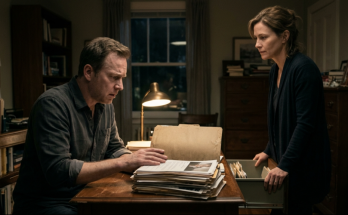
I gave my son $42,000 toward his house, helped cover his mortgage, and bought his wife a car. At Thanksgiving, barely any food remained when my turn came, while they happily discussed buying a lake house. I drove home quietly. The next morning, the bank manager showed me her screen: someone had tried accessing my account at 5:51 a.m. with the correct password.
I knew something was wrong before anyone passed the turkey.
Michael was standing beside my chair, laughing with a friend, when I reached the table. Usually he put a hand on my shoulder, asked about the drive, moved something out of my way. That afternoon he glanced at me and went on talking.
I pulled out the chair myself.
At sixty-seven, I was perfectly capable of sitting down without assistance. What bothered me was the place setting beside the kitchen door, squeezed between a man I barely knew and an extra chair holding three coats.
Across the room, my granddaughter lifted her hand.
“Hi, Grandma.”
“Hi, sweetheart.”
Emma was twelve. She had saved the seat next to her with her cardigan, but Brenda had moved it before I arrived.
“I needed to keep the couples together,” my daughter-in-law explained when Emma asked.
I set my purse beneath my chair. “This is fine.”
There were eleven of us: Michael, Brenda, Emma and me, two couples Michael and Brenda had known since college, and Brenda’s sister with her husband and teenage son. The dining table had been extended nearly to the sideboard.
Brenda had done a beautiful job. White candles, orange flowers, linen napkins. The turkey was already carved on a platter, arranged with rosemary around the edges. Beyond the windows, rain made dark patches on the patio.
I had offered to bring sweet potatoes. Brenda said the menu was handled.
When I arrived with flowers instead, she took them with a quick thank-you and left them beside the laundry-room sink. I knew because I went in there later to hang my damp coat.
At the table, she filled the water glasses along one side and stopped to answer her sister. Mine remained empty until Emma noticed.
“Dad, can you pass Grandma the pitcher?”
Michael handed it over without looking away from his conversation.
Nothing that happened was large enough to make a scene over. That was part of the difficulty. Each small thing could be explained away, and I had spent years providing the explanations myself.
By the time the casserole reached me, the serving spoon scraped the bottom. I took a little and passed it on. There were no rolls left in the basket.
“More in the kitchen?” I asked.
Brenda looked toward the oven. “I think that was all of them.”
Emma started to rise.
“Sit down, honey,” I said. “I have plenty.”
Michael was talking about a house near a lake in the Hill Country. Not buying one immediately, he said, just looking. Someone asked about the kitchen renovation Brenda had been planning.
“Spring, probably,” he answered. “We finally have some breathing room.”
I set down my fork.
On the first business day of every month, money went from my account into theirs. The arrangement had begun after Michael lost a job. He had been working again for more than a year.
I had asked twice when they expected to manage without the transfer.
Both times, the answer had been soon.
“Ruth, are you retired now?” the man beside me asked.
“Three years.”
“She was a nurse,” Michael said. “Thirty-one years. Mom loves telling hospital stories.”
I had not told one that evening.
The man asked which hospital, and for a few minutes we talked about the changes in Houston since his family moved there. Then Michael drew him back into the discussion about lake properties.
Emma caught my eye. She looked toward the empty breadbasket, then back at me.
I smiled so she would stop worrying.
When Brenda served dessert, my slice of pumpkin pie came down the table on a plate someone had already chipped. I ate it. The pie was good. I remember that because afterward I wanted to be fair, even in the privacy of my own thoughts.
The food had been good. There had been enough warmth in that room for everyone else.
At the door, Michael helped me into my coat while checking a message on his phone.
“Drive safe, Mom. Roads are wet.”
“Thank you for dinner.”
“Of course.” He looked back toward the dining room. “See you soon.”
He closed the door before I reached my car.
I drove home with the radio off.
Charles had been gone eight years, but in rain I still heard him reminding me to give the car ahead more room. At a long red light, I realized I was holding the steering wheel hard enough to hurt my fingers.
At home, I turned on the kitchen light and put the kettle on. Then I forgot about it until it began to whistle.
I made tea, carried it into the little room off the hallway, and opened the middle drawer of my desk.
My folder was where it always was.
I had kept household records there since Charles and I bought the house in 1989. Insurance renewals, receipts for major repairs, copies of checks. During my working years, I used the room for schedules and continuing-education assignments. Retirement had not cured me of keeping things in order.
Near the back were the records of what I had given Michael.
Forty-two thousand dollars toward the down payment on his first house in Katy. Eleven months of help with mortgage payments after the downsizing. Money for Brenda’s replacement car. Three years of Emma’s private-school tuition, paid directly to the school.
The monthly transfers had continued after the mortgage emergency ended. They were supposed to cover the gap while Michael settled into his new job.
I added the figures again, although I knew what they said.
The gifts were gifts. I had never asked him to sign a loan agreement, never expected repayment for helping my granddaughter stay in school. I could not honestly turn those decisions into debts because I was hurt.
But I could stop making them.
Under the tuition receipts lay an envelope from a financial consulting firm.
It had arrived three weeks earlier, addressed to me. The cover letter thanked Michael for requesting information about assistance with a parent’s finances. Enclosed were an intake questionnaire and a checklist of documents for an introductory meeting.
One section concerned arranging a financial power of attorney through an attorney. Another asked about property, retirement accounts and existing estate plans.
Nothing bore my signature.
I had called the number on the letter the day it arrived. The woman who answered confirmed that Michael had supplied my mailing address. I told her I had not requested their services.
She apologized and said she would mark the inquiry closed.
When I asked Michael about it, he laughed softly.
“Just information, Mom. Everybody needs a plan.”
“Then ask me before you make one for me.”
“All right. I should have mentioned it.”
I had accepted that answer because accepting it let me keep the son I wanted to believe I had.
Now I took out another paper: a telephone message from my attorney’s office.
Six weeks earlier, Robert Callaway had called to tell me Michael had asked whether a family could seek guardianship if an older parent began making questionable financial decisions.
Robert had not discussed my affairs with him. He had explained that he represented me and would not advise Michael against my interests.
“Has he raised any concerns with you?” Robert asked.
“No.”
“Then you may want to ask him what prompted the call.”
I had. Michael said he had been speaking generally after hearing about a client’s father.
Robert offered me an appointment. I said I would call if I needed one.
I sat at my desk on Thanksgiving night with those two pieces of paper side by side.
There had been no conversation about missed bills, unsafe driving or an inability to manage my home. Michael’s concern had appeared after I began asking when the monthly help could end.
I could not prove what he intended. I could see enough to stop pretending there was nothing to ask about.
At four the next morning, I gave up on sleep.
I made coffee in the anniversary mug Charles had given me eleven years earlier. The handle had a chip near the top; I always turned it away from my thumb.
On a legal pad, I wrote three things: stop the transfers, remove the extra cards, review the estate plan.
Then I wrote a fourth.
No decisions about me without me.
The bank website showed that my branch would be open Friday. I left a message for Robert’s office and waited until it was time to go.
Patricia was already inside when I reached the branch. I sat in the parking lot until the doors opened at nine.
She had helped me sort out accounts after Charles died. When she saw the folder under my arm, she led me to her office.
“Good morning, Ruth. What can we do?”
“I need to stop supporting my son’s household. And I need to know exactly who can get into my accounts.”
She pulled a pad toward her.
“Let’s take them one at a time.”
We canceled the recurring transfer scheduled for the beginning of December. November’s money had already gone through. I did not ask her to retrieve it.
My checking and savings accounts were in my name alone. Michael had never been an owner or signer on them, but years earlier I had given him my online password in case I needed help.
Patricia looked up when I told her.
“Has he been using it?”
“I don’t know.”
“With your permission?”
“Not anymore.”
She brought in the employee who handled online banking problems. We changed the login credentials, checked the phone number used for verification and ended the existing online sessions.
While reviewing the security history, the employee found a sign-in attempt from 5:51 that morning. It had not passed the additional verification step. No completed transfer appeared afterward.
“Can you tell who it was?” I asked.
“No, ma’am. This record doesn’t establish that.”
I looked at the time again. I had been awake, drinking coffee at my kitchen table. I had not been trying to sign in.
“Please keep a record of it,” I said.
Patricia waited until the employee left before asking whether I felt safe at home.
“Yes. I’m upset. I’m not in danger.”
“Do you want everything blocked temporarily while we review it?”
For a moment, I wanted to say yes. Freeze it all. Make everything stop.
Then I thought about the electricity bill, my insurance, the ordinary machinery of my own life.
“I want my access protected,” I said. “I still need to pay my bills.”
She nodded. We checked the scheduled payments and alerts together.
The credit cards required a call to the issuer. Michael and Brenda were authorized users on my account, an arrangement I had kept after the period when Michael was out of work.
I had meant those cards for emergencies. Over time, emergency had come to include home supplies, dinners and appointments Brenda said she had already booked.
With Patricia sitting across from me, I asked the issuer to remove both users and replace my own card number. The representative explained that I remained responsible for charges already properly made on the account.
“I understand.”
There was no satisfaction in hearing the balance. It was simply another bill I would pay for the last time under that arrangement.
The investment account was at a different company. Michael had called it our account often enough that I had begun using the phrase myself. The paperwork said otherwise: I was the owner. He had limited permission to view statements and was listed as a trusted contact.
From Patricia’s office, I called the firm and asked how to withdraw that permission and update the contact information. They sent me forms and began their own security review.
Patricia could not do that work for them. Robert would have to help with the estate documents. By the time I left, I had a short stack of confirmations and another list of things still to complete.
It was nearly eleven.
In the car, I sent Michael a message.
I have ended your and Brenda’s authorized-user access to my credit card. The December transfer is canceled. These are my decisions. Nothing is wrong with the bank. We can discuss it this afternoon.
I read it twice before pressing send.
Then I called Robert’s office again. His assistant returned my message while I was still in the parking lot. Robert was away for the holiday weekend but could speak by telephone that afternoon and see me Monday.
I took the appointment.
At home, I made a sandwich from the turkey breast I had cooked Wednesday and saved in the refrigerator. My phone vibrated before I finished spreading the mayonnaise.
Michael had called twice. His message said his card had been declined at a hardware store while he was picking up materials for a client.
Brenda wrote that she had an appointment that afternoon and had already given the salon the card number.
Please take care of this today.
I put the phone facedown.
A few minutes later Michael wrote, We need that transfer for the mortgage.
I answered that I would talk with him after lunch. I did not offer to send anything.
Shortly after two, his car pulled into my driveway. Brenda got out first. Michael followed, and through the rear window I saw Emma sitting behind him with her backpack on her lap.
She had brought it to Thanksgiving, too. There was usually a book in it and, lately, a sketchpad she let me see if I promised not to make a fuss.
Brenda knocked before Michael reached the porch.
When I opened the door, he held up his phone.
“Mom, what’s going on?”
“I explained in the message.”
“You can’t shut everything off like that.”
“Come inside if you want to talk.”
They entered. I stayed near the open door long enough to wave to Emma. She lifted her hand but remained in the car.
Michael put his phone on the coffee table as though he were setting down evidence.
“I was standing at the counter with a client beside me.”
“I’m sorry the timing embarrassed you.”
“You could have called.”
“I sent the message as soon as I finished. You hadn’t asked me about those materials.”
“I always put supplies on that card.”
“Yes,” I said. “You do.”
Brenda stood beside the couch, still holding her purse.
“We have payments arranged around that money. You know that.”
“I know you’ve come to depend on it.”
“So you understand why this is unreasonable.”
I sat in the reading chair by the window. “I understand why you’re upset. I’m still not sending it.”
Michael sat forward on the couch.
“If you needed to make changes, we could have worked out a plan.”
“I asked you in August. And again last month.”
“Things have been complicated.”
“You talked about a lake house yesterday.”
“We were talking. We haven’t bought anything.”
“And the kitchen?”
Brenda shifted her purse to her other hand.
“That renovation would protect the value of our house.”
“Then you’ll have to decide how to pay for it.”
Michael rubbed his forehead. “This isn’t like you.”
I reached for the folder on the side table.
“That’s what I want to talk about.”
I placed the consulting firm’s letter on the coffee table, facing him.
“You told me this was planning ahead.”
“It was.”
“Without asking what help I wanted.”
“That company sends information to everybody.”
“Not everybody’s son gives them an address.”
He picked up the letter, then set it down again.
Brenda said, “We thought it might make things easier.”
“For whom?”
“For all of us. If there were an emergency.”
“There hasn’t been one.”
Michael looked toward the window. “Nobody said there had.”
“Then why did you ask Robert about guardianship?”
He turned back to me.
“I told you. It came up because of a client.”
“You asked my lawyer whether questionable financial decisions could be a reason.”
“Mom—”
“Which decisions?”
He did not answer.
“Paying my own bills? Taking care of this house? Asking you to support your family?”
Brenda drew a breath to speak, but a knock came at the door.
Through the glass I could see Emma.
Michael went to let her in.
“I told you to wait,” Brenda said.
“I need the bathroom.”
“You know where it is, sweetheart,” I told her.
She went down the hallway. Michael stayed beside the door until she was out of sight, then came back to the couch.
“We shouldn’t be doing this with her here.”
“Then lower your voice,” I said.
He sat down again.
“I’m worried about you. You live alone. You get upset, and then suddenly everything changes.”
“I stopped two extra cards and a gift I can no longer afford to keep making at this rate.”
“You can afford it.”
I looked at him.
He looked down at the letter.
From the hallway came the sound of water running, then the bathroom door opening. Emma stopped near the end of the couch.
“Grandma?”
“Yes?”
“Dad was talking about your house this morning.”
Michael straightened. “Emma.”
She twisted one backpack strap around her fingers.
“I was getting cereal. He was in the kitchen.”
I kept my voice quiet. “What did you hear?”
“He said if you kept being difficult, there were legal options.” She glanced at her father. “And the house was the biggest asset, so it needed to be secured.”
Brenda put her purse down.
“You heard part of an adult conversation.”
“I know.” Emma’s eyes filled. “But I heard that part.”
I stood and went to her.
“Thank you for telling me. You don’t need to explain anything else.”
Michael had risen, too.
“I was talking to a friend. I was frustrated. That isn’t a plan to take your house.”
“Then explain it to me,” I said.
“People plan for these things. You’re alone here. If something happened—”
“What did you mean by difficult?”
He looked at Emma, then at Brenda.
I waited.
Finally he said, “You said last week you might stop helping.”
“Yes.”
“We have a lot tied up in this, Mom.”
“In what?”
He made a small movement with his hand, taking in the room, the folder, me.
I had known he counted on the transfers. Until that moment, I had not understood how thoroughly he counted on everything else.
“Go sit in the kitchen, honey,” I told Emma. “There are cookies in the blue tin. I’ll be there shortly.”
She went reluctantly. I waited until she was through the doorway before speaking again.
“My house is not security for your bills.”
“Nobody said it was.”
“You just did.”
Brenda picked up her purse. “You’re making this sound ugly.”
“I’m trying to understand it.”
“You’ve helped us for years. Then you invite a child into an argument and make us look like we’ve been stealing.”
“I haven’t said you stole. The money I gave you was yours. The money I haven’t given you is mine.”
Michael was looking at the folder again.
“There was an attempted sign-in to my bank account before six this morning,” I said. “It didn’t get through the verification. Was that you?”
He looked at me for a long moment.
“Yes.”
Brenda turned toward him.
“I wanted to check whether the transfer was still set up,” he said.
“You could have asked me.”
“You gave me the password.”
“In case I needed help. I wasn’t asking for help at five fifty-one this morning.”
“I didn’t move anything.”
“I know. I checked.”
He sat back down.
I took the letter off the coffee table and returned it to the folder.
“Your cards are removed. Next month’s transfer is canceled. Robert and I are reviewing my estate plan. If I need assistance managing my affairs, I will arrange it myself.”
“You’re changing your will?” Brenda asked.
“I’m reviewing it with my lawyer.”
Michael stared at the carpet.
“After one dinner?”
I almost laughed. It came out as a breath.
“No, Michael. After years of saying soon. After letters I didn’t request and conversations you didn’t want me to hear.”
Brenda headed for the door.
“Emma, get your things.”
From the kitchen, Emma asked, “Can I stay with Grandma for a while?”
“Get your—”
“Let her stay,” Michael said.
Brenda stopped with her hand on the knob.
He looked at me. “Can you bring her home later?”
“Yes. Around four.”
He nodded.
Brenda went outside. Michael picked up his phone, slipped it into his pocket and stood in front of me without speaking.
Then he said, “I didn’t think it would get like this.”
I could not tell whether he meant his choices or my refusal.
He left before I asked.
Emma was at the kitchen table with the cookie tin open in front of her. She had not taken one.
“Am I in trouble?”
“Not with me.”
“Mom’s really mad.”
I pulled out the chair beside her.
“You shouldn’t have had to hear that conversation. And you don’t have to report anything else to me.”
“But if they—”
“The adults need to work this out. You get to be twelve.”
She looked at the tin.
“I’m sorry.”
“Oh, honey. You haven’t done anything wrong.”
I put a cookie on a plate and slid it toward her. After a moment she broke it in half.
“Are you still going to come to my winter concert?”
“If I’m invited.”
“I’m inviting you.”
“Then I’ll be there.”
She ate the smaller half. I put on the kettle, and we talked about the song her class was practicing. When Robert called, I took the phone into my office and closed the door.
He listened without interrupting while I described the morning and the argument.
“First,” he said, “that packet did not give Michael authority. You didn’t sign anything. And asking about guardianship isn’t obtaining it. A court would need a proper basis. Disagreeing about money does not establish incapacity.”
I sat down at my desk.
“I know enough to understand that. It still frightened me.”
“Of course it did.”
We discussed what he would need Monday. He asked me to bring account statements, beneficiary information and the existing will. He would check whether any older document gave Michael authority I had forgotten about.
“Don’t promise yourself we can finish everything in one visit,” he said. “We’ll do the urgent pieces first and make sure the rest fits together.”
That was exactly what I wanted to hear.
At four I drove Emma home. There was still light in the sky, a dull silver behind the clouds.
Michael opened the door before she reached it. He thanked me for bringing her. Brenda did not appear.
Emma turned on the front step and waved with both hands.
I waved back.
Monday morning, Robert met with me alone.
He asked what I wanted, then asked again in a different way. I did not mind. I wanted the documents to reflect a decision I could explain when I was rested, not simply an argument I was still hearing.
“I need what I have for the rest of my life,” I told him. “Whatever is left afterward, I want it protected for Emma.”
“Do you want her parents managing it?”
“No.”
“And if Michael apologizes?”
I looked at the photograph of Robert’s grandchildren on the bookcase.
“I hope he does. That doesn’t mean I want him in charge of her inheritance.”
We worked through the house, my savings and the investments Charles and I had built over ordinary working lives. I had no hidden fortune. I had a paid-off home, retirement income and enough put aside to have choices if I became ill or needed help.
Giving away the margin had become a habit. I was ending it while there was still a margin to keep.
The new will would leave the property passing under it to a trust for Emma after my death, with an independent trustee to manage it until she turned twenty-five. The terms would allow appropriate spending for her needs before then.
Robert explained the costs and responsibilities of using a professional trustee. We reviewed the choice rather than treating independence as something that came free.
My retirement accounts required separate attention. A new will would not, by itself, change their beneficiary designations. Robert would coordinate those instructions with the account provider and review the consequences before I signed anything affecting them.
“I don’t want to empty them into a trust today,” I said.
“You don’t need to.”
I went home with notes, not a stack of supposedly finished legal work.
On Tuesday, after reviewing the drafts and asking my questions, I returned to execute the revised will with the required formalities. Other account paperwork continued afterward. I kept a checklist and marked off each confirmation as it arrived.
I did not send Michael a copy.
Wednesday was the fifth morning after the argument. I was clearing my breakfast plate when someone knocked.
Michael stood on the porch in a gray sweatshirt. He had not called first, but he stayed outside until I answered.
“Is this a bad time?”
“No.”
“Could we talk?”
I stepped back.
He sat at one end of the couch. His hands moved toward his pocket, then stopped. He left his phone there.
“I’ve started this about ten different ways in the car.”
I sat in my chair.
“Try the plain one.”
He rubbed his palms on his jeans.
“I’m sorry.”
I waited.
“For Friday. For what Emma heard. For going into your account.”
“And Robert?”
He nodded without looking up.
“That too.”
The kitchen clock ticked through several seconds.
“I kept telling myself I was making sure things wouldn’t fall apart,” he said. “And every time something got tight, I put you in the budget instead of changing anything.”
“You and Brenda both have income.”
“I know.”
“So what were you afraid would fall apart?”
He looked toward the window.
“The house. What people think. Brenda and me fighting about what we can actually afford.” He paused. “It was easier to tell you we needed another month.”
“You let me believe it was temporary.”
“Yes.”
“And when I wanted to stop?”
He pressed his fingers together.
“I started looking for a way you couldn’t.”
I looked away first. Hearing him admit it hurt more than hearing the excuses.
He did not rush to soften it.
“I don’t know how I got from asking you for help to thinking I should have a say over your house.”
“You got there a little at a time.”
He nodded.
“Brenda thinks you’re doing this to punish us.”
“What do you think?”
“I thought that Friday.”
“And now?”
“I think we’ve been spending money that wasn’t ours to count on.”
I folded my hands in my lap.
“Did you apologize to Emma?”
“Yes. I told her she wasn’t wrong to tell you.”
“Good.”
“She asked if you’d still come to her concert.”
“I told her I would.”
He swallowed and looked down again.
“I don’t want her thinking this is how you treat your mother.”
“Then you have some work to do.”
“I know.”
He stayed another twenty minutes. He told me he had started listing their payments and canceling things they could do without. He did not present the list as an emergency for me to solve.
He did not ask what the will said.
When he stood to leave, I stood too.
“I love you, Michael.”
His eyes reddened.
“I love you too, Mom.”
“The transfer is still canceled.”
“I understand.”
I wanted to believe him. I also wanted to keep the confirmations in my desk drawer. For once, I allowed myself both.
At the door, he asked whether Emma could call more often, just to talk.
“She doesn’t need a reason,” I said.
He nodded, then went down the steps.
There was no transformation I could verify by watching him walk to his car. There was a man who had said something difficult and would have to decide what to do after saying it.
In the weeks that followed, the December transfer did not leave my account.
Michael did not call to ask whether I had forgotten.
The investment firm confirmed the access changes. Robert’s office helped finish the remaining beneficiary paperwork, and I filed the acknowledgments with the signed estate documents. My own bills continued to be paid.
Brenda sent me the time and location of Emma’s concert without a greeting. I thanked her for the information. We had not settled anything between us. I did not pretend we had.
At the concert, Michael saved a seat beside him.
Afterward, Emma pushed through the crowded school hallway with her folder clutched to her chest. She was searching the adults until she saw me.
“You came.”
“I said I would.”
She leaned against me while we waited for her parents to finish speaking with the music teacher.
A few Sundays later, Michael brought her over with groceries for lunch. He set the bags on my counter and handed me the receipt by habit, then caught himself.
“Sorry. That’s mine.”
He put it in his pocket.
I took out the bread.
We ate ordinary sandwiches at my kitchen table. Emma showed me her drawings. Michael washed the plates before they left. Nobody discussed a payment, an account balance or a problem that required my checkbook.
I enjoyed the visit. When they went home, I was tired enough to take a nap, and I did.
One morning after that, I woke before sunrise and went to the kitchen to make coffee.
Outside, the southern magnolia still held its dark, glossy leaves. Charles had planted it the spring Emma was born. She had been four when he died, old enough to remember the watering can he let her carry and the way he pretended it took both of them to lift it.
I had a photograph of the two of them beneath that tree. He was bent beside her, one hand steadying the can while she poured water mostly onto his shoe.
My phone lit up while the coffee brewed.
Good morning, Grandma. Look what I finished.
Emma had sent a drawing of the tree, with my front window behind it. She had included the crooked little bird feeder Charles never got around to straightening.
I enlarged the picture with my fingers.
You got the feeder exactly right, I wrote.
She sent back a laughing face, then a little yellow sun.
I carried my coffee to the porch. Down the street, a neighbor was trying to persuade her small brown dog to leave a damp pile of leaves. She waved when she saw me.
For years, I had begun mornings by checking whether Michael needed something. Even on quiet days, I kept part of my attention waiting for the phone.
That morning I answered my granddaughter, set the phone beside my chair and watched the dog finally give in.
The coffee was still hot. I drank it while it was.