The day my father died, he smelled like antiseptic and old wool.
He had insisted on wearing his cardigan in the hospital bed—the brown one with the missing button on the left cuff—because he said hospitals made him feel like a specimen, and at least in his own clothes he felt like a man.
I remember the weight of his hand on mine, papery and cool, the grip weaker than I expected from someone who had once carried two of us on his shoulders through the county fair.
“Take care of your mother,” he said.
Not I love you. Not I’m proud of you. Just that. A directive. A transfer of duty from one set of hands to another.
I was thirty-one years old. I said, “I will, Dad.”
He died at 4:17 in the morning. By 4:25, my brothers were already arguing about who got the truck.
My name is Daniel Marsh. I am the second of four sons born to Raymond and Evelyn Marsh of Carterville, Ohio—a town best described as the kind of place people are always just about to leave. My father worked thirty years at the county water authority.
My mother taught third grade until her knees gave out. They were not wealthy people. They were not unhappy people. They were simply people who believed that family was the architecture of life, the load-bearing walls, the thing you didn’t knock down no matter how cramped the rooms felt.
My brothers: Patrick, the eldest, who moved to Phoenix in 2003 and called on holidays if he remembered. Marcus, the third, who lived forty minutes away in Columbus and was always in the middle of something—a renovation, a business idea, a crisis that somehow never resolved. And Brendan, the youngest, who at thirty-four still had the face of a boy who expected the world to find him charming, and was baffled when it sometimes didn’t.
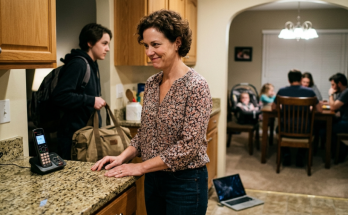
I lived eleven minutes from Mom’s house. That was the first reason I became the one who took care of her. Geography is destiny in families like ours.
The second reason was the promise.
For the first three years after Dad died, I told myself it was temporary. Mom just needed help getting back on her feet. She was sixty-eight, still sharp, still capable, but the house required things—a new furnace, repairs to the back porch, property taxes that had crept up while she wasn’t watching. Her teacher’s pension covered her basic needs but left almost nothing for emergencies, and emergencies, I was learning, were the dominant language of old age.
I started small. Groceries. Her car insurance. The occasional medical co-pay.
I called Patrick in Phoenix and told him what I was contributing. He said, “That’s really good of you, Danny. She’s lucky to have you nearby.” Then he asked if I thought the Cleveland Browns would make the playoffs.
I called Marcus and mentioned that Mom’s furnace had cost $4,200 to replace. He said, “Oh man, that’s brutal. Hey, do you know anything about refinancing? My mortgage guy is saying—” and the conversation became about Marcus for the remaining fourteen minutes.
Brendan, when I texted him about the furnace, responded with a thumbs-up emoji. One thumb. Pointed skyward. The full extent of his fraternal contribution for that quarter.
By the fourth year, I had stopped calling them. Not from bitterness, I told myself, but from efficiency. It took less energy to simply pay for things than to navigate the elaborate theater of asking for help from people who had perfected the art of not quite being available.
I kept records, though. I’m an accountant by profession—have been for twenty years, numbers are my native language—and so I documented everything. Not because I planned to use it. I think at first I kept records because it was the only way to make the invisible visible, to give weight and form to a sacrifice that everyone else seemed content to pretend wasn’t happening. Spreadsheet by spreadsheet, receipt by receipt, I built an archive of devotion. Twelve years of groceries and rent supplements and medical bills and home repairs and prescription pickups and emergency room parking fees and physical therapy co-pays and the $340 I spent on a specialized walker after Mom slipped in the bathroom and bruised her hip and was too proud to tell me for four days.
The running total climbed. Quietly. Steadily. Like water rising in a basement.
The surgery happened in March of 2019. Mom had been having abdominal pain for weeks, dismissing it as indigestion, and by the time I drove her to the ER it had become something considerably more serious—a bowel obstruction that required emergency intervention. The surgeon was a young woman named Dr. Feltner who had the calm, focused manner of someone who had stopped being frightened by human vulnerability and simply gotten to work. She told me it was serious but manageable. She told me to get some sleep. I slept in the waiting room chair for two hours and woke up with a crick in my neck that lasted six weeks.
Mom was in the hospital for eleven days. Rehab for three weeks after that. The bills came in waves over the following months: the surgery itself, the anesthesiologist, the rehab facility, various specialists who had briefly entered the room and apparently charged for the experience. When it was all tallied, the total for that episode alone—hospital, surgery, rehab, medications, the home health aide I hired for six weeks post-discharge—was $45,000.
I paid it. All of it. Because Patrick was in Phoenix and Marcus was renovating his kitchen and Brendan sent a card with a cartoon bear on it that said Feel Better Soon!
It was during those weeks—the long weeks of hospital waiting rooms and rehab facility parking lots and late nights filling out insurance paperwork—that Mom and I had The Conversation.
She was in the rehab facility, growing stronger but still frightened in the way that serious illness frightens people who have never had to consider their own mortality too closely. She reached for my hand the same way my father had, and I felt the echo of that moment with a clarity that made my chest ache.
“Danny,” she said. “What I’ve put you through.”
“You haven’t put me through anything, Mom.”
“I know what this costs. I’m not a foolish woman.” She paused. “Your father would have wanted all four of you to share this.”
“Dad’s not here,” I said, and then wished I’d said it more gently.
“No.” Her eyes went somewhere private. “He’s not.” She was quiet for a long time. Then: “I want to make this right. What I owe you. I want to put it in writing.”
I told her she didn’t need to do that.
She told me she did, and Evelyn Marsh, when she used that tone, was not a woman you argued with successfully.
I called my attorney, a methodical and thorough man named Gerald Okafor, who had handled my father’s estate and knew the family’s situation well. I explained what Mom wanted. He drafted a document—a formal promissory note, structured properly, specifying the amount owed, the interest rate, the collateral, the terms. The amount we settled on was $200,000, which was, if anything, a modest accounting of what I had actually spent and contributed over the years. Gerald brought it to the rehab facility. Mom read it carefully. She asked two questions. She signed it in the presence of two witnesses and a notary.
The house, a three-bedroom Colonial on Prentiss Street that my parents had bought in 1979 for $67,000 and that was now worth somewhere between $280,000 and $310,000 depending on who you asked, was listed as collateral.
I put the document in a folder, filed it in my home office between Medical—Mom and Property—Mom, and tried not to think about it as anything other than a formality.
Mom recovered. This is the part of the story that should be uncomplicated and joyful, and for a while it was. She regained her strength, her appetite, her capacity for strong opinions about how I loaded the dishwasher. She joined a book club. She started attending the senior center on Tuesday mornings. She was, by any measure, herself again—which was a gift so large I sometimes forgot it was fragile.
My brothers drifted back into orbit once the crisis had passed. Patrick flew in for a weekend that summer and took Mom to dinner twice. Marcus started calling more regularly. Brendan visited on her birthday and fixed the screen door that had been hanging loose for two years, and Mom praised him for it as though he had built the house from raw timber with his own hands.
I said nothing. I watched. I paid her October heating bill and said nothing.
The change in atmosphere began about eight months before the will announcement. Mom became vague about certain subjects—her finances, her plans for the house, her conversations with her attorney. She deflected questions with the practiced ease of someone managing information she wasn’t ready to release. I noticed but didn’t press. She was entitled to her privacy. She was entitled to make her own decisions.
I told myself this.
I told myself this right up until the Sunday afternoon in September when she sat the four of us down in her living room—Patrick home for a visit, Marcus there with his wife, Brendan slouched on the couch with the particular confidence of a man who has never expected bad news—and announced that she had updated her will.
Equal shares. Twenty-five percent each.
The room received this information in different ways. Patrick nodded slowly, the nod of a man performing thoughtfulness. Marcus said, “That seems fair,” in the tone of someone agreeing that a restaurant had been overpriced. Brendan smiled, and in his smile I saw something I had not seen in years of watching him accept things he hadn’t earned—I saw awareness. He knew what this meant. He knew what I had given. And he was smiling anyway.
I said, “Mom. I’ve spent two hundred thousand dollars taking care of you.”
The room changed temperature.
Mom said, “Your brothers are family too.”
Brendan said, “Fair is fair.”
And that’s when I stood up.
The folder was in my car. I had not brought it into the house with any intention of using it that day—I had been carrying it for weeks, moving it between my car and my office and back again, because some part of me had known that this conversation was coming and had wanted to be ready for it without being the kind of person who walked into his mother’s house ready for battle.
I set the folder on the coffee table and opened it.
Twelve years of receipts. Bank transfer records organized by year and category. Medical billing statements. The physical therapy invoices. The grocery delivery confirmations. The rent supplement checks with Mom’s signature on the memo line. A ledger, printed and annotated, showing every dollar, every date, every purpose.
And underneath all of it, the promissory note.
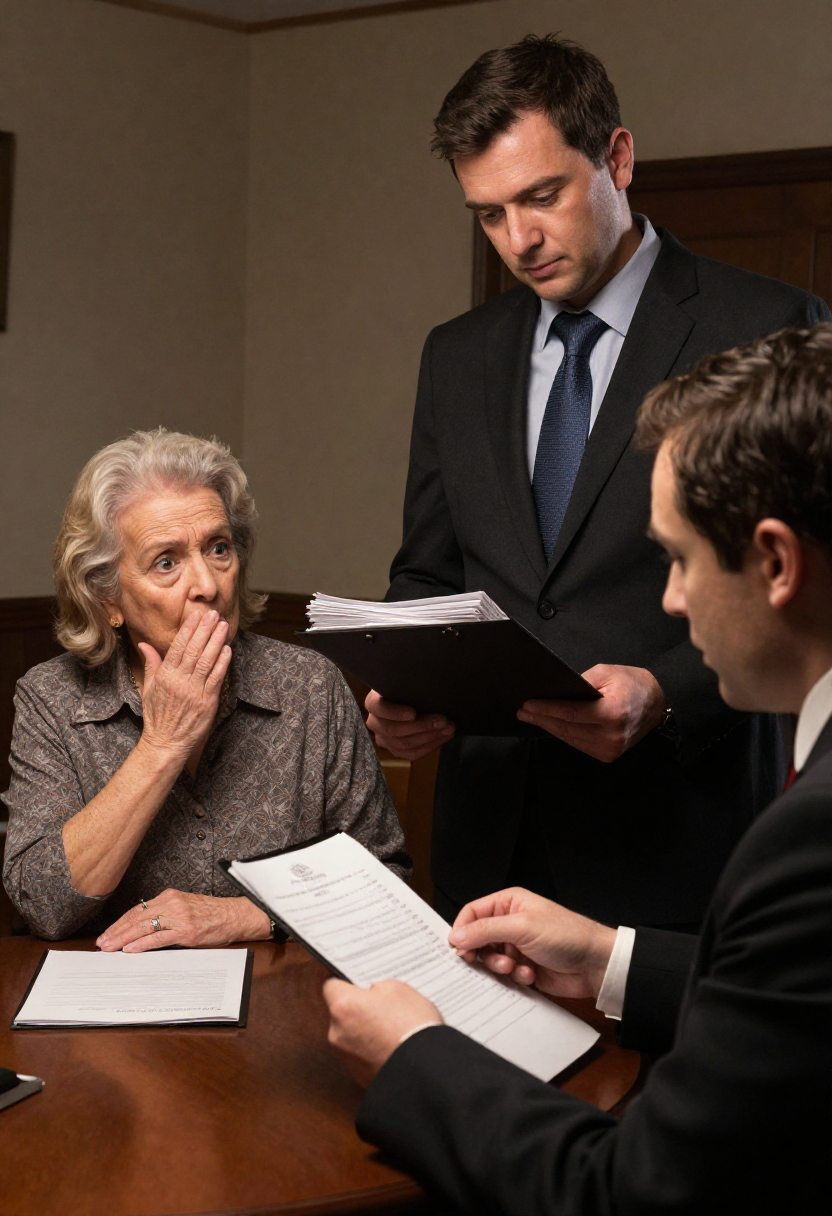
Mom’s attorney—a woman named Sandra Holt who had driven over to help explain the will revisions to all of us and was now sitting in the armchair by the window with the expression of someone who had witnessed this kind of scene before and had not enjoyed it then either—leaned forward when I placed the promissory note on the table. She picked it up. She read it carefully. Her expression did not change, which I recognized as the professional mask of a person whose expression wanted very much to change.
Mom had gone pale the moment she saw it.
“Where did you get that?” she asked, though I think she already knew.
“You signed it,” I said. “After your surgery. In the rehab facility. Gerald Okafor drafted it. There were two witnesses and a notary.” I said this quietly. I had promised myself I would say it quietly, without heat, the way you state a fact that doesn’t require the assistance of your emotions to be true.
“I was sick,” Mom said. “I was—I wasn’t myself.”
Sandra Holt looked up from the document. “Mrs. Marsh, at the time of signing, were you on any medications that would have impaired your judgment? Were you under duress?”
Mom opened her mouth and closed it again.
“I can answer that,” I said, “because I was there and I kept notes. She had been off pain medication for six days at the time of signing. She was alert and oriented. She asked two specific questions about the interest rate and the collateral valuation, which Gerald answered directly before she signed. She was not impaired. She was grateful, and she wanted to do the right thing, and she did it.”
Silence.
Patrick was looking at me with an expression I hadn’t seen from him since we were teenagers—something close to respect, though it was tangled up with unease. Marcus was very still. Brendan had stopped smiling.
“Danny,” Mom said, and her voice had gone small in a way that hurt me, genuinely hurt me, because I had not come here to hurt her. I had come here because for twelve years I had kept my word to a dead man while three other people had kept nothing, and I was no longer willing to be the person who absorbed the cost of everyone else’s indifference and called it love. “Danny, I didn’t think you’d—”
“I know you didn’t,” I said. “That’s what I need you to understand.”
Sandra Holt asked us to take a short break. She stepped outside to make a phone call. When she came back in, her expression had settled into something professionally grave.
She explained, carefully and without editorializing, that the promissory note appeared to be a valid legal document. That it created an obligation that would, in the event of Mom’s death, constitute a claim against the estate before any distribution to heirs. That the house listed as collateral was, in practical terms, the primary asset of the estate. That she would need to consult with a colleague to fully assess the implications, but that her initial read was that this document significantly complicated the equal-division plan.
Patrick said, “Can she contest it?”
Sandra said, “She can attempt to. It would require demonstrating incapacity or duress at the time of signing, and from what I’m hearing, that will be a difficult case to make.”
Brendan stood up and said he needed some air. He went to the kitchen. I heard him open the refrigerator, close it, open it again. The sound of a man recalibrating.
Marcus looked at me with an expression I couldn’t entirely read. Not anger, exactly. Something more complicated—the face of a man who has, for the first time, been asked to see himself clearly in a mirror he has spent years avoiding.
“How much did you actually spend?” he asked.
“Over twelve years? The documented amount is $201,400 and some change. That’s what’s on the note—I rounded down.”
Marcus nodded once. A slow, reluctant nod.
Mom was crying. Not dramatically—she wasn’t a dramatic woman—but steadily, the way it rains in October, without urgency, just the long gray fact of it. I sat down beside her and I took her hand, and I hated the fact that I had made her cry, and I also knew that if I walked out of this room without having said what needed to be said, I would be making a different kind of promise to a different dead version of myself—the version who kept his head down and wrote the checks and told himself that his reward was the private knowledge of his own goodness.
I was tired of private rewards.
“Mom,” I said. “I’m not doing this to take the house from you. I’m not doing this to punish you. I’m doing this because I need you to see what happened. I need everyone in this room to see it.”
She turned to look at me, her eyes wet. “I do see it.”
“Then why?” I asked, and this was the question I had carried for years, wrapped up carefully so it wouldn’t detonate in the wrong moment. “Why is it equal? After everything, why is it equal?”
She was quiet for a long time. Outside, the October light was thinning toward afternoon, that particular quality of fall light that makes everything look like memory.
“Because I’m their mother too,” she finally said. “And because I was afraid.”
“Afraid of what?”
“Of them.” Her voice was almost a whisper. “Of losing them. If I left you more, they’d—Patrick would stop calling. Marcus would be angry. Brendan—” She stopped.
“I would still be here,” I said. “I would still call. I would still show up. You know that.”
“Yes,” she said. “I know that.”
The weight of that admission sat in the room. The terrible arithmetic of it: she had discounted my loyalty because she knew it was unconditional. She had taken the surest thing in her life and used its certainty against itself.
I think Patrick understood it too, in that moment, because he said, quietly, from across the room: “Danny. I’m sorry.” Just that. No elaboration. But the words were real—I could hear the absence of performance in them—and they landed differently than I expected.
Marcus said, “I should have done more. There’s no—I can’t explain it. I should have done more.”
Brendan came back from the kitchen. He stood in the doorway and looked at me and said nothing for a long moment. Then: “What do you want to happen?”
What I wanted—what I had always wanted, at the bottom of everything, beneath the spreadsheets and the receipts and the legal document I had filed between two manila folders—was to not be alone in this. To have had, at some point over twelve years, a single brother who called and said, hey, let me cover this one. To have received, on some ordinary Tuesday, a text that said, Mom mentioned her heating bill is high, I’m sending her something.
That was what I wanted. A thing that could no longer be given.
What I asked for was different.
I told them I didn’t want to sue my own mother. I told them the note was real and the obligation was real, but that what I wanted was acknowledgment and something approaching fairness—not charity, not pity, but the basic recognition that the distribution of inheritance should account for the distribution of contribution.
Sandra Holt mediated the conversation that followed. It went on for nearly three hours. Patrick flew back to Phoenix the following morning and called me from the airport to say he’d transfer $25,000 into a joint account for Mom’s ongoing care. Marcus said he would take on the monthly grocery and utility payments going forward. Brendan agreed to handle all the home maintenance and to be the backup when I wasn’t available—a commitment that had a structural accountability to it now, witnessed by everyone in the room.
And the will.
Mom called Sandra two weeks later and revised it. Not dramatically. Not punitively. She left the house to all four of us, but specified that the first $150,000 of its value would be offset against my share as satisfaction of the promissory note—meaning, in practical terms, that I would receive the house outright and my brothers would divide the remaining assets. Given the estate’s likely value, it wasn’t a financial windfall. It was a recognition.
That was enough.
I want to tell you that after that afternoon everything changed in the bright, clean way that change happens in stories. That my brothers became different men. That our Sunday dinners became warm and consistent. That Brendan showed up, reliably, with his toolbox and his labor and his slowly maturing understanding that family is not a status but a practice.
The truth is more textured than that.
Patrick calls more. Not every week, but often enough that I’ve stopped being surprised by it. He flew back in February to spend a long weekend with Mom—not for a holiday, not for an occasion, just because. I heard them laughing in the kitchen about something I wasn’t privy to, and I stood in the hallway for a moment and let myself feel glad about it.
Marcus is handling the groceries. He sometimes forgets, and Mom calls me, and I handle it without resentment because Marcus-who-sometimes-forgets is an improvement over Marcus-who-doesn’t-think-about-it-at-all, and improvement is its own kind of thing.
Brendan fixed the water heater in April. He called me afterward and said, “The pressure valve was completely shot. Did you know about that?” He sounded genuinely proud of himself. I told him I hadn’t known. I thanked him. I meant it.
My father died with his hand in mine and a request on his lips. Take care of your mother.
I took it as an instruction to carry alone. Maybe that was his fault, for directing it only at me. Maybe it was mine, for not understanding that a promise doesn’t require you to be the only person keeping it. Maybe it was simply the nature of families—the way we fall into roles as children and then spend our adult lives performing them with the skill and the resentment of long-typecasted actors.
I kept the folder. I still have it. Twelve years of receipts in acid-free sleeves, the promissory note behind a clear cover sheet. I don’t know exactly why I’ve kept it. Perhaps because the discipline of documentation is how I learned to value my own life—the knowledge that I had been here, that I had shown up, written down, accounted for.
Or perhaps because I want to remember the afternoon I sat in my mother’s living room and said: I see what happened. I need you to see it too.
My mother called me last Thursday. She wanted to know if I could drive her to the eye doctor on Tuesday. She mentioned that she had seen a recipe for the lemon cake my father used to like, and did I want to come over Saturday so she could make it.
I said yes to both.
She paused before hanging up, that particular pause she sometimes takes when she’s deciding whether to say the next thing.
“Danny,” she said. “I should have said it sooner. But I see you. I see what you gave.”
I held the phone for a moment in the quiet of my car.
“I know, Mom,” I said.
And I drove to her house, eleven minutes away, for the first time in a long time without the weight of invisibility.
The promissory note sits in my filing cabinet between two manila folders. It has never been exercised. Some documents exist not to be used, but to say: this was real. What happened here was real. I was here.