The Name Behind the Door Daniel was silent for three seconds. Not the silence of a frightened man. The silence of a man calculating.
Then he said, almost lazily, “You’re making a mistake.” I looked at Clara. She had gone completely still. I could see the memory of countless nights reflected in her eyes—the waiting, the apologies, the promises that tomorrow would be different.
But there was something else there now. Recognition. She knew that voice. It was the voice Daniel used when he believed he still had control.
“I don’t think you understand what you’ve done,” he continued. “You’ve interfered in a family matter. You’ve taken my child without my permission. You’ve encouraged my wife to make false allegations.”
“You were told that Clara and Sophie are protected under an emergency order,” I said.
A pause.
Then a soft laugh.
“You really should stop pretending to be a lawyer.”
Clara looked at me sharply.
I said nothing.
Daniel continued.
“I know people in the courthouse. I know people in the police department. I know exactly how these things work. By tomorrow morning, Clara will be explaining to a judge why she lied.”
“Is that a threat?”
“No.”
His voice became colder.
“It’s a prediction.”
The call ended.
For several seconds, neither Clara nor I moved.
The only sound in the room was the rain.
Then Clara whispered, “Mom?”
“Yes?”
“Why did he say you were pretending to be a lawyer?”
I looked at her.
“Because I never told him I was one.”
She swallowed.
“You never told him anything.”
“No.”
“Then how did he know?”
That was the first moment I felt the case changing beneath our feet.
Until then, I had believed I was dealing with a violent husband who had become frightened because his wife finally escaped.
Now I wondered whether Daniel had been frightened long before Clara ever left him.
And if so, what exactly had he been afraid of?
The next morning, I woke before dawn.
I sat alone in my study with a cup of coffee growing cold beside me.
On the wall were photographs of my life before the bench.
Clara at eight years old.
Clara at sixteen.
Clara on her college graduation day.
And Sophie, four years old, smiling with two missing front teeth.
I stared at that last photograph for a long time.
Then I opened a secure notebook.
I did not write Daniel’s name.
I wrote:
MERCER, VALE & KNOX
Underneath it, I wrote:
VERIFY EVERYTHING.
I had learned long ago that power was rarely as frightening as secrecy.
People could survive being challenged.
They became dangerous when they believed no one would ever discover what they were hiding.
At 6:17 a.m., my private phone rang.
It was my clerk.
“Judge Hart?”
“Yes.”
“We have a problem.”
I straightened.
“What kind of problem?”
“There was an overnight filing in the county court involving Clara Cross.”
My hand tightened around the coffee cup.
“Who filed it?”
“Daniel Mercer.”
I closed my eyes.
“Mercer?”
“Yes.”
I looked again at the name I had written in my notebook.
Mercer.
Not just his firm.
His own name.
“Send me the filing,” I said.
“I already did.”
I opened the secure message.
The document was titled an emergency petition for temporary custody.
The allegations were predictable.
Daniel claimed Clara had suffered an emotional breakdown.
He described her as unstable.
He claimed she had become paranoid.
He said she had “fabricated injuries” after an argument and had fled the home with Sophie.
But then I reached the final page.
My breath caught.
The document contained a paragraph about me.
Not Judge Evelyn Hart.
Evelyn Cross.
My daughter’s mother.
The man had discovered my identity.
And he had included it in a court filing.
He wrote that Clara’s mother was “a highly influential federal judicial officer who may attempt to improperly interfere with the proceedings.”
I stared at the screen.
There are moments in a judge’s life when anger becomes almost physical.
This was one of them.
But I knew better than anyone that anger was exactly what could destroy a case.
I did not touch the filing again.
Instead, I called the appropriate judicial ethics office and disclosed the entire situation.
Then I contacted the judge handling the family proceedings through the proper channels.
I would not preside over anything involving Clara.
I would not influence anyone who did.
I would not give Daniel the satisfaction of turning his accusations into evidence.
But I would protect my daughter as her mother.
There was a difference.
And I intended to keep it.
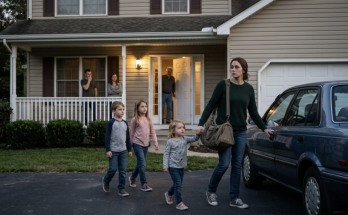
At 8:05 a.m., Clara walked into the kitchen holding Sophie.
My granddaughter was still wearing her pajamas.
She looked sleepy.
“Grandma?”
I smiled.
“Yes, sweetheart?”
“Are we staying here?”
I crouched down.
“For a little while.”
“Is Daddy coming?”
Clara froze behind her.
I looked at Sophie.
“Your mommy and daddy are having some grown-up problems.”
“Did Daddy do something bad?”
Clara’s eyes filled with tears.
I could see her struggling to find an answer that would not place an adult burden on a four-year-old.
So I said gently, “Sometimes adults make choices that aren’t safe.”
Sophie thought about this.
Then she whispered, “Daddy was yelling again.”
Clara closed her eyes.
I looked at her.
“Again?”
She nodded.
Sophie had said it casually.
But the word struck like a hammer.
Again.
Not once.
Not yesterday.
Again.
“How long has she heard him yelling?” I asked quietly.
Clara shook her head.
“I don’t know.”
That answer frightened me more than anything Daniel had said.
At 9:40, the victim advocate called.
“There’s something you need to know.”
“What?”
“Clara’s hospital records have already been requested.”
“By whom?”
“The request came through a law firm.”
“Mercer, Vale & Knox?”
“Yes.”
I felt the room go cold.
“That’s impossible,” Clara whispered.
The advocate continued.
“The request claims they represent Daniel in a pending family matter and that the records are relevant to custody.”
“Did the hospital release anything?”
“No. The records were flagged because of the protective order.”
I exhaled slowly.
“Thank you.”
After the call ended, Clara stared at me.
“He’s trying to get everything.”
“He’s trying to control the story.”
“He’ll say I’m lying.”
“He already is.”
“What if people believe him?”
I took her hand.
“Then we give them facts.”
She looked down.
“I don’t know if I can do this.”
“Yes, you can.”
“But I’m scared.”
“I know.”
“You sound so certain.”
“I’ve spent my entire career listening to people who were terrified to tell the truth.”
She looked at me.
“And what did you learn?”
I paused.
“That fear doesn’t mean someone is lying.”
That afternoon, something unexpected arrived.
A small envelope.
No return address.
It had been hand-delivered to the security desk outside my home.
Inside was a photograph.
I recognized the place immediately.
Daniel’s office.
But the photograph wasn’t of Daniel.
It showed a locked filing cabinet.
On the cabinet was a handwritten label:
CROSS — CONFIDENTIAL
My heart stopped.
Clara had never worked at Mercer, Vale & Knox.
So why would a cabinet bearing our family name exist inside Daniel’s office?
There was a second photograph.
This one showed a document.
Only the top portion was visible.
At the bottom of the page was a signature.
Evelyn Hart.
My signature.
Or something remarkably close to it.
I turned the photograph over.
Three words had been written on the back.
ASK WHO PAID.
I read it twice.
Then a third time.
Clara watched my face.
“What is it?”
I handed her the photograph.
She stared at it.
“Mom…”
“I know.”
“No. You don’t.”
She pointed to the cabinet.
“That name…”
“What?”
“I’ve seen it before.”
My stomach tightened.
“Where?”
“In Daniel’s study.”
“When?”
“About six months ago.”
“Why didn’t you tell me?”
“Because he told me it was a legal file involving one of his clients.”
I looked at the photograph again.
“Did you ever see what was inside?”
“No.”
“Did you see anyone accessing it?”
Clara hesitated.
“Yes.”
“Who?”
She looked terrified.
“Your former law clerk.”
The room seemed to tilt.
“My former clerk?”
“His name was Michael.”
I knew exactly who she meant.
Michael Reeves had worked in my chambers for seven years.
Brilliant.
Ambitious.
Trusted.
He had left three years earlier to enter private practice.
And six months after leaving, he had joined Mercer, Vale & Knox.
I had never thought twice about it.
Now I couldn’t remember the last time I had seen him.
At 7:12 that evening, another unknown number called.
I answered.
No one spoke.
Then a man’s voice said:
“Judge Hart.”
I said nothing.
“You shouldn’t have opened that envelope.”
“Who are you?”
“You know who I am.”
The line went dead.
I immediately checked the call record.
Blocked.
I called security.
Then I called the detective assigned to Clara’s case.
Within twenty minutes, officers were outside the house.
They searched the property.
Nothing.
No broken windows.
No forced entry.
No footprints.
Nothing.
But as one officer was leaving, he stopped.
“Judge?”
“Yes?”
“There is something strange.”
He pointed toward the end of the driveway.
A small child’s red rain boot sat in the grass.
Sophie had worn a pair exactly like it the day before.
I looked at Clara.
Her face drained of color.
“That’s hers.”
The officer carefully photographed it.
Then he looked toward the road.
“Are you certain both boots were in the house?”
Clara nodded.
“I put them by the door.”
No one spoke.
Then Sophie came running into the hallway.
“Grandma!”
I turned.
She was holding something.
A small silver key.
“Look what I found in Mommy’s bag.”
Clara stared at it.
“That’s not mine.”
I took the key.
There was a number stamped into the metal.
317.
I knew that number.
Not because I had seen it recently.
Because I had seen it twenty years earlier.
Room 317.
The old federal courthouse archive.
A storage room that had been sealed after a case involving missing evidence.
I had been a young judge then.
And one of the attorneys assigned to that case had been Michael Reeves’s father.
I looked at Clara.
She whispered, “What does it open?”
I closed my fingers around the key.
“I don’t know.”
But I did.
Or at least I knew where I was going to find out.
That night, after Clara and Sophie went upstairs, I returned to my study.
I opened the old judicial records database.
I searched the case number from memory.
The file appeared.
UNITED STATES v. ROTHMAN — SEALED EXHIBITS
Twenty years old.
Sealed.
Unrelated to Clara.
Apparently.
But when I opened the list of attorneys, one name stopped me.
David Mercer.
Daniel’s father.
I sat back.
Mercer.
Reeves.
The courthouse archive.
The envelope.
The photographs.
The forged signature.
And Clara’s injuries.
Suddenly, the pieces weren’t separate anymore.
They were connected.
I just didn’t yet know how.
Then I noticed something I’d missed.
The photograph of the document in the envelope contained a case number.
I zoomed in.
My hands began to shake.
It wasn’t the old Rothman case.
It was a case from three years ago.
A case I had presided over.
A case involving financial crimes.
A case in which the government had seized millions of dollars from a network of shell companies.
And one of those companies had been represented by Mercer, Vale & Knox.
I whispered the name of the defendant.
Then I understood why Daniel had been so confident.
Why he knew people in the courthouse.
Why he had been so certain that Clara would not be believed.
This wasn’t simply a marriage that had turned violent.
Daniel had built his confidence on something much larger.
Something hidden.
Something that could destroy careers, reputations, and possibly lives.
My private phone rang again.
This time, the caller ID displayed a name.
Michael Reeves.
I answered.
He didn’t say hello.
He said:
“Judge Hart, if you want your daughter alive and your granddaughter safe, stop digging.”
I stood motionless.
“Michael?”
“You were never supposed to find the cabinet.”
“What is in it?”
Silence.
Then he whispered:
“Proof.”
“Proof of what?”
Another pause.
“Of why Daniel married Clara.”
My blood ran cold.
I looked toward the staircase.
Clara was upstairs.
Sophie was with her.
Michael spoke again.
“And Judge…”
“Yes?”
“Don’t trust the police officer assigned to your daughter’s case.”
The line went dead.
I remained standing in the dark.
For the first time in my career, I wasn’t thinking like a judge.
I was thinking like a mother.
And somewhere upstairs, my daughter was sleeping beside the little girl whose safety depended on me uncovering the truth before Daniel did.
I looked down at the silver key marked 317.
Then I heard a faint sound from the hallway.
A floorboard creaked.
I turned.
Clara stood at the top of the stairs.
Her face was pale.
“Mom?”
“Yes?”
She slowly shook her head.
“I heard you talking.”
I walked toward her.
“What did you hear?”
Her eyes filled with tears.
“Michael’s voice.”
I stopped.
She whispered:
“He called Daniel by another name.”
I felt the world go silent.
“What name?”
Clara looked over her shoulder toward the dark hallway.
Then she said:
“Not Daniel Mercer.”
And before I could ask another question, the lights in the entire house went out.
## Part 3 — The Man Behind the Name
For three seconds, the house was completely dark.
Then Sophie screamed upstairs.
“Mommy!”
Clara ran.
I followed her, reaching the staircase just as the emergency lights flickered on.
Sophie was standing in the hallway, crying.
Clara grabbed her.
“It’s okay. Mommy’s here.”
I looked toward the windows.
Nothing.
No movement.
No shadow.
Only rain sliding down the glass.
But something was wrong.
The security panel beside the front door was dark.
Not malfunctioning.
Disabled.
I pulled my phone from my pocket and called security.
No signal.
I tried again.
Nothing.
Then my phone vibrated.
A message appeared.
UNKNOWN NUMBER
You should have listened.
I stared at the screen.
A second message arrived.
Room 317. Midnight. Come alone.
Clara saw it.
“What does that mean?”
“I don’t know.”
“You’re lying.”
I looked at her.
She was still holding Sophie against her chest.
“No,” I said quietly. “I’m trying not to frighten you.”
She shook her head.
“Mom, I’m already frightened.”
I looked toward the dark staircase.
“So am I.”
We stayed together until the electricity returned forty minutes later.
Security officers searched the property again.
The cameras had been disabled for exactly eleven minutes.
Not damaged.
Disabled.
Whoever had done it knew exactly where the system was located.
And exactly how long they needed.
Nothing had been stolen.
Nothing had been broken.
Except one thing.
The front-door lock had been opened from the inside.
I stared at the report.
“Are you sure?”
The officer nodded.
“Yes, ma’am.”
“So whoever entered didn’t force their way in.”
“That’s what it looks like.”
Clara whispered, “But nobody entered.”
I looked at her.
“Maybe they didn’t.”
She frowned.
“What does that mean?”
“It means someone may have already had access.”
The officer shifted uncomfortably.
“Judge Hart, I’m going to recommend that you and your daughter stay somewhere secure tonight.”
I nodded.
But I noticed something.
He never asked how I knew about Room 317.
He never asked about Michael Reeves.
And he never asked who had been threatening us.
He simply wanted us gone.
That bothered me.
At 11:32 p.m., I made my decision.
I was going to the courthouse.
Not because of Daniel.
Not because of Michael.
Because of the key.
I told Clara I needed to retrieve something from my office.
She immediately shook her head.
“No.”
“Clara—”
“No, Mom. You’re not going alone.”
“I won’t be alone.”
“Who will be with you?”
I didn’t answer.
She understood.
“You were going to go by yourself.”
“I was going to investigate something.”
“You’re my mother.”
“And you’re my daughter.”
“Exactly.”
Her voice broke.
“You don’t get to become Judge Hart when I’m terrified and expect me to become some obedient little girl.”
I softened.
“I know.”
She looked down.
“I spent three years believing nobody would help me.”
“I know.”
“And now you’re the first person who has.”
She wiped her cheek.
“So don’t disappear on me.”
I pulled her into my arms.
“I won’t.”
At 11:57, we entered the courthouse through a secured entrance.
The building was almost completely empty.
Our footsteps echoed across the marble floor.
The old courthouse had always felt different at night.
During the day, it was a place of law.
At midnight, it felt like a place where secrets came to wait.
We reached the archive corridor.
Room 317 was at the end.
The door had been sealed for years.
I inserted the key.
It turned.
Clara grabbed my arm.
“Mom.”
“I know.”
The door opened.
Dust filled the air.
There were shelves of old boxes.
Court exhibits.
Sealed records.
Evidence transferred from cases long forgotten.
But in the center of the room stood a single metal cabinet.
New.
Clean.
Recently installed.
A white label had been taped across the front.
CROSS FAMILY
Clara covered her mouth.
I opened it.
Inside were folders.
Dozens of them.
Medical records.
Bank statements.
Photographs.
Court filings.
Property records.
And then I saw my own name.
Not as Judge Evelyn Hart.
As Evelyn Cross.
There were photographs of me leaving the courthouse.
Photographs of Clara at college.
Photographs of Sophie outside preschool.
Photographs of our home.
My hands went cold.
Someone had been watching my family for years.
Clara found a folder marked:
PROJECT HART
She opened it.
Inside was a photograph of Daniel.
But underneath his photograph was a different name.
Nathaniel David Mercer.
Clara stared.
“That’s impossible.”
I read the page beneath it.
Daniel Mercer had legally changed his name seven years earlier.
Before that, he had been Nathaniel David Mercer.
But that wasn’t the shocking part.
The document listed another name.
A woman.
Margaret Cross.
My sister.
My dead sister.
Clara looked at me.
“Mom?”
I couldn’t answer.
My sister Margaret had died twenty-six years ago.
I had always believed she had died in an accident.
But the document said something else.
Subject connected to Mercer family through undisclosed financial relationship.
I turned the page.
There was a handwritten note.
Evelyn never knew.
Clara whispered:
“Who wrote that?”
I didn’t know.
Then she found another page.
Her hands began trembling.
“Mom…”
“What?”
“This says Daniel met me before we met.”
I took the document.
It contained a timeline.
Daniel had first encountered Clara when she was twenty-one.
Not at the restaurant where he later claimed they met.
Not at the charity event.
Three months earlier.
He had been watching her.
Tracking her.
Studying her.
The file contained notes about her personality, family, education, finances, and relationship history.
At the bottom was one sentence:
Marriage recommended.
Clara stepped backward.
“No.”
I held her shoulders.
“Clara…”
“No.”
She shook her head violently.
“He didn’t marry me because he loved me.”
I had no answer.
She looked at me.
“Why?”
Before I could respond, the archive lights turned on.
Someone was standing in the doorway.
Michael Reeves.
He looked exhausted.
Older than I remembered.
His suit was soaked from the rain.
“Because your mother was the only person they couldn’t control,” he said.
I stared at him.
“What are you talking about?”
Michael closed the door behind him.
“They thought marrying Clara would give them leverage.”
“Who?”
He looked at the cabinet.
“Daniel’s family.”
“Why?”
“Because twenty years ago, your sister discovered what they were doing.”
My heart stopped.
“What did Margaret discover?”
Michael swallowed.
“Money.”
“What money?”
“Federal money.”
The room seemed to shrink around us.
Michael continued.
“Mercer, Vale & Knox wasn’t built on legal work alone. They moved money through shell companies, charities, construction firms, and political donors.”
I stared at him.
“And my sister?”
“She found the original records.”
“What happened to them?”
“She gave them to you.”
I shook my head.
“No.”
“She did.”
“I never received anything.”
Michael looked at me sadly.
“You did.”
He pointed toward the cabinet.
“You just didn’t know what you were looking at.”
I opened another folder.
Inside was a photograph of Margaret standing beside me.
We were young.
Behind us was my old home.
On the back of the photograph were five handwritten words:
For Evelyn, when she remembers.
My breath caught.
I turned the photograph over.
There was another message beneath the first.
The accident was not an accident.
Clara gasped.
I couldn’t move.
For twenty-six years, I had carried the grief of losing my sister.
Twenty-six years of believing I had failed to save her.
And now someone was telling me she had been murdered.
Michael stepped closer.
“Judge Hart, I’m sorry.”
I looked at him.
“You knew?”
“Yes.”
“How long?”
“Three years.”
My voice became cold.
“Three years?”
“I was trying to protect Clara.”
“You joined Daniel’s firm.”
“I joined it to find the evidence.”
“You could have come to me.”
“I couldn’t.”
“Why?”
His eyes shifted toward Clara.
“Because someone inside the federal courthouse was working for them.”
The words hung in the air.
I stared at him.
“Who?”
Michael shook his head.
“I don’t know.”
“You said someone inside the courthouse.”
“Yes.”
“Who?”
“I never learned the name.”
A noise came from the corridor.
Footsteps.
Michael froze.
Then the archive door handle began to turn.
Slowly.
Clara pulled Sophie closer.
I whispered:
“Michael?”
He shook his head.
“Don’t open it.”
The handle stopped.
Silence.
Then someone spoke from the other side.
A man’s voice.
Calm.
Familiar.
Daniel.
“You should have listened to me, Evelyn.”
Clara’s face went white.
Daniel continued.
“You were always very good at judging other people.”
A pause.
“But you never learned how to judge the people standing closest to you.”
I looked at Michael.
He was staring at the floor.
“Michael,” I whispered.
He didn’t answer.
Daniel spoke again.
“Ask him what happened the night your sister died.”
Michael closed his eyes.
And I realized something.
He wasn’t afraid of Daniel.
He was afraid of me discovering the truth.
I stepped toward him.
“What happened?”
Michael whispered:
“I wasn’t supposed to be there.”
“What happened?”
“I was seventeen.”
Clara stared at him.
“You were there?”
Michael nodded.
“I saw the car.”
My heart pounded.
“What car?”
“The one that hit your sister.”
I could barely breathe.
“Who was driving?”
Michael looked directly into my eyes.
Then he said:
“Daniel’s father.”
The hallway fell silent.
But Daniel laughed softly from the other side of the door.
“No, Judge.”
His voice changed.
Almost tenderly.
“That’s only half the truth.”
Then the lights went out again.
And when they came back on thirty seconds later—
Daniel was gone.
So was Michael.
And the folder containing the evidence of my sister’s death had disappeared from my hands.
Only one page remained.
A single handwritten sentence:
Ask Clara what she saw the night she left Daniel.
I turned toward my daughter.
She was crying.
“Mom…”
“What did you see?”
She hesitated.
Then she whispered:
“I saw him talking to someone.”
“Who?”
Her eyes lifted toward mine.
“I thought it was Daniel.”
A long silence followed.
“But it wasn’t.”
I felt the blood drain from my face.
“Who was it?”
Clara’s lips trembled.
“It was a man who looked exactly like him.”
Then she pointed at the photograph of Nathaniel David Mercer.
And whispered:
“Because I think Daniel has a twin.”
## Part 4 — The Truth That Came Home
For several seconds, I couldn’t speak.
A twin.
The word seemed absurd.
Impossible.
And yet the entire story of the past three years suddenly felt like a puzzle with one missing piece.
I looked at Clara.
“Are you sure?”
She nodded through her tears.
“I saw them together that night. Daniel was standing near the garage. Another man came out of the house. At first I thought it was Daniel.”
“But?”
“He looked exactly like him.”
“What did they say?”
“I couldn’t hear everything. But I heard one sentence.”
“What sentence?”
Clara closed her eyes.
“He said, ‘She remembers too much.’”
My blood ran cold.
“Who said it?”
“I don’t know.”
Then Sophie tugged on Clara’s sleeve.
“Mommy?”
Clara immediately knelt.
“I’m here.”
“Can we go home?”
Clara looked at me.
For the first time, I understood that home wasn’t a building anymore.
It was wherever my daughter and granddaughter felt safe.
“Yes,” I said.
“We’re going home.”
The next morning, everything changed.
I contacted federal investigators through the proper channels and gave them every document we had discovered.
I recused myself from anything connected to Clara’s case.
I did not make a single call asking anyone for special treatment.
I simply gave them evidence.
And once the investigation began, the hidden structure started collapsing.
Bank records revealed transfers between companies controlled by Daniel’s family.
Old court files connected those companies to the financial crimes case I had presided over years earlier.
The cabinet in Room 317 contained copies of documents that had disappeared from several investigations.
And then came the most important discovery.
Daniel Mercer did not have a twin.
At least, not in the way we had believed.
The man Clara had seen was Daniel’s identical half-brother, Nathan Mercer, born under a different surname and kept outside the family’s public business.
Daniel and Nathan had worked together for years.
Nathan rarely appeared in official records.
That was the secret.
Two men.
One identity when convenient.
One reputation.
One carefully constructed life.
And when Daniel needed an alibi, a threat, or someone to appear where he couldn’t safely be seen, Nathan became Daniel.
It explained the photographs.
The conflicting surveillance.
The witness statements.
Even Clara’s uncertainty.
She hadn’t imagined anything.
She had been seeing two men who looked almost identical.
Three days later, investigators found Nathan.
He was attempting to leave the country under a false identity.
He was arrested before boarding his flight.
Daniel was arrested the same afternoon.
The charges were far more serious than domestic violence.
Conspiracy.
Fraud.
Witness intimidation.
Obstruction.
Financial crimes.
And eventually, evidence connected both brothers to the death of my sister Margaret.
For twenty-six years, I had believed Margaret died because of a tragic accident.
The truth was harder.
But strangely, knowing the truth also brought peace.
Margaret had discovered the financial scheme.
She had copied evidence.
She had hidden some of it where she knew only I would eventually find it.
And when the family realized she intended to expose them, they tried to silence her.
They failed.
Because Margaret had already prepared for that possibility.
She had left the evidence behind.
She had simply needed someone to survive long enough to find it.
That someone was me.
Six months later, the courtroom was packed.
Daniel stood at the defense table.
He looked different without the expensive suit, polished smile, and confidence he had once worn like armor.
He looked ordinary.
That was perhaps the strangest thing of all.
People like Daniel always seemed larger than life until the moment their power disappeared.
Then you saw what they really were.
A frightened man surrounded by the consequences of his own choices.
Clara testified.
She told the truth.
Not dramatically.
Not angrily.
Simply.
She described the bruises.
The threats.
The isolation.
The financial control.
The nights she slept with her daughter locked in the bedroom because she was afraid of what Daniel might do.
At one point, Daniel looked at her.
Clara looked back.
And then she looked away.
Not because she was afraid.
Because he no longer mattered.
That was the moment I knew my daughter was free.
Months passed.
The investigation widened.
Mercer, Vale & Knox collapsed.
Several partners cooperated with prosecutors.
Others were charged.
The missing financial records were recovered.
And Margaret’s name was finally cleared.
A memorial plaque was placed at the courthouse in honor of victims whose courage helped expose the scheme.
I attended the ceremony with Clara and Sophie.
When the cloth was removed from the plaque, Clara reached for my hand.
“I wish Aunt Margaret could see this.”
“So do I.”
Sophie looked up at us.
“Was she brave?”
I smiled through my tears.
“Very brave.”
“Like Mommy?”
I looked at Clara.
“Yes.”
“Like Grandma?”
Clara smiled.
“Especially like Grandma.”
I laughed softly.
For years, I had thought being strong meant never showing fear.
Margaret had taught me otherwise.
Clara had taught me something even greater.
Sometimes courage was simply telling the truth while your voice was shaking.
A year after Clara left Daniel, she moved into a small house fifteen minutes from mine.
It had a blue front door.
A little garden.
A swing for Sophie.
There were no security cameras hidden in the walls.
No locked doors between rooms.
No whispered arguments.
No apologies followed by another frightening night.
Just ordinary life.
One Saturday morning, I arrived to find Clara in the kitchen making pancakes.
Sophie ran toward me.
“Grandma!”
She wrapped both arms around my waist.
I hugged her tightly.
“Good morning, sunshine.”
“Mommy burned the first pancakes.”
Clara called from the kitchen.
“I did not!”
“You did!”
I laughed.
Clara appeared carrying a plate.
“Your granddaughter has become very dramatic.”
“She learned from her grandmother.”
“Excuse me?”
I smiled.
For the first time in years, the house sounded exactly as a home should sound.
Children laughing.
Someone arguing about pancakes.
Music playing softly from another room.
No fear.
No secrets.
Just life.
That evening, Clara and I sat on the porch.
The sun was setting.
She looked at me.
“Mom?”
“Yes?”
“Do you ever wish you had never found out?”
I thought about it.
“No.”
“Even knowing what happened to Aunt Margaret?”
I looked across the yard.
“No.”
“Why?”
“Because secrets don’t disappear when you ignore them.”
She nodded.
“And because,” I continued, “your aunt spent her last days trying to make sure the truth survived.”
Clara rested her head on my shoulder.
“I almost didn’t.”
“But you did.”
“I was so scared.”
“I know.”
“I thought nobody would believe me.”
I turned toward her.
“Look at me.”
She did.
“I believed you.”
Her eyes filled with tears.
“From the beginning?”
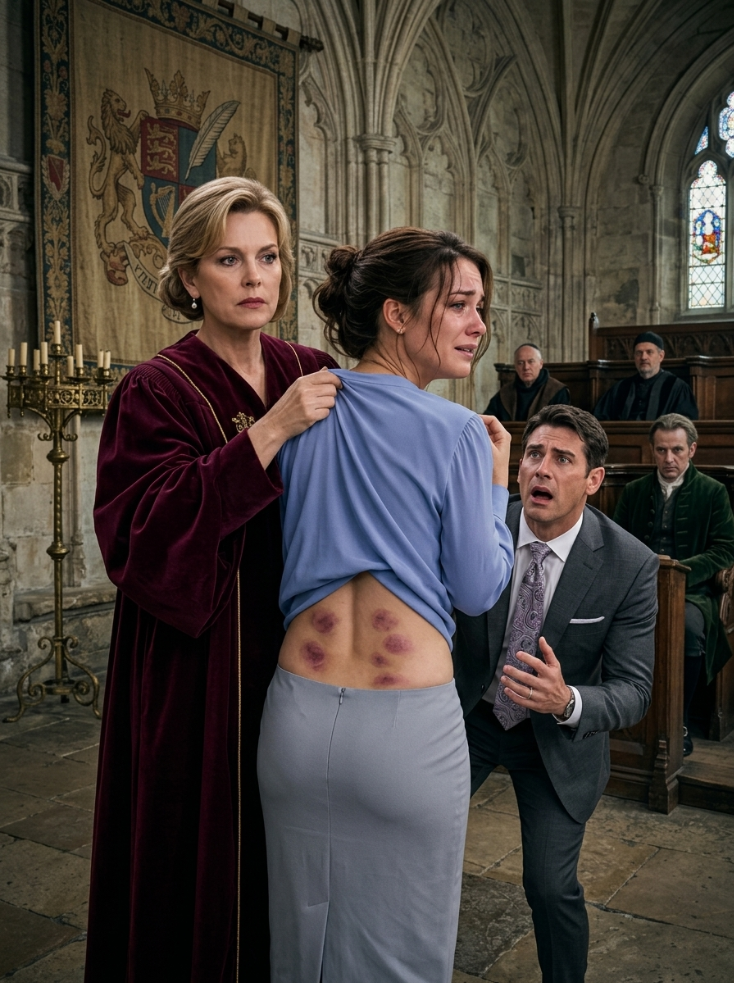
“From the moment I saw your back.”
She cried then.
Not the frightened crying I had seen before.
The kind that comes when someone finally realizes they are safe.
I put my arm around her.
“You came home,” I whispered.
She smiled.
“Yes.”
“And that’s all that matters.”
Years later, Sophie would sometimes ask about the strange time when her mother came home without a wedding ring.
We never told her everything at once.
She was too young.
As she grew older, we explained the truth carefully.
Not to frighten her.
To teach her.
That love should never hurt you into silence.
That power doesn’t make someone right.
That fear is not consent.
That asking for help is not weakness.
And that no matter how powerful someone appears, the truth can still find them.
Sophie grew into a confident young woman.
Clara became a successful advocate for victims of domestic violence.
She eventually stood before Congress and spoke about the importance of protecting survivors from intimidation and manipulation.
When she finished her speech, I watched from the audience.
She looked straight ahead.
Calm.
Strong.
Free.
I realized then that the woman who had once whispered, Please, Mom, don’t make this worse, had become someone who could walk into a room full of powerful people and make them listen.
Afterward, she came running toward me.
“Mom!”
I hugged her.
“You were wonderful.”
“I was terrified.”
“So was I.”
She laughed.
“You?”
“Always.”
She pulled back.
“But you never looked scared.”
I smiled.
“That’s because I was your mother first.”
She hugged me again.
And for the first time, I understood something I had missed throughout my entire career.
A judge can protect the law.
A mother protects the person she loves.
Sometimes, if you’re very lucky, you get to do both.
That night, I returned home alone.
I walked into my study.
The old photograph of Margaret was still there.
Beside it was a newer photograph.
Clara and Sophie laughing in the garden.
I placed the two photographs side by side.
Past and present.
Loss and survival.
A sister I couldn’t save.
A daughter I almost lost.
A granddaughter who would grow up knowing that she was loved.
I switched off the lamp.
Before leaving the room, I looked once more at Margaret’s photograph.
“It’s over,” I whispered.
The room was silent.
But for the first time, the silence didn’t feel empty.
It felt peaceful.
Outside, rain began tapping softly against the windows.
The same sound I had heard the night Clara came home.
Only this time, there was no fear behind it.
Upstairs, I could hear Clara laughing on the phone with Sophie.
Life had continued.
The darkness had not won.
And sometimes, after years of searching for justice, the greatest victory isn’t seeing the guilty punished.
It’s watching the people you love finally become unafraid.
I closed the door to the study.
And went upstairs to join my family.
The truth had finally come home.