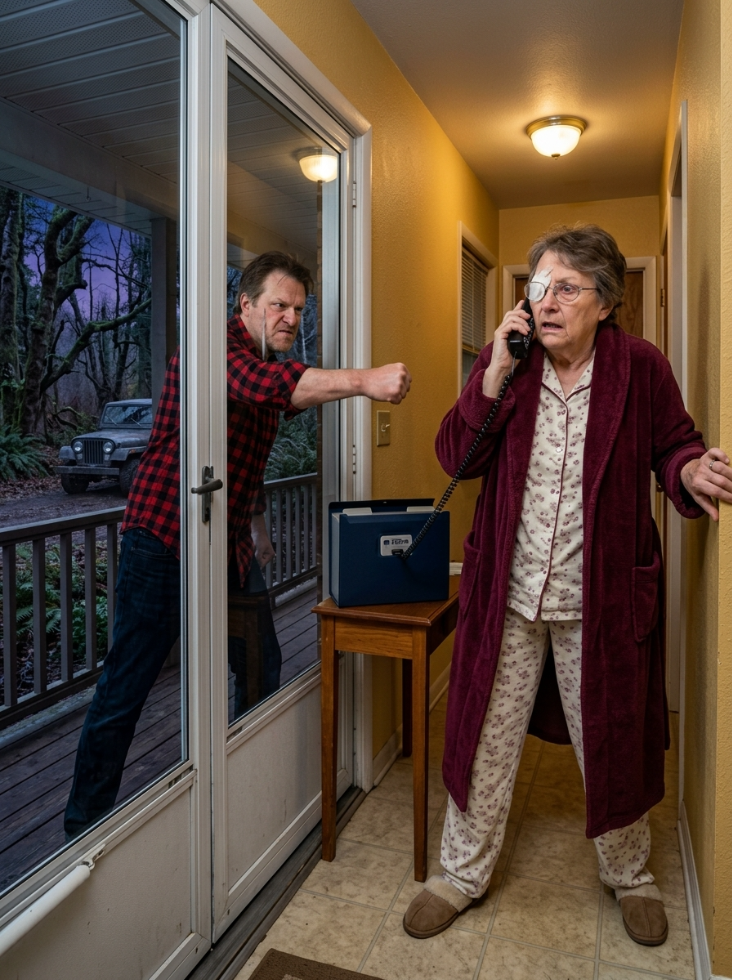
Wade’s fist came down again. “Margaret, open the door.” I stayed where I was. My hand tightened around the phone. The bank woman was still speaking, but the words had become muffled beneath the pounding in my chest.
“Mrs. Bennett? Are you still there?” “Yes.” “I need you to understand something. The account connected to the $19,400 balance is not in your name.” I closed my eyes.
“What does that mean?” “It means you are not personally listed as the borrower.” Relief came so quickly it almost made me dizzy.
Then she added, “But your name appears in the original documentation.” My relief disappeared. “Where?” “There’s a recorded authorization connected to a line of credit.” “What authorization?
She hesitated.
“That’s why I’m calling. We received a dispute this morning. Someone claims the debt was opened using an outdated power-of-attorney document.”
My gaze moved toward the green accordion file. The file suddenly looked different.
Not like a box of old memories.
Like a warning.
“Who disputed it?”
“I’m not permitted to give you that information over this call.”
Another pound shook the door.
“Margaret!”
Wade sounded angry now.
Not worried.
Not frightened.
Angry.
I lowered my voice.
“Did the dispute come from my daughter?”
“I can’t confirm that.”
“But you can confirm my name appears on the paperwork.”
“Yes.”
“And you can confirm the power of attorney is mentioned?”
“Yes.”
I swallowed.
“I revoked that power of attorney last week.”
“I see that.”
My breath caught.
“You see it?”
“Yes, Mrs. Bennett. Your revocation was recorded yesterday afternoon.”
For several seconds, neither of us spoke.
Then the woman said something that made every hair rise on my arms.
“The timing is unusual.”
“What do you mean?”
“The credit application was submitted two days before your revocation was recorded.”
Two days.
I looked at the clock.
7:06 a.m.
Wade knocked again.
“Margaret, I know you’re in there.”
I did not answer.
The bank woman lowered her voice.
“There is one more thing.”
“What?”
“The application contains a signature that appears to be yours.”
My knees weakened.
I reached for the hallway table.
“Are you saying someone forged my signature?”
“I’m saying our fraud department is reviewing it.”
I stared at the green file.
Royce’s handwriting was still visible across the tab.
C&W.
Caroline and Wade.
Thirteen years of rescuing them.
Thirteen years of telling myself that helping your children did not mean keeping score.
Thirteen years of believing that if you gave enough love, eventually they would understand what it had cost.
I had been wrong about at least one of those things.
Maybe all of them.
“Mrs. Bennett?”
“I’m here.”
“You should not discuss the investigation with anyone involved until our fraud team contacts you.”
My eyes moved toward the door.
“Even family?”
“Especially if you suspect someone close to you.”
The call ended.
I stood alone in the hallway.
The house was completely silent except for the refrigerator humming in the kitchen.
Then my phone buzzed.
A text.
From Caroline.
Mom, please don’t make this harder than it has to be.
I stared at those nine words.
My daughter had not asked if I was all right.
She had not asked why the bank was calling.
She had not asked why Wade was standing on my porch.
She already knew.
I typed:
What did you do?
The three dots appeared immediately.
Then disappeared.
Appeared again.
Disappeared.
Finally:
Open the door.
I did not.
Instead, I walked into the kitchen and pulled the green accordion file toward me.
My hands were shaking so badly I almost dropped it.
The first section contained old bank statements.
The second contained medical bills.
The third was labeled CAROLINE — 2013–2020.
The fourth was simply marked CURRENT.
I had not opened it since Royce died.
I slid my finger beneath the tab.
Inside were documents I didn’t recognize.
A photocopy of my driver’s license.
A bank statement.
A mortgage disclosure.
And a single sheet of paper with a familiar signature at the bottom.
My signature.
Except it wasn’t my signature.
It looked close.
Close enough that someone who wanted to believe it was mine might have believed.
But Royce had taught me something years ago.
He used to say, “A signature isn’t handwriting, Maggie. It’s muscle memory.”
He was right.
I knew my own signature.
That one was wrong.
The final page was dated six days earlier.
I read it twice.
Then a third time.
It was an authorization allowing a financial institution to use my name and existing power-of-attorney information in connection with a $19,400 line of credit.
The borrower wasn’t Caroline.
It wasn’t Wade.
It was a company.
A company I had never heard of.
Bennett Family Holdings, LLC.
I whispered the name aloud.
The kitchen seemed to tilt.
Bennett.
My last name.
Family.
Holdings.
I sat down.
For years, I had assumed Wade’s ambition was the ordinary kind. The kind men carried home from offices in polished shoes and expensive watches.
But maybe I had misunderstood him.
Maybe he hadn’t been trying to build a career.
Maybe he had been building something else.
Something with my name attached to it.
The front door shook again.
This time Wade didn’t knock.
He shouted.
“Margaret! You need to talk to me!”
I picked up the phone and called Otis.
He answered on the fourth ring.
“Margaret?”
“Otis, I think someone used my old power of attorney.”
Silence.
Then his voice changed.
“What makes you think that?”
“The bank called. There’s a $19,400 line of credit. My name is in the paperwork.”
Another silence.
“Did they say when the application was submitted?”
“Six days ago.”
I heard him breathe out.
“Margaret, listen to me carefully.”
“I’m listening.”
“Do not open that door.”
My eyes went to the glass.
Wade was still there.
“I wasn’t planning to.”
“Good. And don’t confront Caroline.”
“I wasn’t—”
“You’re going to want to.”
He knew me too well.
“I already found a document,” I said.
“What document?”
“Bennett Family Holdings, LLC.”
Otis stopped breathing for a moment.
Then he said quietly, “Where did you see that name?”
“In the loan paperwork.”
“Margaret, that company was formed three months ago.”
My stomach dropped.
“How do you know?”
“Because I saw the filing.”
“When?”
“Yesterday.”
“Why?”
He didn’t answer immediately.
“Otis?”
“I received a copy from someone who was concerned about your estate.”
“Who?”
Another pause.
“I can’t tell you yet.”
The words frightened me more than anything else.
“Why not?”
“Because I don’t know who I can trust.”
I looked toward the front window.
Wade had stepped away from the porch.
For one terrible second, I thought he was leaving.
Then I saw him walking toward the side of the house.
“Otis.”
“What?”
“Wade isn’t on the porch anymore.”
“Lock every door.”
“They’re already locked.”
“Windows?”
“Locked.”
“Good. Stay inside.”
I heard a scrape against the siding.
Then another.
My heart began beating so hard it hurt.
“Otis,” I whispered, “he’s going around the house.”
“Call the police.”
I almost laughed.
Not because it was funny.
Because until that moment, I had never imagined the words call the police because my son-in-law is trying to get into my house could belong to my life.
I ended the call.
Then I heard the sound.
A key turning in the back door.
I froze.
Once.
Twice.
The lock resisted.
Then Wade cursed under his breath.
I stepped backward.
He had a key.
Of course he had a key.
Caroline had given them one years ago, after Royce died, because she said she was worried about me being alone.
I had forgotten.
Or perhaps I had simply stopped thinking of my daughter as someone who could use my trust against me.
The key turned again.
The deadbolt held.
“Margaret,” Wade said through the glass.
His voice was suddenly calm.
Too calm.
“You need to let me in.”
I didn’t answer.
“I’m not here to hurt you.”
I looked at the green file.
“No,” I whispered. “You’re here for something.”
He went quiet.
Then he said:
“You found the paperwork.”
My blood went cold.
He knew.
He knew what I had found.
I moved away from the door.
“Wade,” I called, “why is my name on a $19,400 loan?”
Nothing.
“Why is there a company using my last name?”
Still nothing.
Then, very softly:
“Because Caroline didn’t tell you everything.”
My heart cracked at the sound of my daughter’s name.
“What does that mean?”
“She was trying to fix it.”
“Fix what?”
Wade didn’t answer.
Instead, he said something I would remember for the rest of my life.
“Your daughter didn’t steal from you, Margaret.”
I waited.
“She borrowed from you.”
The room seemed to go silent.
“Borrowed what?”
“My God,” I whispered. “How much?”
He didn’t answer.
I asked again.
“How much?”
Finally, he said:
“More than the bank told you.”
I stepped backward until my legs hit the kitchen chair.
Then my phone buzzed.
A new message.
Not from Caroline.
Not from Wade.
It was from an unknown number.
There was only one sentence.
Ask your daughter what happened on the night Royce died.
I stared at it.
My husband had been dead for six years.
Six years since the hospital corridor.
Six years since I held his hand while the machines became quiet.
Six years since Caroline arrived twenty minutes after he died and cried so hard she could barely stand.
Six years since she told me she had been stuck in traffic.
Six years since I believed her.
I read the message again.
Then another message arrived.
This one contained a photograph.
It was grainy and dark.
A parking lot.
A black SUV.
And a woman standing beside it.
I zoomed in.
My hand went numb.
The woman was Caroline.
And beside her was Wade.
The timestamp in the corner was unmistakable.
11:42 p.m.
The night Royce died.
I looked toward the back door.
Wade was still standing outside.
But he was no longer trying to get in.
He was staring through the glass at me.
And somehow, even from across the kitchen, I knew he had seen my face.
He knew I had received the photograph.
His expression changed.
For the first time since I had known him, Wade looked afraid.
Then he whispered through the glass:
“Margaret…”
He pressed his palm against the door.
“Please.”
I didn’t move.
“Please don’t ask Caroline about that night.”
And that was the moment I understood.
The $19,400 wasn’t the beginning of the story.
It wasn’t even the worst thing they had done.
It was the first crack in a story my daughter and I had both been living inside for six years.
And behind that crack was something neither of them had ever intended for me to see.
Wade’s fist came down again.
“Margaret, open the door.”
I stayed where I was.
My hand tightened around the phone.
The bank woman was still speaking, but the words had become muffled beneath the pounding in my chest.
“Mrs. Bennett? Are you still there?”
“Yes.”
“I need you to understand something. The account connected to the $19,400 balance is not in your name.”
I closed my eyes.
“What does that mean?”
“It means you are not personally listed as the borrower.”
Relief came so quickly it almost made me dizzy.
Then she added, “But your name appears in the original documentation.”
My relief disappeared.
“Where?”
“There’s a recorded authorization connected to a line of credit.”
“What authorization?”
She hesitated.
“That’s why I’m calling. We received a dispute this morning. Someone claims the debt was opened using an outdated power-of-attorney document.”
My gaze moved toward the green accordion file.
The file suddenly looked different.
Not like a box of old memories.
Like a warning.
“Who disputed it?”
“I’m not permitted to give you that information over this call.”
Another pound shook the door.
“Margaret!”
Wade sounded angry now.
Not worried.
Not frightened.
Angry.
I lowered my voice.
“Did the dispute come from my daughter?”
“I can’t confirm that.”
“But you can confirm my name appears on the paperwork.”
“Yes.”
“And you can confirm the power of attorney is mentioned?”
“Yes.”
I swallowed.
“I revoked that power of attorney last week.”
“I see that.”
My breath caught.
“You see it?”
“Yes, Mrs. Bennett. Your revocation was recorded yesterday afternoon.”
For several seconds, neither of us spoke.
Then the woman said something that made every hair rise on my arms.
“The timing is unusual.”
“What do you mean?”
“The credit application was submitted two days before your revocation was recorded.”
Two days.
I looked at the clock.
7:06 a.m.
Wade knocked again.
“Margaret, I know you’re in there.”
I did not answer.
The bank woman lowered her voice.
“There is one more thing.”
“What?”
“The application contains a signature that appears to be yours.”
My knees weakened.
I reached for the hallway table.
“Are you saying someone forged my signature?”
“I’m saying our fraud department is reviewing it.”
I stared at the green file.
Royce’s handwriting was still visible across the tab.
C&W.
Caroline and Wade.
Thirteen years of rescuing them.
Thirteen years of telling myself that helping your children did not mean keeping score.
Thirteen years of believing that if you gave enough love, eventually they would understand what it had cost.
I had been wrong about at least one of those things.
Maybe all of them.
“Mrs. Bennett?”
“I’m here.”
“You should not discuss the investigation with anyone involved until our fraud team contacts you.”
My eyes moved toward the door.
“Even family?”
“Especially if you suspect someone close to you.”
The call ended.
I stood alone in the hallway.
The house was completely silent except for the refrigerator humming in the kitchen.
Then my phone buzzed.
A text.
From Caroline.
Mom, please don’t make this harder than it has to be.
I stared at those nine words.
My daughter had not asked if I was all right.
She had not asked why the bank was calling.
She had not asked why Wade was standing on my porch.
She already knew.
I typed:
What did you do?
The three dots appeared immediately.
Then disappeared.
Appeared again.
Disappeared.
Finally:
Open the door.
I did not.
Instead, I walked into the kitchen and pulled the green accordion file toward me.
My hands were shaking so badly I almost dropped it.
The first section contained old bank statements.
The second contained medical bills.
The third was labeled CAROLINE — 2013–2020.
The fourth was simply marked CURRENT.
I had not opened it since Royce died.
I slid my finger beneath the tab.
Inside were documents I didn’t recognize.
A photocopy of my driver’s license.
A bank statement.
A mortgage disclosure.
And a single sheet of paper with a familiar signature at the bottom.
My signature.
Except it wasn’t my signature.
It looked close.
Close enough that someone who wanted to believe it was mine might have believed.
But Royce had taught me something years ago.
He used to say, “A signature isn’t handwriting, Maggie. It’s muscle memory.”
He was right.
I knew my own signature.
That one was wrong.
The final page was dated six days earlier.
I read it twice.
Then a third time.
It was an authorization allowing a financial institution to use my name and existing power-of-attorney information in connection with a $19,400 line of credit.
The borrower wasn’t Caroline.
It wasn’t Wade.
It was a company.
A company I had never heard of.
Bennett Family Holdings, LLC.
I whispered the name aloud.
The kitchen seemed to tilt.
Bennett.
My last name.
Family.
Holdings.
I sat down.
For years, I had assumed Wade’s ambition was the ordinary kind. The kind men carried home from offices in polished shoes and expensive watches.
But maybe I had misunderstood him.
Maybe he hadn’t been trying to build a career.
Maybe he had been building something else.
Something with my name attached to it.
The front door shook again.
This time Wade didn’t knock.
He shouted.
“Margaret! You need to talk to me!”
I picked up the phone and called Otis.
He answered on the fourth ring.
“Margaret?”
“Otis, I think someone used my old power of attorney.”
Silence.
Then his voice changed.
“What makes you think that?”
“The bank called. There’s a $19,400 line of credit. My name is in the paperwork.”
Another silence.
“Did they say when the application was submitted?”
“Six days ago.”
I heard him breathe out.
“Margaret, listen to me carefully.”
“I’m listening.”
“Do not open that door.”
My eyes went to the glass.
Wade was still there.
“I wasn’t planning to.”
“Good. And don’t confront Caroline.”
“I wasn’t—”
“You’re going to want to.”
He knew me too well.
“I already found a document,” I said.
“What document?”
“Bennett Family Holdings, LLC.”
Otis stopped breathing for a moment.
Then he said quietly, “Where did you see that name?”
“In the loan paperwork.”
“Margaret, that company was formed three months ago.”
My stomach dropped.
“How do you know?”
“Because I saw the filing.”
“When?”
“Yesterday.”
“Why?”
He didn’t answer immediately.
“Otis?”
“I received a copy from someone who was concerned about your estate.”
“Who?”
Another pause.
“I can’t tell you yet.”
The words frightened me more than anything else.
“Why not?”
“Because I don’t know who I can trust.”
I looked toward the front window.
Wade had stepped away from the porch.
For one terrible second, I thought he was leaving.
Then I saw him walking toward the side of the house.
“Otis.”
“What?”
“Wade isn’t on the porch anymore.”
“Lock every door.”
“They’re already locked.”
“Windows?”
“Locked.”
“Good. Stay inside.”
I heard a scrape against the siding.
Then another.
My heart began beating so hard it hurt.
“Otis,” I whispered, “he’s going around the house.”
“Call the police.”
I almost laughed.
Not because it was funny.
Because until that moment, I had never imagined the words call the police because my son-in-law is trying to get into my house could belong to my life.
I ended the call.
Then I heard the sound.
A key turning in the back door.
I froze.
Once.
Twice.
The lock resisted.
Then Wade cursed under his breath.
I stepped backward.
He had a key.
Of course he had a key.
Caroline had given them one years ago, after Royce died, because she said she was worried about me being alone.
I had forgotten.
Or perhaps I had simply stopped thinking of my daughter as someone who could use my trust against me.
The key turned again.
The deadbolt held.
“Margaret,” Wade said through the glass.
His voice was suddenly calm.
Too calm.
“You need to let me in.”
I didn’t answer.
“I’m not here to hurt you.”
I looked at the green file.
“No,” I whispered. “You’re here for something.”
He went quiet.
Then he said:
“You found the paperwork.”
My blood went cold.
He knew.
He knew what I had found.
I moved away from the door.
“Wade,” I called, “why is my name on a $19,400 loan?”
Nothing.
“Why is there a company using my last name?”
Still nothing.
Then, very softly:
“Because Caroline didn’t tell you everything.”
My heart cracked at the sound of my daughter’s name.
“What does that mean?”
“She was trying to fix it.”
“Fix what?”
Wade didn’t answer.
Instead, he said something I would remember for the rest of my life.
“Your daughter didn’t steal from you, Margaret.”
I waited.
“She borrowed from you.”
The room seemed to go silent.
“Borrowed what?”
“My God,” I whispered. “How much?”
He didn’t answer.
I asked again.
“How much?”
Finally, he said:
“More than the bank told you.”
I stepped backward until my legs hit the kitchen chair.
Then my phone buzzed.
A new message.
Not from Caroline.
Not from Wade.
It was from an unknown number.
There was only one sentence.
Ask your daughter what happened on the night Royce died.
I stared at it.
My husband had been dead for six years.
Six years since the hospital corridor.
Six years since I held his hand while the machines became quiet.
Six years since Caroline arrived twenty minutes after he died and cried so hard she could barely stand.
Six years since she told me she had been stuck in traffic.
Six years since I believed her.
I read the message again.
Then another message arrived.
This one contained a photograph.
It was grainy and dark.
A parking lot.
A black SUV.
And a woman standing beside it.
I zoomed in.
My hand went numb.
The woman was Caroline.
And beside her was Wade.
The timestamp in the corner was unmistakable.
11:42 p.m.
The night Royce died.
I looked toward the back door.
Wade was still standing outside.
But he was no longer trying to get in.
He was staring through the glass at me.
And somehow, even from across the kitchen, I knew he had seen my face.
He knew I had received the photograph.
His expression changed.
For the first time since I had known him, Wade looked afraid.
Then he whispered through the glass:
“Margaret…”
He pressed his palm against the door.
“Please.”
I didn’t move.
“Please don’t ask Caroline about that night.”
And that was the moment I understood.
The $19,400 wasn’t the beginning of the story.
It wasn’t even the worst thing they had done.
It was the first crack in a story my daughter and I had both been living inside for six years.
And behind that crack was something neither of them had ever intended for me to see.
I did not open the door.
Not for Wade.
Not for Caroline.
Not for anyone.
I stood in the kitchen with the photograph still glowing on my phone and felt something inside me separate cleanly from the woman I had been that morning.
A mother can forgive many things.
She can forgive a missed birthday.
A cruel sentence.
A forgotten phone call.
She can even forgive money.
But there are some questions that become impossible to forgive once you know they were deliberately hidden.
I looked at Wade through the glass.
“What happened that night?”
His face tightened.
“I told you not to ask.”
“No.”
My voice surprised me.
It was steady.
“I asked you what happened.”
He looked down at the porch.
For several seconds, neither of us spoke.
Then he said, “Caroline was driving.”
My stomach tightened.
“Driving where?”
“To the hospital.”
“She told me she was stuck in traffic.”
“She was.”
“You just said she was driving.”
“She was driving when—”
He stopped.
“When what?”
He rubbed both hands over his face.
“You don’t understand.”
“I understand enough.”
I held up the photograph.
“Who took this?”
“I don’t know.”
“Who sent it?”
“I don’t know.”
“Why are you afraid of it?”
He looked at me.
And there it was again.
Fear.
Not anger.
Not guilt.
Fear.
“Because that photograph isn’t the worst one.”
My mouth went dry.
“What does that mean?”
He stepped closer to the glass.
“There are three.”
I felt the blood drain from my face.
“Three photographs?”
He nodded.
“Where are they?”
“Caroline has them.”
“Why?”
“Because she was trying to protect you.”
I laughed once.
It was the same broken laugh that had escaped me when I found the manila envelope.
“Protect me?”
“Margaret—”
“She lied to me about the night my husband died.”
“She was scared.”
“She lied to me.”
“She was twenty-nine.”
“She was your wife.”
“She was your daughter.”
That stopped me.
For a moment, the only sound was the rain ticking against the windows.
Then Wade said quietly, “You think she doesn’t feel guilty?”
I stared at him.
“Guilty for what?”
He didn’t answer.
I stepped closer to the door.
“Tell me.”
“I can’t.”
“You came to my house at seven in the morning.”
“I was trying to stop you.”
“From doing what?”
“From opening the file.”
I looked at the green accordion folder.
“You knew about the file?”
“Caroline told me.”
“When?”
“Last week.”
“Before or after she sent me that text?”
“Before.”
That hurt more than I expected.
My daughter had known.
She had known exactly what was in that file.
She had known I was reconsidering the way I had spent my life helping her.
And somehow, that had frightened them.
I looked down at the bank documents.
“Who is Bennett Family Holdings?”
Wade closed his eyes.
“Our company.”
“Our?”
“Yes.”
“What does it do?”
“It was supposed to be an investment company.”
“Supposed to be?”
He didn’t answer.
I felt my pulse quicken.
“What did you invest in?”
“Real estate.”
“Whose money?”
His silence answered me.
I whispered, “Mine.”
“No.”
“Then whose?”
“Caroline’s.”
I almost smiled.
Not because it was funny.
Because it was absurd.
“My daughter doesn’t have $19,400 sitting around.”
“That wasn’t all of it.”
I felt cold.
“How much?”
Wade looked away.
“Wade.”
“How much?”
He finally said it.
“Eighty-six thousand.”
The kitchen seemed to disappear around me.
I sat down.
Eighty-six thousand dollars.
I looked at the old receipts in front of me.
Seventy-three thousand four hundred twenty dollars.
The number I had spent years believing represented every sacrifice.
Every rescue.
Every time I had stepped in.
Every time I had said, Don’t worry. Mama will handle it.
But there was another number now.
Eighty-six thousand.
Money I hadn’t given.
Money they had apparently found another way to reach.
“Where did it come from?”
Wade’s voice was barely audible.
“Your accounts.”
I stared at him.
“My accounts?”
“Not directly.”
“Then explain.”
He looked at the ground.
“Caroline used the old power of attorney.”
My fingers went numb.
“She wasn’t supposed to.”
“I know.”
“It was revoked.”
“Now.”
“Not before.”
He nodded.
I closed my eyes.
For six years, I had trusted my daughter with the paperwork of my life.
After Royce died, she had said, “Mom, you shouldn’t have to deal with all this by yourself.”
She had helped with insurance.
She had helped transfer accounts.
She had organized bills.
She had told me which documents needed signatures.
And I had thanked her.
I had called her my right hand.
I had never imagined that the same hand might someday reach into my pocket.
“Why did she need the money?”
Wade didn’t respond.
“Why?”
“She was trying to save the house.”
“What house?”
“Our house.”
“From foreclosure?”
He nodded.
“Why didn’t you tell me?”
“Because you would have helped.”
The answer was so simple that it nearly broke me.
I stared at him.
“You’re right.”
He looked up.
“I would have.”
“That was the problem.”
“No,” I said.
My voice became harder.
“That was your solution.”
He looked away.
I picked up my phone.
“I want Caroline here.”
“No.”
I froze.
“You don’t get to tell me what to do in my own house.”
“You don’t understand what will happen.”
“Then explain it.”
“If she comes here, she won’t tell you the truth.”
“I think I’ve had enough lies.”
He stepped back.
“Margaret, listen to me.”
“No.”
“Please.”
“No.”
I walked to the front window.
“I’m calling her.”
His face changed.
“Don’t.”
I dialed.
One ring.
Two.
Three.
Straight to voicemail.
I tried again.
Nothing.
I sent a message.
Come home. We need to talk.
The reply came almost immediately.
I’m sorry.
Only that.
Two words.
Then another message.
I should have told you years ago.
My hands began trembling.
I looked at Wade.
He had gone completely still.
“You knew she was going to confess.”
He shook his head.
“No.”
“Then why aren’t you surprised?”
“I’ve been waiting for this day.”
“Why?”
He looked at me through the glass.
“Because the person who sent you that photograph isn’t trying to expose us.”
“Who are they trying to expose?”
He swallowed.
“Me.”
I stared at him.
“What did you do?”
He didn’t answer.
“Wade.”
“I didn’t kill Royce.”
The sentence came so quickly it frightened me.
I had not accused him of killing my husband.
He had accused himself.
“I didn’t say you did.”
“I know.”
“Then why did you say it?”
He stepped away from the door.
“I need to go.”
I watched him walk toward his truck.
“Wade!”
He stopped.
I opened the door only a few inches, keeping the chain locked.
He turned.
“What happened to Royce?”
He looked at me for a long time.
Then he said:
“Ask Caroline who was driving when they left the hospital.”
My heart stopped.
“They?”
He said nothing.
“Who was with her?”
He walked away.
“Wade!”
He kept going.
I watched his truck disappear down the street.
Then I closed the door.
Locked it.
Checked the deadbolt twice.
And stood there in the quiet.
Five minutes later, Caroline called.
I answered.
Neither of us spoke.
I could hear her breathing.
Then she said, “Mom?”
“Who was with you the night Dad died?”
Silence.
Not even a breath.
Then a tiny sound.
A sob.
“Mom, I wanted to tell you.”
“When?”
“I don’t know.”
“You’ve had six years.”
“I know.”
“Who was in the car?”
She cried harder.
“Caroline.”
“Wade.”
I closed my eyes.
“Where were you going?”
“The hospital.”
“That’s what you said.”
“We were.”
“Then why did Wade say I should ask who was driving when you left?”
She stopped crying.
“Mom…”
“Who was driving?”
“I was.”
I gripped the counter.
“And Wade?”
“He was with me.”
“Then why did you tell me you were stuck in traffic?”
“Because I was.”
“That doesn’t answer the question.”
She was silent.
I felt something cold move through me.
“Caroline.”
Finally she whispered:
“Dad wasn’t supposed to be alone that night.”
I couldn’t breathe.
“What does that mean?”
“He called me.”
“When?”
“An hour before the hospital called.”
“Why?”
“He said he had found something.”
“What?”
“I don’t know.”
“Don’t lie to me.”
“I swear.”
“What did he say?”
Her voice broke.
“He said he knew someone had been taking money.”
I looked at the green file.
“Who?”
“He wouldn’t tell me.”
“Then what happened?”
“He asked me to come over.”
“To your house?”
“No.”
Her voice dropped.
“To the office.”
“What office?”
“Dad’s.”
I felt a chill.
“Royce’s office?”
“Yes.”
“Why?”
“He said he wanted to show me something.”
“What?”
“I never saw it.”
“Why not?”
“Because when I got there, Wade was already there.”
I closed my eyes.
“Why was Wade there?”
“I don’t know.”
“You expect me to believe that?”
“No.”
Her voice was barely audible.
“I’m not asking you to.”
I sat down.
“What happened next?”
“He and Dad argued.”
“About money?”
“Yes.”
“What money?”
“I don’t know.”
“Caroline.”
“I heard Dad say, ‘You don’t get to decide what happens to my family.’”
My throat tightened.
“Then what?”
“I went inside.”
“Where?”
“Dad’s office.”
“And?”
“He was on the floor.”
I stopped breathing.
“What?”
“He was alive.”
My hand flew to my mouth.
“He was alive?”
“Yes.”
“Why didn’t you tell me?”
“I was scared.”
“Of what?”
“Of Wade.”
The silence between us became enormous.
“Where was Wade?”
“He was standing over Dad.”
I whispered, “And you still married him.”
She began crying.
“I thought he was going to call the ambulance.”
“But he didn’t?”
“No.”
“Who did?”
“I did.”
“How long?”
“I don’t know.”
“How long, Caroline?”
“Seven minutes.”
I closed my eyes.
Seven minutes.
Seven minutes could be nothing.
Seven minutes could be everything.
“What happened during those seven minutes?”
She didn’t answer.
“Caroline.”
“I called someone.”
“Who?”
She began sobbing.
“Who did you call?”
“I called a man Dad had been investigating.”
The room went cold.
“What man?”
“I don’t know his real name.”
“Then what do you know?”
“He called himself Daniel.”
I looked at the photograph again.
The parking lot.
The black SUV.
Caroline beside it.
Wade beside her.
And suddenly I noticed something I hadn’t seen before.
A third figure.
Half-hidden behind the SUV.
A man.
Standing beside a hospital entrance.
I zoomed in.
Caroline whispered through the phone.
“Mom?”
I didn’t answer.
“Mom, are you there?”
I stared at the photograph.
The man was holding something.
A folder.
Green.
Exactly like mine.
Then Caroline said the words that made my blood run cold.
“Dad wasn’t investigating Wade.”
I looked at the photograph again.
“He was investigating me.”
And somewhere in the house, the old silver kettle began to whistle.
The same kettle.
The same sound.
The same kitchen where this had all begun.
Only now I understood why it had always made me think of Royce.
Because six years ago, on the night he died, I had heard that kettle whistle too.
And I suddenly remembered something I had forgotten.
Something I had not thought about in six years.
Before Caroline came to the hospital that night, before the police arrived, before the doctor came out to tell me my husband was gone—
someone had called my house.
I had answered.
And a man’s voice had said:
“Mrs. Bennett, your husband left something for you.”
Then the line went dead.
I had assumed it was grief.
Shock.
A mistake.
But now, standing alone in my kitchen with the green file in front of me, I knew it hadn’t been.
Royce had left something.
And I had never found it.
Until now.
I did not open the door.
Not for Wade.
Not for Caroline.
Not for anyone.
I stood in the kitchen with the photograph still glowing on my phone and felt something inside me separate cleanly from the woman I had been that morning.
A mother can forgive many things.
She can forgive a missed birthday.
A cruel sentence.
A forgotten phone call.
She can even forgive money.
But there are some questions that become impossible to forgive once you know they were deliberately hidden.
I looked at Wade through the glass.
“What happened that night?”
His face tightened.
“I told you not to ask.”
“No.”
My voice surprised me.
It was steady.
“I asked you what happened.”
He looked down at the porch.
For several seconds, neither of us spoke.
Then he said, “Caroline was driving.”
My stomach tightened.
“Driving where?”
“To the hospital.”
“She told me she was stuck in traffic.”
“She was.”
“You just said she was driving.”
“She was driving when—”
He stopped.
“When what?”
He rubbed both hands over his face.
“You don’t understand.”
“I understand enough.”
I held up the photograph.
“Who took this?”
“I don’t know.”
“Who sent it?”
“I don’t know.”
“Why are you afraid of it?”
He looked at me.
And there it was again.
Fear.
Not anger.
Not guilt.
Fear.
“Because that photograph isn’t the worst one.”
My mouth went dry.
“What does that mean?”
He stepped closer to the glass.
“There are three.”
I felt the blood drain from my face.
“Three photographs?”
He nodded.
“Where are they?”
“Caroline has them.”
“Why?”
“Because she was trying to protect you.”
I laughed once.
It was the same broken laugh that had escaped me when I found the manila envelope.
“Protect me?”
“Margaret—”
“She lied to me about the night my husband died.”
“She was scared.”
“She lied to me.”
“She was twenty-nine.”
“She was your wife.”
“She was your daughter.”
That stopped me.
For a moment, the only sound was the rain ticking against the windows.
Then Wade said quietly, “You think she doesn’t feel guilty?”
I stared at him.
“Guilty for what?”
He didn’t answer.
I stepped closer to the door.
“Tell me.”
“I can’t.”
“You came to my house at seven in the morning.”
“I was trying to stop you.”
“From doing what?”
“From opening the file.”
I looked at the green accordion folder.
“You knew about the file?”
“Caroline told me.”
“When?”
“Last week.”
“Before or after she sent me that text?”
“Before.”
That hurt more than I expected.
My daughter had known.
She had known exactly what was in that file.
She had known I was reconsidering the way I had spent my life helping her.
And somehow, that had frightened them.
I looked down at the bank documents.
“Who is Bennett Family Holdings?”
Wade closed his eyes.
“Our company.”
“Our?”
“Yes.”
“What does it do?”
“It was supposed to be an investment company.”
“Supposed to be?”
He didn’t answer.
I felt my pulse quicken.
“What did you invest in?”
“Real estate.”
“Whose money?”
His silence answered me.
I whispered, “Mine.”
“No.”
“Then whose?”
“Caroline’s.”
I almost smiled.
Not because it was funny.
Because it was absurd.
“My daughter doesn’t have $19,400 sitting around.”
“That wasn’t all of it.”
I felt cold.
“How much?”
Wade looked away.
“Wade.”
“How much?”
He finally said it.
“Eighty-six thousand.”
The kitchen seemed to disappear around me.
I sat down.
Eighty-six thousand dollars.
I looked at the old receipts in front of me.
Seventy-three thousand four hundred twenty dollars.
The number I had spent years believing represented every sacrifice.
Every rescue.
Every time I had stepped in.
Every time I had said, Don’t worry. Mama will handle it.
But there was another number now.
Eighty-six thousand.
Money I hadn’t given.
Money they had apparently found another way to reach.
“Where did it come from?”
Wade’s voice was barely audible.
“Your accounts.”
I stared at him.
“My accounts?”
“Not directly.”
“Then explain.”
He looked at the ground.
“Caroline used the old power of attorney.”
My fingers went numb.
“She wasn’t supposed to.”
“I know.”
“It was revoked.”
“Now.”
“Not before.”
He nodded.
I closed my eyes.
For six years, I had trusted my daughter with the paperwork of my life.
After Royce died, she had said, “Mom, you shouldn’t have to deal with all this by yourself.”
She had helped with insurance.
She had helped transfer accounts.
She had organized bills.
She had told me which documents needed signatures.
And I had thanked her.
I had called her my right hand.
I had never imagined that the same hand might someday reach into my pocket.
“Why did she need the money?”
Wade didn’t respond.
“Why?”
“She was trying to save the house.”
“What house?”
“Our house.”
“From foreclosure?”
He nodded.
“Why didn’t you tell me?”
“Because you would have helped.”
The answer was so simple that it nearly broke me.
I stared at him.
“You’re right.”
He looked up.
“I would have.”
“That was the problem.”
“No,” I said.
My voice became harder.
“That was your solution.”
He looked away.
I picked up my phone.
“I want Caroline here.”
“No.”
I froze.
“You don’t get to tell me what to do in my own house.”
“You don’t understand what will happen.”
“Then explain it.”
“If she comes here, she won’t tell you the truth.”
“I think I’ve had enough lies.”
He stepped back.
“Margaret, listen to me.”
“No.”
“Please.”
“No.”
I walked to the front window.
“I’m calling her.”
His face changed.
“Don’t.”
I dialed.
One ring.
Two.
Three.
Straight to voicemail.
I tried again.
Nothing.
I sent a message.
Come home. We need to talk.
The reply came almost immediately.
I’m sorry.
Only that.
Two words.
Then another message.
I should have told you years ago.
My hands began trembling.
I looked at Wade.
He had gone completely still.
“You knew she was going to confess.”
He shook his head.
“No.”
“Then why aren’t you surprised?”
“I’ve been waiting for this day.”
“Why?”
He looked at me through the glass.
“Because the person who sent you that photograph isn’t trying to expose us.”
“Who are they trying to expose?”
He swallowed.
“Me.”
I stared at him.
“What did you do?”
He didn’t answer.
“Wade.”
“I didn’t kill Royce.”
The sentence came so quickly it frightened me.
I had not accused him of killing my husband.
He had accused himself.
“I didn’t say you did.”
“I know.”
“Then why did you say it?”
He stepped away from the door.
“I need to go.”
I watched him walk toward his truck.
“Wade!”
He stopped.
I opened the door only a few inches, keeping the chain locked.
He turned.
“What happened to Royce?”
He looked at me for a long time.
Then he said:
“Ask Caroline who was driving when they left the hospital.”
My heart stopped.
“They?”
He said nothing.
“Who was with her?”
He walked away.
“Wade!”
He kept going.
I watched his truck disappear down the street.
Then I closed the door.
Locked it.
Checked the deadbolt twice.
And stood there in the quiet.
Five minutes later, Caroline called.
I answered.
Neither of us spoke.
I could hear her breathing.
Then she said, “Mom?”
“Who was with you the night Dad died?”
Silence.
Not even a breath.
Then a tiny sound.
A sob.
“Mom, I wanted to tell you.”
“When?”
“I don’t know.”
“You’ve had six years.”
“I know.”
“Who was in the car?”
She cried harder.
“Caroline.”
“Wade.”
I closed my eyes.
“Where were you going?”
“The hospital.”
“That’s what you said.”
“We were.”
“Then why did Wade say I should ask who was driving when you left?”
She stopped crying.
“Mom…”
“Who was driving?”
“I was.”
I gripped the counter.
“And Wade?”
“He was with me.”
“Then why did you tell me you were stuck in traffic?”
“Because I was.”
“That doesn’t answer the question.”
She was silent.
I felt something cold move through me.
“Caroline.”
Finally she whispered:
“Dad wasn’t supposed to be alone that night.”
I couldn’t breathe.
“What does that mean?”
“He called me.”
“When?”
“An hour before the hospital called.”
“Why?”
“He said he had found something.”
“What?”
“I don’t know.”
“Don’t lie to me.”
“I swear.”
“What did he say?”
Her voice broke.
“He said he knew someone had been taking money.”
I looked at the green file.
“Who?”
“He wouldn’t tell me.”
“Then what happened?”
“He asked me to come over.”
“To your house?”
“No.”
Her voice dropped.
“To the office.”
“What office?”
“Dad’s.”
I felt a chill.
“Royce’s office?”
“Yes.”
“Why?”
“He said he wanted to show me something.”
“What?”
“I never saw it.”
“Why not?”
“Because when I got there, Wade was already there.”
I closed my eyes.
“Why was Wade there?”
“I don’t know.”
“You expect me to believe that?”
“No.”
Her voice was barely audible.
“I’m not asking you to.”
I sat down.
“What happened next?”
“He and Dad argued.”
“About money?”
“Yes.”
“What money?”
“I don’t know.”
“Caroline.”
“I heard Dad say, ‘You don’t get to decide what happens to my family.’”
My throat tightened.
“Then what?”
“I went inside.”
“Where?”
“Dad’s office.”
“And?”
“He was on the floor.”
I stopped breathing.
“What?”
“He was alive.”
My hand flew to my mouth.
“He was alive?”
“Yes.”
“Why didn’t you tell me?”
“I was scared.”
“Of what?”
“Of Wade.”
The silence between us became enormous.
“Where was Wade?”
“He was standing over Dad.”
I whispered, “And you still married him.”
She began crying.
“I thought he was going to call the ambulance.”
“But he didn’t?”
“No.”
“Who did?”
“I did.”
“How long?”
“I don’t know.”
“How long, Caroline?”
“Seven minutes.”
I closed my eyes.
Seven minutes.
Seven minutes could be nothing.
Seven minutes could be everything.
“What happened during those seven minutes?”
She didn’t answer.
“Caroline.”
“I called someone.”
“Who?”
She began sobbing.
“Who did you call?”
“I called a man Dad had been investigating.”
The room went cold.
“What man?”
“I don’t know his real name.”
“Then what do you know?”
“He called himself Daniel.”
I looked at the photograph again.
The parking lot.
The black SUV.
Caroline beside it.
Wade beside her.
And suddenly I noticed something I hadn’t seen before.
A third figure.
Half-hidden behind the SUV.
A man.
Standing beside a hospital entrance.
I zoomed in.
Caroline whispered through the phone.
“Mom?”
I didn’t answer.
“Mom, are you there?”
I stared at the photograph.
The man was holding something.
A folder.
Green.
Exactly like mine.
Then Caroline said the words that made my blood run cold.
“Dad wasn’t investigating Wade.”
I looked at the photograph again.
“He was investigating me.”
And somewhere in the house, the old silver kettle began to whistle.
The same kettle.
The same sound.
The same kitchen where this had all begun.
Only now I understood why it had always made me think of Royce.
Because six years ago, on the night he died, I had heard that kettle whistle too.
And I suddenly remembered something I had forgotten.
Something I had not thought about in six years.
Before Caroline came to the hospital that night, before the police arrived, before the doctor came out to tell me my husband was gone—
someone had called my house.
I had answered.
And a man’s voice had said:
“Mrs. Bennett, your husband left something for you.”
Then the line went dead.
I had assumed it was grief.
Shock.
A mistake.
But now, standing alone in my kitchen with the green file in front of me, I knew it hadn’t been.
Royce had left something.
And I had never found it.
Until now.
For a long time, I simply stared at the kettle.
The whistle grew louder.
Shriller.
Almost angry.
Then I remembered what Royce used to say whenever I let it boil too long.
“Margaret, if you keep ignoring that thing, it’ll scream the roof off.”
I almost smiled.
Almost.
Because suddenly I understood.
Royce had always hidden important things in ordinary places.
Not safes.
Not secret compartments.
Ordinary places.
Places nobody thought to look.
I turned off the burner.
The kitchen fell silent.
Then I opened the green accordion file.
I went through every section again.
Bank statements.
Receipts.
Insurance papers.
Old tax returns.
Caroline’s college records.
Medical bills.
The house documents.
Nothing.
I closed my eyes.
“Think, Maggie.”
Royce had left something for me.
Something he expected me to find.
Something connected to that night.
I walked through the house slowly.
The hallway.
The living room.
His old study.
I stopped at the bookshelf.
There were thirty-two years of our life sitting there.
Cookbooks.
Novels.
His fishing magazines.
A dictionary he had bought in 1987 and refused to replace.
And then I saw it.
A blue book.
An old postal service retirement handbook.
I pulled it out.
Nothing.
I turned it over.
Still nothing.
Then I noticed the pages were unusually thick.
I opened the middle.
Someone had cut a rectangle into the pages.
Inside was a small brass key.
My breath caught.
Attached to it was a piece of paper in Royce’s handwriting.
Only four words.
Not the bank. The box.
I sat down.
The box.
Of course.
After Royce died, I had cleaned his office for three weeks.
I had donated his suits.
Packed his tools.
Sorted his papers.
But there was one thing I had never touched.
A small wooden box he kept beneath his desk.
I had assumed it contained old stamps.
He had always been a collector.
I hurried into the study.
The box was still there.
Dusty.
Forgotten.
I placed the brass key into the lock.
It clicked.
Inside were three envelopes.
One was addressed to me.
One to Caroline.
And one had no name.
I opened mine first.
The letter was dated six years earlier.
Maggie,
If you’re reading this, something went wrong.
My hands began to shake.
I kept reading.
Royce explained that he had discovered irregular transfers from an account connected to a property investment Wade had been discussing.
He had confronted Wade.
Wade denied everything.
But Royce had found enough evidence to believe someone had been using Caroline’s name without her full knowledge.
He had planned to meet an investigator named Daniel the night he died.
Daniel wasn’t a criminal.
He was a private investigator Royce had hired.
And the mysterious company wasn’t Bennett Family Holdings.
It was another company with an almost identical name.
Someone had created it to confuse financial records.
Royce had suspected that Wade was being manipulated by a businessman named Victor Hale, who had convinced him to invest in failing properties.
The $86,000 wasn’t stolen for luxury cars or vacations.
It had been poured into an investment scheme that was collapsing.
Wade had panicked.
Caroline had discovered what he had done.
And then everything had fallen apart.
But the final paragraph stopped me.
Maggie, if Wade tells you I was angry with him, he is telling the truth. But if anyone tells you I died because of him, don’t believe them.
I read the sentence twice.
Then again.
At the bottom, Royce had written:
My heart was already failing. I knew it. I didn’t tell you because I didn’t want my last months to become hospital rooms.
I covered my mouth.
Tears filled my eyes.
Royce had known.
He had known his heart was failing.
And he had kept living normally.
He had bought groceries.
Fixed the porch.
Made me coffee.
Complained about the weather.
Loved me.
All while carrying a secret he thought would protect me.
I opened the second envelope.
Caroline’s letter was shorter.
Mom,
Dad asked me not to tell you because he wanted you to have a life instead of a funeral waiting room. I thought keeping his secret was protecting you. Then Wade’s investment collapsed, and I made the worst decision of my life.
I used your power of attorney because I thought I could move money temporarily, sell the investment, and replace everything before you knew. I was wrong.
I am sorry.
I stopped reading.
The truth was painful.
But it wasn’t what I had feared.
My daughter had not planned to destroy me.
She had panicked.
She had lied.
She had crossed a line.
And then another.
But somewhere underneath all of that, she had been trying desperately to fix a disaster she had helped create.
The third envelope contained something unexpected.
A bank receipt.
$86,000.
Paid in full.
The date was six years earlier.
I stared at it.
Someone had repaid the money.
Then I saw the name.
Royce Bennett.
He had covered the loss before he died.
My husband had known.
He had saved Caroline from the consequences.
And he had never told me.
I began to cry.
Not the quiet tears I had shed for six years.
The kind that hurt.
The kind that emptied something.
I sat on the floor of Royce’s study and cried for the man who had loved me enough to carry fear alone.
An hour later, Caroline arrived.
Alone.
No Wade.
She stood on my porch with red eyes and trembling hands.
I opened the door.
For several seconds, we simply looked at each other.
Then she whispered:
“Mom.”
I stepped aside.
She came in.
She didn’t hug me.
Neither of us was ready.
We sat at the kitchen table.
The same table where she had eaten cereal as a child.
The same table where she had once practiced spelling words.
The same table where she had sat beside me after Royce died.
I placed the letters in front of her.
She looked at them.
Then she covered her face.
“I thought you would hate me.”
“I was very angry.”
“I know.”
“I still am.”
“I know.”
“But I don’t hate you.”
She looked up.
“Why?”
“Because you’re my daughter.”
Her face collapsed.
“I don’t deserve that.”
“No,” I said gently. “But love isn’t a reward you earn.”
She cried.
So did I.
Then I told her something I should have told her years earlier.
“Love does not mean I will rescue you from every consequence.”
She nodded.
“I understand.”
“And if we rebuild this relationship, money will not be part of it.”
“I understand.”
“You will repay what you can.”
“I will.”
“And Wade?”
Her face changed.
“We’re separated.”
“Why?”
“Because I finally realized that being afraid of losing him made me willing to lose myself.”
I reached across the table.
She took my hand.
It was the first time we had touched in weeks.
“I want you to know something,” she said.
“What?”
“Dad wasn’t angry when he died.”
I looked at her.
“How do you know?”
“Because when the ambulance came, he looked at me.”
She wiped her cheeks.
“He said, ‘Take care of your mother.’”
I closed my eyes.
That was Royce.
Even at the end, he was thinking about me.
Three months later, the bank investigation cleared my name completely.
The forged document was traced to the company Wade had used during the failed investment.
Wade cooperated with investigators.
The $19,400 debt was removed from my records.
The house was saved.
Caroline sold the investment property and began repaying the money she had taken from my accounts.
Not because I demanded it.
Because she wanted to make things right.
And slowly, very slowly, we rebuilt.
Not the old relationship.
A better one.
One where Caroline could say, “I need help,” without expecting me to solve everything.
One where I could say, “No,” without being punished for it.
One where love didn’t come with receipts.
A year later, on Memorial Day weekend, Caroline came to my house with Hudson and May.
Hudson was five now.
May was walking.
They brought flowers.
Caroline stood on the porch holding a small paper bag.
“What’s that?” I asked.
“Something for you.”
Inside was a new silver kettle.
I laughed.
“Oh, absolutely not.”
She laughed too.
“The old one finally died.”
I looked toward the kitchen.
The old kettle was sitting there, scratched and dented, still perfectly functional.
“I liked that one.”
“I know.”
She hugged me.
This time, I hugged her back.
Later that afternoon, the children played in the yard while Caroline helped me make lemonade.
She looked out the window.
“Mom?”
“Yes?”
“Do you think Dad would be proud of me now?”
I put down the knife.
“Yes.”
She smiled through tears.
“How can you know?”
“Because I know your father.”
She nodded.
Outside, Hudson was chasing bubbles while May laughed so hard she fell into the grass.
Caroline watched them.
Then she said quietly:
“I almost lost all of this.”
I looked at her.
“You didn’t.”
She turned toward me.
“Because you forgave me?”
“No.”
She frowned.
“Then why?”
“Because you finally told the truth.”
That evening, after they left, I sat alone on the porch.
The sky was turning gold.
For the first time in years, the house didn’t feel empty.
It felt peaceful.
I opened Royce’s letter one more time.
At the bottom, beneath his signature, there was one final sentence I hadn’t noticed before.
Maggie, don’t spend the rest of your life protecting everyone from the truth. The people who truly love you can survive it.
I folded the letter carefully.
Then I looked toward the road.
Caroline’s car was disappearing around the corner.
I smiled.
I had spent forty-one years working for other people.
Six years grieving my husband.
And far too many years believing that being a good mother meant saying yes until there was nothing left of me.
But that was not the lesson Royce left behind.
The lesson was simpler.
Love doesn’t ask you to disappear.
Love gives you room to remain yourself.
So I went inside.
I turned on the kettle.
And when it began to whistle, I didn’t silence it.
I let it sing.
For Royce.
For Caroline.
For the grandchildren who would grow up knowing their grandmother loved them enough to say no when she needed to.
And for myself.
Because after sixty-eight years, I had finally learned that choosing yourself isn’t choosing against the people you love.
Sometimes,
it’s the first honest way you choose to stay.
For a long time, I simply stared at the kettle.
The whistle grew louder.
Shriller.
Almost angry.
Then I remembered what Royce used to say whenever I let it boil too long.
“Margaret, if you keep ignoring that thing, it’ll scream the roof off.”
I almost smiled.
Almost.
Because suddenly I understood.
Royce had always hidden important things in ordinary places.
Not safes.
Not secret compartments.
Ordinary places.
Places nobody thought to look.
I turned off the burner.
The kitchen fell silent.
Then I opened the green accordion file.
I went through every section again.
Bank statements.
Receipts.
Insurance papers.
Old tax returns.
Caroline’s college records.
Medical bills.
The house documents.
Nothing.
I closed my eyes.
“Think, Maggie.”
Royce had left something for me.
Something he expected me to find.
Something connected to that night.
I walked through the house slowly.
The hallway.
The living room.
His old study.
I stopped at the bookshelf.
There were thirty-two years of our life sitting there.
Cookbooks.
Novels.
His fishing magazines.
A dictionary he had bought in 1987 and refused to replace.
And then I saw it.
A blue book.
An old postal service retirement handbook.
I pulled it out.
Nothing.
I turned it over.
Still nothing.
Then I noticed the pages were unusually thick.
I opened the middle.
Someone had cut a rectangle into the pages.
Inside was a small brass key.
My breath caught.
Attached to it was a piece of paper in Royce’s handwriting.
Only four words.
Not the bank. The box.
I sat down.
The box.
Of course.
After Royce died, I had cleaned his office for three weeks.
I had donated his suits.
Packed his tools.
Sorted his papers.
But there was one thing I had never touched.
A small wooden box he kept beneath his desk.
I had assumed it contained old stamps.
He had always been a collector.
I hurried into the study.
The box was still there.
Dusty.
Forgotten.
I placed the brass key into the lock.
It clicked.
Inside were three envelopes.
One was addressed to me.
One to Caroline.
And one had no name.
I opened mine first.
The letter was dated six years earlier.
Maggie,
If you’re reading this, something went wrong.
My hands began to shake.
I kept reading.
Royce explained that he had discovered irregular transfers from an account connected to a property investment Wade had been discussing.
He had confronted Wade.
Wade denied everything.
But Royce had found enough evidence to believe someone had been using Caroline’s name without her full knowledge.
He had planned to meet an investigator named Daniel the night he died.
Daniel wasn’t a criminal.
He was a private investigator Royce had hired.
And the mysterious company wasn’t Bennett Family Holdings.
It was another company with an almost identical name.
Someone had created it to confuse financial records.
Royce had suspected that Wade was being manipulated by a businessman named Victor Hale, who had convinced him to invest in failing properties.
The $86,000 wasn’t stolen for luxury cars or vacations.
It had been poured into an investment scheme that was collapsing.
Wade had panicked.
Caroline had discovered what he had done.
And then everything had fallen apart.
But the final paragraph stopped me.
Maggie, if Wade tells you I was angry with him, he is telling the truth. But if anyone tells you I died because of him, don’t believe them.
I read the sentence twice.
Then again.
At the bottom, Royce had written:
My heart was already failing. I knew it. I didn’t tell you because I didn’t want my last months to become hospital rooms.
I covered my mouth.
Tears filled my eyes.
Royce had known.
He had known his heart was failing.
And he had kept living normally.
He had bought groceries.
Fixed the porch.
Made me coffee.
Complained about the weather.
Loved me.
All while carrying a secret he thought would protect me.
I opened the second envelope.
Caroline’s letter was shorter.
Mom,
Dad asked me not to tell you because he wanted you to have a life instead of a funeral waiting room. I thought keeping his secret was protecting you. Then Wade’s investment collapsed, and I made the worst decision of my life.
I used your power of attorney because I thought I could move money temporarily, sell the investment, and replace everything before you knew. I was wrong.
I am sorry.
I stopped reading.
The truth was painful.
But it wasn’t what I had feared.
My daughter had not planned to destroy me.
She had panicked.
She had lied.
She had crossed a line.
And then another.
But somewhere underneath all of that, she had been trying desperately to fix a disaster she had helped create.
The third envelope contained something unexpected.
A bank receipt.
$86,000.
Paid in full.
The date was six years earlier.
I stared at it.
Someone had repaid the money.
Then I saw the name.
Royce Bennett.
He had covered the loss before he died.
My husband had known.
He had saved Caroline from the consequences.
And he had never told me.
I began to cry.
Not the quiet tears I had shed for six years.
The kind that hurt.
The kind that emptied something.
I sat on the floor of Royce’s study and cried for the man who had loved me enough to carry fear alone.
An hour later, Caroline arrived.
Alone.
No Wade.
She stood on my porch with red eyes and trembling hands.
I opened the door.
For several seconds, we simply looked at each other.
Then she whispered:
“Mom.”
I stepped aside.
She came in.
She didn’t hug me.
Neither of us was ready.
We sat at the kitchen table.
The same table where she had eaten cereal as a child.
The same table where she had once practiced spelling words.
The same table where she had sat beside me after Royce died.
I placed the letters in front of her.
She looked at them.
Then she covered her face.
“I thought you would hate me.”
“I was very angry.”
“I know.”
“I still am.”
“I know.”
“But I don’t hate you.”
She looked up.
“Why?”
“Because you’re my daughter.”
Her face collapsed.
“I don’t deserve that.”
“No,” I said gently. “But love isn’t a reward you earn.”
She cried.
So did I.
Then I told her something I should have told her years earlier.
“Love does not mean I will rescue you from every consequence.”
She nodded.
“I understand.”
“And if we rebuild this relationship, money will not be part of it.”
“I understand.”
“You will repay what you can.”
“I will.”
“And Wade?”
Her face changed.
“We’re separated.”
“Why?”
“Because I finally realized that being afraid of losing him made me willing to lose myself.”
I reached across the table.
She took my hand.
It was the first time we had touched in weeks.
“I want you to know something,” she said.
“What?”
“Dad wasn’t angry when he died.”
I looked at her.
“How do you know?”
“Because when the ambulance came, he looked at me.”
She wiped her cheeks.
“He said, ‘Take care of your mother.’”
I closed my eyes.
That was Royce.
Even at the end, he was thinking about me.
Three months later, the bank investigation cleared my name completely.
The forged document was traced to the company Wade had used during the failed investment.
Wade cooperated with investigators.
The $19,400 debt was removed from my records.
The house was saved.
Caroline sold the investment property and began repaying the money she had taken from my accounts.
Not because I demanded it.
Because she wanted to make things right.
And slowly, very slowly, we rebuilt.
Not the old relationship.
A better one.
One where Caroline could say, “I need help,” without expecting me to solve everything.
One where I could say, “No,” without being punished for it.
One where love didn’t come with receipts.
A year later, on Memorial Day weekend, Caroline came to my house with Hudson and May.
Hudson was five now.
May was walking.
They brought flowers.
Caroline stood on the porch holding a small paper bag.
“What’s that?” I asked.
“Something for you.”
Inside was a new silver kettle.
I laughed.
“Oh, absolutely not.”
She laughed too.
“The old one finally died.”
I looked toward the kitchen.
The old kettle was sitting there, scratched and dented, still perfectly functional.
“I liked that one.”
“I know.”
She hugged me.
This time, I hugged her back.
Later that afternoon, the children played in the yard while Caroline helped me make lemonade.
She looked out the window.
“Mom?”
“Yes?”
“Do you think Dad would be proud of me now?”
I put down the knife.
“Yes.”
She smiled through tears.
“How can you know?”
“Because I know your father.”
She nodded.
Outside, Hudson was chasing bubbles while May laughed so hard she fell into the grass.
Caroline watched them.
Then she said quietly:
“I almost lost all of this.”
I looked at her.
“You didn’t.”
She turned toward me.
“Because you forgave me?”
“No.”
She frowned.
“Then why?”
“Because you finally told the truth.”
That evening, after they left, I sat alone on the porch.
The sky was turning gold.
For the first time in years, the house didn’t feel empty.
It felt peaceful.
I opened Royce’s letter one more time.
At the bottom, beneath his signature, there was one final sentence I hadn’t noticed before.
Maggie, don’t spend the rest of your life protecting everyone from the truth. The people who truly love you can survive it.
I folded the letter carefully.
Then I looked toward the road.
Caroline’s car was disappearing around the corner.
I smiled.
I had spent forty-one years working for other people.
Six years grieving my husband.
And far too many years believing that being a good mother meant saying yes until there was nothing left of me.
But that was not the lesson Royce left behind.
The lesson was simpler.
Love doesn’t ask you to disappear.
Love gives you room to remain yourself.
So I went inside.
I turned on the kettle.
And when it began to whistle, I didn’t silence it.
I let it sing.
For Royce.
For Caroline.
For the grandchildren who would grow up knowing their grandmother loved them enough to say no when she needed to.
And for myself.
Because after sixty-eight years, I had finally learned that choosing yourself isn’t choosing against the people you love.
Sometimes,
it’s the first honest way you choose to stay.