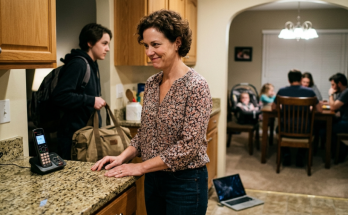
My thirteen-year-old son took a weekend dishwashing job to save for a new bike. Six months later, the bike still hadn’t appeared. Then his boss called me and asked,
“Do you know what Evan does with every paycheck?”
I told him my son was saving for a bicycle. The man went silent. Then he said, “Ma’am, you need to sit down. Everything your boy has told you about that money is a lie.”
My son, Evan, had been staring at the same bicycle for months. Every time we passed the sporting-goods store, his eyes went straight to the window.
Matte black.
Orange lettering.
Twenty-one gears.
Lightweight aluminum frame. He knew everything about it. He even knew the exact price. But Evan never asked me to buy it. That was the strange thing. Before his father died, Evan had been the kind of kid who made lists for Christmas.
He wanted a remote-control car.
A certain brand of sneakers.
A video game.
A telescope he eventually used twice. But after his father died suddenly three years earlier, something inside him seemed to change. He became quieter. More observant.
He noticed things children weren’t supposed to notice. He saw me sitting at the kitchen table with unpaid bills.
He saw me comparing grocery prices. He saw me quietly putting things back at the store when I realized I had gone over my budget.
He saw me working late. And somewhere along the way, Evan decided that needing something was the same as being a burden. So when he told me he had found a Saturday job washing dishes at a neighborhood diner, I wasn’t surprised.
“I’m going to buy the bike myself,” he said.
“You don’t have to do that.”
“I know.”
“Then why?”
He shrugged.
“Because I want to.”
I smiled.
“All right. But school comes first.”
“Deal.”
Every Saturday morning, Evan left the house wearing old jeans, worn sneakers, and a shirt he didn’t care about getting stained.
Every Saturday evening, he returned smelling like dish soap, fryer grease, and french fries.
His hands became dry and red from the hot water.
Sometimes I found him asleep on the couch with his homework still open.
Whenever I asked about the bicycle, he always gave me the same answer.
“Almost there.”
At first, I believed him.
Then three months passed.
Four.
Five.
Six.
Still no bicycle.
That was when I started doing the math.
Evan was earning enough every Saturday that he should have been able to afford the bike months earlier.
So where was his money going?
I tried not to worry.
Maybe he had changed his mind.
Maybe he was saving for something else.
Maybe he’d bought something without telling me.
Maybe he was planning some kind of surprise.
Then one night, I walked past his bedroom and noticed the light was still on.
His door was partly open.
I glanced inside.
Evan was sitting cross-legged on the floor counting a thick stack of cash.
There was far more money there than I expected.
The second he saw me, his expression changed.
He swept the bills together, shoved them into his backpack, and zipped it closed.
“What are you doing?”
“Nothing.”
“That was a lot of money.”
“Sal pays me in small bills. It just looks like more.”
I stared at him.
“Evan.”
He wouldn’t meet my eyes.
“I’m getting close.”
“Close to what?”
“The bike.”
Something felt wrong.
But he was thirteen.
He deserved some privacy.
So I nodded.
“All right.”
He gave me a nervous smile.
“Good night, Mom.”
I walked away.
But that night, I didn’t sleep well.
A few weeks later, things became even stranger.
Evan usually came home from the diner around six.
That Saturday, seven passed.
Then seven-thirty.
His phone went straight to voicemail.
By the time the back door finally opened, it was nearly eight.
I rushed into the hallway.
Then I froze.
His sneakers were covered in mud.
His jeans were soaked nearly to the knees.
One sleeve was torn.
There was a fresh scrape along the side of his face.
“Evan!”
He stopped.
“What happened?”
“Nothing.”
“Nothing?”
“I fell.”
“You fell where?”
“Near the creek.”
“What were you doing near the creek?”
He shrugged.
“I took a shortcut.”
I looked at his torn sleeve.
“You call that a shortcut?”
“I’m fine.”
“You’re bleeding.”
“It’s just a scratch.”
He tried to walk past me.
I stepped in front of him.
“Where’s your paycheck?”
He stopped.
His eyes dropped toward the floor.
“I put it somewhere safe.”
“Somewhere safe where?”
“Mom, please.”
“What does that mean?”
“I don’t want to talk about it.”
My voice softened.
“Evan, I’m not angry. I’m worried.”
He looked at me for several seconds.
Then he whispered,
“Can I please just take a shower?”
And he went upstairs.
I stood alone in the hallway listening to the water turn on.
By then, my imagination had started working against me.
The hidden cash.
The torn clothes.
The muddy shoes.
The missing money.
The bicycle that never appeared.
What if someone older had gotten him involved in something?
What if the diner job wasn’t the whole story?
What if my grieving thirteen-year-old had gotten himself into something dangerous and was too frightened to tell me?
I hated myself for thinking it.
But the pieces weren’t fitting.
I decided that weekend I would sit him down and demand the truth.
Before I had the chance, his boss called.
I was at work when an unfamiliar number appeared on my phone.
“Hello?”
“Is this Evan’s mother?”
The man sounded older.
“Yes. Who’s calling?”
“My name is Sal. I own the diner where Evan works.”
My stomach tightened.
“Did he do something wrong?”
There was a long pause.
Finally, Sal said,
“I honestly don’t know how to answer that.”
“What does that mean?”
Another silence.
Then he asked,
“Do you know what your son does with every paycheck?”
I frowned.
“He’s saving it.”
“For what?”
“A bicycle.”
Sal exhaled slowly.
Then his voice changed.
“Ma’am, you should probably sit down.”
I grabbed the edge of my desk.
“Why?”
“Because everything that boy has told you about that money is a lie.”
My stomach dropped.
“What are you talking about?”
“He isn’t saving for that bike.”
“Then what is he doing?”
Before Sal could answer, shouting erupted in the background.
Then I heard Evan.
“Please! Don’t tell my mom!”
I shot to my feet.
“Evan?!”
Something crashed loudly.
Then Sal shouted,
“Everybody back up!”
“Sal, what’s happening?”
“Ma’am, you need to come down here.”
“What happened?”
“Your son tried to do it again.”
My heart stopped.
“Tried to do what?”
“Just get here. Now.”
The call ended.
I didn’t even grab my coat.
I took my keys and ran.
During the drive, every terrible possibility went through my head.
Had Evan stolen money?
Had he gotten into a fight?
Was someone threatening him?
Was he hurt?
Was the cash I’d seen in his bedroom even his?
By the time I reached the diner, my hands were shaking.
I pushed through the front door.
The restaurant was closed for the afternoon.
The dining room was empty.
But the kitchen was crowded.
Several employees stood around the dishwashing area.
Nobody spoke.
Then I saw Evan.
He was standing in the middle of the kitchen.
His backpack was open on the floor.
Things I had never seen before were scattered beside it.
Receipts.
Envelopes.
Small packages.
Canned food.
Medicine.
Gift cards.
Bus passes.
And photographs.
Then I saw what was lying on top of everything.
A small red plastic inhaler.
I looked at my son.
He looked at me.
And suddenly, six months of strange behavior began to make sense.
The hidden money.
The muddy clothes.
The torn sleeve.
The missing paychecks.
The repeated promise that he was “almost there.”
And most of all…
why there had never been enough money for that bicycle.
“Evan,” I whispered.
He wouldn’t look at me.
Sal walked toward me.
“I owe you an explanation.”
I looked at him.
“Start talking.”
He nodded.
Then he pointed toward the back door.
“Three months ago, Evan found someone living behind the diner.”
I stared at him.
“Who?”
“A family.”
“What family?”
“A woman named Marisol and her two children.”
I looked at Evan.
He was crying now.
Sal continued.
“They weren’t exactly living there. They were staying in an abandoned storage shed behind the old auto shop across the creek.”
My stomach turned.
“How did Evan know?”
Sal sighed.
“Because he found them.”
I looked at my son.
“When?”
Evan finally spoke.
“On a Saturday.”
His voice was barely audible.
“I was taking the trash out.”
He wiped his face.
“I heard a little girl coughing.”
I didn’t say anything.
“I thought somebody was hurt.”
“So I went to look.”
His voice shook.
“There was a woman in there with two kids.”
I knelt in front of him.
“What happened?”
“They had nowhere to go.”
He looked down.
“The mom said they were waiting for someone from a shelter to call them.”
“And?”
“They never called.”
I felt tears gathering in my eyes.
“Why didn’t you tell me?”
Evan swallowed.
“Because you already had enough problems.”
That sentence broke something inside me.
“Evan…”
“I knew we didn’t have much.”
“You should have told me.”
“I wanted to.”
He looked at me.
“But I thought if I told you, you’d worry.”
“I am your mother. I’m supposed to worry.”
He gave a tiny, broken smile.
“I know.”
I looked at Sal.
“How long has this been going on?”
“About four months.”
“Four months?”
Sal nodded.
“At first, Evan brought them leftover food.”
I stared at him.
“He was taking food from the diner?”
“Food that was going to be thrown away,” Sal said quickly. “I knew about that.”
“You knew?”
“I caught him carrying a box out one night.”
Sal rubbed his forehead.
“I was angry at first. Then I followed him.”
He looked at Evan.
“I saw where he was going.”
“And you let him keep doing it?”
“I did more than that.”
Sal pointed toward the boxes.
“I started putting food aside for him.”
My eyes moved across the kitchen.
There were cartons of rice.
Canned vegetables.
Bread.
Baby food.
Soap.
Blankets.
Then I noticed something else.
A stack of envelopes.
“What’s in those?”
Sal didn’t answer.
Evan did.
“Rent.”
I looked at him.
“What?”
“Not rent for us.”
He swallowed.
“For them.”
I stared at the envelopes.
“You’ve been paying their rent?”
“Not rent exactly.”
He shook his head.
“It’s for the motel.”
I looked at Sal.
He explained.
“Marisol finally got a temporary room at a motel outside town. But she couldn’t afford the deposit.”
“So Evan paid it?”
Evan nodded.
“Where did you get that kind of money?”
“My paychecks.”
I stared at him.
“All of them?”
He nodded.
“For four months?”
Another nod.
I felt a strange mixture of anger and pride.
“You lied to me.”
“I know.”
“You told me you were saving for a bicycle.”
“I know.”
“You watched me believe you.”
“I know.”
“Why?”
His lower lip trembled.
“Because if I told you the truth, you’d make me stop.”
I opened my mouth.
Then closed it.
Because he was probably right.
Not because I wouldn’t have wanted to help.
But because I would have been terrified.
I would have worried about his safety.
I would have called someone.
I would have tried to fix everything.
And Evan had decided he had to protect me from one more problem.
Sal crouched beside the backpack.
“This isn’t all of it.”
I looked at him.
“What do you mean?”
He reached inside and pulled out a notebook.
He handed it to me.
It was Evan’s handwriting.
I opened it.
Every Saturday had been listed.
The date.
His paycheck.
The amount he kept.
The amount he spent.
The supplies he purchased.
At the bottom of each page were small notes.
“Milk.”
“Bus ticket.”
“Antibiotics.”
“School shoes.”
“Blanket.”
“Deposit.”
“Food.”
Then I turned another page.
There was a list of goals.
Food for one month.
New shoes for the little girl.
Doctor appointment.
Motel deposit.
School supplies.
Emergency money.
And at the very bottom, crossed out several times, was:
**BIKE — $420**
I stared at it.
“Why did you cross it out?”
Evan looked embarrassed.
“Because I realized I didn’t need it.”
I closed the notebook.
“You did need it.”
He shook his head.
“They needed things more.”
“No.”
I put the notebook down.
“You are thirteen.”
He looked confused.
“You don’t have to sacrifice everything you want because your mother is struggling.”
He didn’t respond.
“You are allowed to want a bicycle.”
He nodded slowly.
“You’re allowed to be a kid.”
His eyes filled with tears.
“I just wanted to help.”
“I know.”
Then Sal cleared his throat.
“There is one more thing.”
I turned.
“What?”
He looked uncomfortable.
“The reason I called you today wasn’t just because of the money.”
“What happened?”
He pointed toward the packages.
“Evan has been trying to get Marisol’s daughter into a medical clinic.”
I looked at my son.
“Why?”
“The little girl has asthma.”
My eyes went to the inhaler.
“She’s been having trouble breathing.”
Evan nodded.
“Her mom couldn’t afford the prescription.”
“And that’s what happened today?”
Sal nodded.
“Evan came in with another package. He’d bought medication and food. I told him he couldn’t keep doing this alone.”
Evan looked down.
“I told him I’d help.”
Sal sighed.
“But then he got upset because he thought I was going to tell you.”
I looked at Evan.
“You ran?”
He nodded.
“I didn’t want you to know.”
“And you crossed the creek?”
“It’s faster.”
“That’s why your clothes were muddy?”
He nodded.
“You could have been hurt.”
“I know.”
“And that’s why your sleeve was torn?”
He nodded again.
I pulled him toward me.
For a few seconds, he resisted.
Then he collapsed against my shoulder.
He cried the way he hadn’t cried since his father died.
“I didn’t want you to think Dad would be disappointed in me.”
I held him tighter.
“Your father would have been proud of your heart.”
“But I lied.”
“Yes.”
He pulled back.
I wiped his face.
“You did something kind, but you did it in a way that wasn’t safe.”
He nodded.
“You don’t get to carry the world by yourself.”
He nodded again.
“And no more secrets.”
“Okay.”
“Promise?”
“I promise.”
Sal quietly stepped away.
Then he said,
“There is something else you should know.”
I looked at him.
“Marisol has a job interview Monday.”
“That’s good.”
“She also got accepted into an affordable housing program.”
I smiled.
“That’s wonderful.”
“She needs transportation.”
I looked at Evan.
He looked at me.
Then I understood.
“You were saving for a bike so she could get to work.”
He nodded.
“Her job is too far from the motel.”
My eyes filled again.
“How much money do you have left?”
Evan hesitated.
“Almost nothing.”
“Because you spent it all?”
He nodded.
I looked at Sal.
“Does she know what he’s been doing?”
“No.”
“Good.”
Evan looked confused.
“Why?”
“Because she doesn’t owe you anything.”
He frowned.
“I don’t want her to.”
“Exactly.”
I picked up his backpack.
“We’re going home.”
He looked nervous.
“Are you mad?”
“Yes.”
His shoulders dropped.
“But not because you helped someone.”
He looked up.
“Then why?”
“Because you lied to me.”
He nodded.
“And because you crossed a creek alone at night.”
“I’m sorry.”
“I know.”
“And because you thought you had to solve problems adults couldn’t solve.”
He was silent.
I put my hand on his shoulder.
“That’s my job.”
We walked out of the diner.
In the parking lot, Evan stopped.
“Mom?”
“Yes?”
“Can I still get the bike someday?”
I smiled.
“Yes.”
“But I don’t want you to buy it.”
“I didn’t say I was buying it.”
He looked surprised.
“Then how?”
“We’ll figure it out.”
He smiled.
“For real?”
“For real.”
Two weeks later, something unexpected happened.
I received an envelope in the mail.
Inside was a handwritten letter from Sal.
It said the diner staff had started a small community fund.
Nobody had been told Evan’s name.
Nobody was supposed to know exactly how much he’d given.
But everyone knew a thirteen-year-old had been quietly using his Saturday wages to help a family he barely knew.
The diner employees wanted to contribute.
So did several customers.
There was no enormous amount of money.
No miracle check.
Just dozens of small contributions.
Ten dollars.
Twenty.
Five.
Fifty.
Together, they were enough to replace what Evan had spent.
And then some.
But I didn’t tell him immediately.
Instead, I waited.
Three weeks later, Marisol got the apartment.
Her daughter got medical care.
The little girl started school.
Marisol got the job.
And Evan stopped taking the shortcut across the creek.
He also stopped hiding his money.
Every Saturday evening, he came home and put his paycheck on the kitchen table.
We divided it into three envelopes.
Savings.
Spending.
Giving.
Not because he had to give.
Because he wanted to.
And for the first time, I made sure the giving envelope never came before the savings one.
“You’re allowed to build your own future,” I told him.
He nodded.
Then came the day of the bicycle.
I picked Evan up from school.
He opened the car door.
Then froze.
In the back seat was a large box.
Orange lettering.
Matte black.
He stared at it.
His mouth fell open.
“No.”
I smiled.
“Yes.”
“Mom!”
He climbed into the back seat and nearly tore the box open before I stopped him.
“Wait.”
He laughed.
“You said I could have it!”
“I said you could have it.”
I handed him the card I’d found taped to the box.
He opened it.
Inside was a message from Sal.
It said:
**For the kid who thought everyone else needed something more than he did.**
Evan read it twice.
Then he started crying.
I hugged him.
“Happy birthday.”
“It isn’t my birthday.”
“I know.”
He laughed through his tears.
“Then why?”
“Because sometimes you don’t need a special day to deserve something good.”
He looked at the bicycle.
Then at me.
“Did you buy it?”
I shook my head.
“Sal and the diner staff helped.”
Evan looked stunned.
“I told them you shouldn’t have to choose between helping someone and having something you wanted.”
He ran his hand along the handlebars.
For months, he’d stared at that exact bicycle through the sporting-goods-store window.
Now it belonged to him.
But something about his expression had changed.
He wasn’t looking at it like a prize.
He was looking at it like a second chance.
The next Saturday morning, Evan rode it to the diner.
He came home three hours later with a huge smile.
“How was it?”
“Great.”
“Did you ride carefully?”
“Yes.”
“Helmet?”
“Yes.”
“Good.”
He put the bike away.
Then he walked into the kitchen.
He was holding an envelope.
“What’s that?”
“My paycheck.”
He placed it on the table.
I smiled.
“Three envelopes?”
He nodded.
“Three.”
Then he pointed toward the smallest one.
“This one’s for giving.”
I looked at him.
“And who are you helping now?”
He grinned.
“Nobody yet.”
He thought for a moment.
“I’m saving it.”
“For what?”
He shrugged.
“Whoever needs it.”
I hugged him.
And for the first time in years, I didn’t see the little boy who had lost his father.
I saw the young man he was becoming.
A young man who had learned something I hoped he’d never forget:
Kindness was powerful.
But kindness didn’t mean carrying every burden alone.
And sometimes, the bravest thing a person could do wasn’t giving away everything they had.
Sometimes it was allowing someone else to help.
Years later, I would still think about that phone call from Sal.
The question he asked me had frightened me.
“Do you know what Evan does with every paycheck?”
At the time, I thought the answer would reveal something terrible.
Instead, it revealed something I hadn’t fully understood about my own son.
He wasn’t trying to buy a bicycle.
He was trying to buy someone else a chance.
A chance to eat.
A chance to get medicine.
A chance to get to work.
A chance to sleep somewhere safe.
And eventually, he learned that helping someone didn’t mean giving away every piece of himself.
It meant helping when he could.
Asking for help when he couldn’t.
And never being ashamed of wanting something for himself, too.
The matte-black bicycle stayed with him for years.
The orange lettering eventually became scratched.
The tires wore down.
The gears needed replacing.
But Evan kept it.
He even carried it with him when he moved away for college.
One day, years later, I asked him why.
He smiled.
“Because that’s the bike that taught me I was allowed to be a kid.”
I smiled back.
“You know something?”
“What?”
“You never really needed that bike to prove anything.”
“I know.”
“Then why did you keep staring at it?”
He laughed.
“Because I really wanted it.”
We both laughed.
Then he said,
“But I guess wanting something doesn’t make you selfish.”
“No,” I said.
“It doesn’t.”
And that was the lesson I wished I had taught him sooner.
My son had spent six months pretending to save for a bicycle.
But the truth was, he’d been spending every paycheck trying to save people.
And when his boss finally called me and told me everything Evan had been hiding, I thought I was about to discover the worst thing my child had ever done.
Instead, I discovered the biggest thing he’d ever tried to do.
He had tried to make a broken world a little less broken.
He just hadn’t understood yet that he didn’t have to do it alone.