My Parents Abandoned Me at a Bus Station—Then Sued Me for the $3.8 Million Inheritance I Received
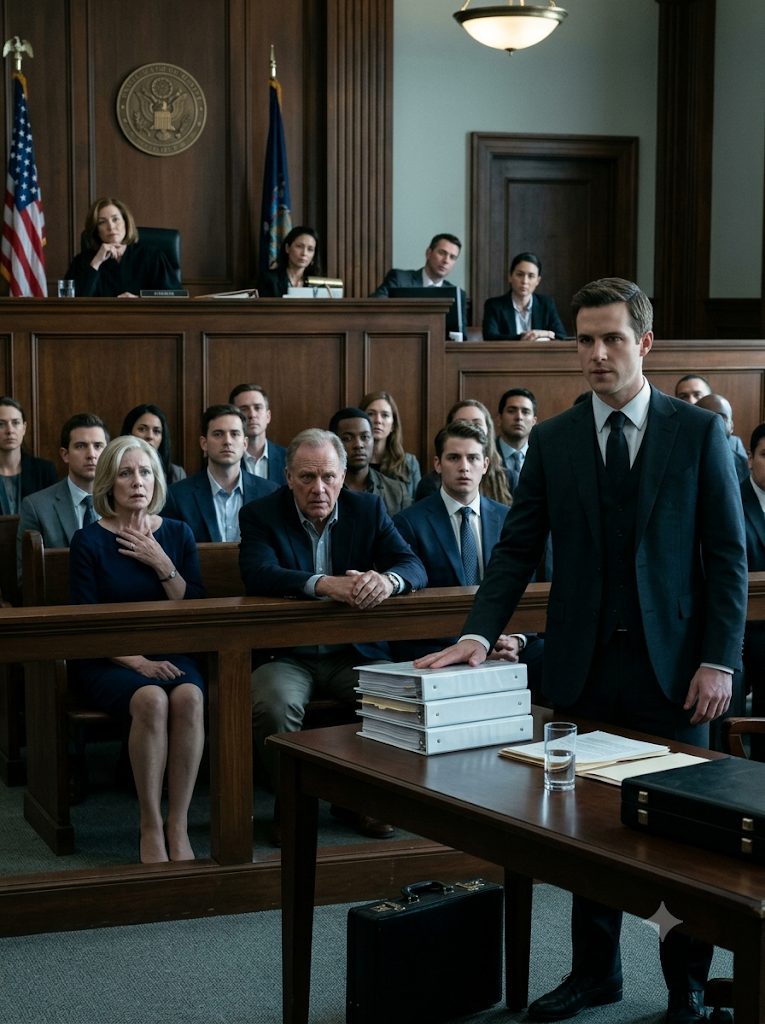
The bailiff set the first binder in front of Judge Patricia Wynn.
My father leaned toward his attorney and whispered something. My mother stared at the binder as if it might disappear if she refused to look at it. Wyatt had stopped smiling.
I opened my copy and turned to the first page.
“Your Honor,” I said, “this is the police report filed on February 14, 1994, the night my parents left me at the Greyhound station in Dayton.”
Their attorney stood immediately.
“Objection. We have not been provided a proper foundation for these materials.”
I looked at him.
“The records were produced during discovery, counsel. The certified copies were included in my exhibit list and served within the required deadline.”
Judge Wynn glanced through her file.
“I have the exhibit list,” she said. “Counsel, you will have an opportunity to raise specific objections as the documents are introduced. Sit down for now.”
He sat.
I turned the binder toward the judge.
The first document was the original report describing me as a runaway.
It stated that my parents had returned home after I supposedly left without permission.
It described me as difficult to control, emotionally unstable, and prone to disappearing.
I was eight years old.
I had never run away.
I had never been violent.
And I had not disappeared from my home.
My parents had driven me to a bus station, told me to sit on a wooden bench, and walked away.
I read the report’s description of the supposed incident.
Then I looked at my mother.
She had both hands clasped tightly in her lap.
“Do you remember telling the police I ran away?” I asked.
Their attorney stood.
“Your Honor, my client is not required to answer questions from the defendant.”
Judge Wynn nodded.
“Correct. Mr. Marsh, address the court and the evidence. Do not turn this into an argument with the plaintiffs.”
I lowered my eyes to the report.
“Yes, Your Honor.”
I continued.
The report had been filed before the police located me at the station.
That detail mattered.
The officer who found me had documented where I was sitting, what I was wearing, and the fact that I had been waiting for my parents to return.
A separate supplemental report recorded that I repeatedly said my father had gone to buy tickets and my mother had gone with him.
I had not told anyone I wanted to leave.
I had not claimed to be running away.
I had told the officers exactly what an eight-year-old child would tell them.
My parents had said they were coming back.
They never did.
Judge Wynn examined the two reports side by side.
“Why are these accounts so different?” she asked.
I turned a page.
“Because, Your Honor, one account was given by the child who was found at the station, and the other was supplied by the adults who left him there.”
My father’s attorney rose again.
“Your Honor, the plaintiffs were young parents facing a difficult family situation. The defendant is attempting to turn a dispute over an estate into a public accusation about events from decades ago.”
I looked at him.
“They were not young parents who misplaced a child. They filed a report saying I had run away after they left me at a bus station.”
Judge Wynn raised one hand.
“Mr. Marsh, continue with the exhibits. Counsel, you will have an opportunity to respond.”
I moved to the second section.
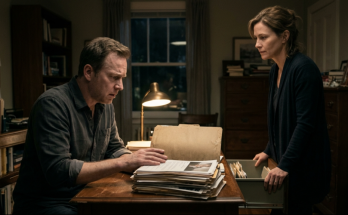
It contained the documents that had taken me the longest to look at when the investigator first showed them to me.
The insurance policy.
I placed the application on top of the binder.
It had been issued eighteen months before the night at the station.
My name appeared on the page as the insured child.
Arthur and Evelyn Marsh were listed as the policyholders and beneficiaries.
The coverage was tied to a disappearance provision, with conditions under which the insurer could consider a prolonged, documented disappearance for purposes of a claim.
I had read those pages so many times that I could almost recite them.
The next document was a claim filed two years after I had been abandoned.
My parents had reported that I remained missing.
They had submitted a sworn statement supporting the claim.
The final page showed the payment.
$62,000.
The courtroom became so quiet that I could hear someone shifting in a chair behind me.
I placed my hand on the document.
“Your Honor, my parents received this money two years after leaving me at the Greyhound station.”
My mother shook her head.
Not dramatically.
Just once, as if she were trying to reject something she couldn’t bear to hear.
My father’s attorney stood.
“We object to the characterization of this payment. The policy was administered by an insurance company, and the defendant has not established that the plaintiffs violated any criminal statute.”
“I have not asked this court to decide a criminal charge,” I replied. “I am showing the court why their claim that they were devastated parents searching for their missing child is contradicted by their own sworn documents.”
Judge Wynn looked at the attorney.
“Your objection is noted. The court will distinguish between what the documents establish and what they do not establish.”
I nodded.
That was exactly what I wanted.
I wasn’t asking the judge to decide everything that had happened in 1994.
I was asking her to look at the people who had filed this lawsuit and consider whether their story deserved to be accepted without question.
I turned to the third binder.
It contained the documents relating to my placement, adoption, and the termination of Arthur and Evelyn’s parental rights.
The first pages recorded the investigation that followed my abandonment.
Then came the court orders.
Then the adoption decree.
Elijah Marsh’s name appeared in the final section.
The man who had walked into the wrong room at a child-services office and asked me whether I knew how to play chess had become my legal father.
He had not simply given me a place to sleep.
He had shown up.
Week after week.
He had completed the required process, accepted the responsibility, and raised me.
He had sat in the third row at my graduation.
He had paid for my education without reminding me what it cost.
And when he died, he left me everything he had spent a lifetime building.
I looked toward my parents.
“Twenty-two years ago, the court entered an order terminating your parental rights. Elijah later adopted me. You were not my legal parents when he died, and you did not have a relationship with him.”
My father’s jaw tightened.
Their attorney stood.
“Your Honor, we dispute the defendant’s interpretation of the applicable law. The plaintiffs are not seeking to reverse an adoption. They are asserting that the circumstances surrounding the estate and the decedent’s relationship with the defendant raise questions that deserve examination.”
Judge Wynn looked at him.
“Then identify the legal basis for your clients’ claim to this inheritance.”
The attorney adjusted his papers.
He began talking about biological family, the natural bond between parents and children, and the unfairness of allowing a person outside the biological family to inherit such a substantial estate.
I waited until he finished.
Then I stood.
“Your Honor, Elijah was not an outsider.”
My voice sounded steadier than I felt.
“He was the person who raised me. He was the person who took responsibility when the people who brought me into the world left me behind. He paid for my education. He gave me a home. He was my father in every way that mattered, and he was my father under the law.”
I glanced at the adoption decree.
“The plaintiffs are asking this court to disregard the legal relationship that existed for decades because they have now learned the estate is worth $3.8 million.”
My mother finally spoke.
“Matthew, that’s not fair.”
I turned toward her.
For twenty-two years, I had imagined hearing my mother say my name.
I had imagined what I would ask her.
Why did you leave?
Did you look for me?
Did you ever regret it?
Instead, the first time she said my name in a courtroom, it was because I had shown the judge a document proving what she had done.
“What’s not fair?” I asked.
Judge Wynn tapped her desk.
“Mr. Marsh.”
I stopped.
My mother looked down.
Their attorney stood and asked for a brief recess.
The judge granted it.
As the courtroom began to empty, I gathered my papers and placed the insurance claim back inside its protective sleeve.
I didn’t feel victorious.
I felt as though I had spent the morning opening a door I had kept shut for most of my adult life.
In the hallway, my father approached me.
“Matthew.”
I turned.
He looked older than I remembered from the photographs in the investigator’s report.
His hair had thinned.
His shoulders seemed narrower.
But his voice was the same.
“We need to talk.”
I closed my binder.
“About what?”
“About what happened.”
“You’ve had twenty-two years.”
He glanced toward the courtroom doors.
“Not here.”
I looked at him for a moment.
“Where would you like to talk? The bus station?”
His face hardened.
“You don’t understand the pressure we were under back then.”
I felt something inside me go very still.
I had heard versions of that sentence before, even though I had never heard it from him directly.
People who abandoned responsibility often had explanations.
Sometimes those explanations were painful.
Sometimes they were complicated.
But none of them changed the fact that an eight-year-old boy had waited four hours on a wooden bench.
“You can explain it to the judge,” I said.
Then I walked back inside.
When the hearing resumed, Judge Wynn asked both sides to address the central issue.
The estate was not a prize to be awarded to whichever party could tell the most emotional story.
The court needed to determine whether Arthur and Evelyn had any legally recognized basis to claim the assets Elijah had left to his adopted son.
Their attorney argued that the estate’s value, the timing of the will, and the history of the relationship should be examined before the case could proceed.
I answered by pointing to the will, the estate documents, and the adoption decree.
Elijah had named me as his sole beneficiary.
There was no indication in the documents that he had been pressured into doing so.
He had signed the will with the required formalities.
The estate attorney had confirmed the process.
And the plaintiffs had offered no evidence that Elijah lacked the capacity to make his own decisions.
Then I turned to the question of motive.
“Your Honor, I understand that the plaintiffs have a right to bring a claim if they believe they have a valid legal basis. But the court should not confuse the right to file a lawsuit with the existence of a right to inherit.”
Judge Wynn looked at the complaint.
“Mr. Marsh, are you asking me to dismiss the plaintiffs’ claims today?”
“Yes, Your Honor. I am asking the court to dismiss the claims that have no legal basis, and to consider the evidence of the plaintiffs’ prior sworn statements when evaluating the credibility of their allegations.”
Their attorney objected to the second part.
The judge considered the request.
“I will address the legal claims separately from any allegation that might fall outside the scope of this estate proceeding.”
She turned toward my parents.
“Mr. and Mrs. Marsh, do you understand that this hearing concerns your legal claim to the estate, not whether you regret decisions made more than twenty years ago?”
My mother nodded.
My father said nothing.
The judge continued.
“Your biological relationship to the defendant does not, by itself, establish an entitlement to property left by someone who legally adopted him. If you have another recognized basis for your claim, your counsel needs to identify it.”
Their attorney stood again.
He asked for additional time to review the adoption records and insurance documents.
Judge Wynn gave him a limited period to submit a written response to the exhibits and address the specific legal grounds for the claim.
But she made one thing clear.
The plaintiffs could not simply call themselves Matthew’s parents and expect the court to treat the inheritance as theirs.
For the first time that morning, I saw my father look genuinely uncertain.
Wyatt leaned forward and whispered something to him.
My father shook his head.
My brother had entered the courtroom as though the $3.8 million were already his.
Now he was staring at the documents with the same expression I remembered from childhood whenever an adult told him something he didn’t want to hear.
The judge ordered the parties to preserve all relevant records, including the original insurance documents and the materials related to the 1994 police report.
She also stated that any question of possible misconduct involving the insurance claim would need to be handled through the appropriate process outside the narrow question of who inherited Elijah’s estate.
That distinction mattered.
A civil judge deciding an inheritance dispute was not going to declare someone guilty of insurance fraud based on a binder presented at a hearing.
But the documents were now part of the record before the court.
And the story my parents had told for decades was no longer the only version anyone could see.
Before the hearing ended, my mother’s attorney asked whether his clients could speak with me privately.
I declined.
I had no interest in being cornered in a hallway and told that everything had been a misunderstanding.
If they wanted to explain their actions, they could do so through the proper process.
The hearing concluded without a final ruling that afternoon.
The judge set a date for the next submission and instructed both sides to address the legal issues directly.
I packed the binders.
As I lifted the last one, I noticed my father’s eyes following the insurance document.
He looked as though he wanted to say something.
But he didn’t.
I walked out of the courtroom alone.
Outside, the winter air felt sharp against my face.
I stood on the courthouse steps for a few minutes before taking out my phone.
There was a photograph of Elijah saved in my favorites.
It showed him sitting at the kitchen table in his brown corduroy jacket, a chessboard between us.
He was smiling at something outside the frame.
I had taken it years earlier without thinking it would become one of the last photographs I had of him.
I looked at it for a long time.
Then I remembered the first time he had visited me at the child-services office.
I had been sitting in a plastic chair, refusing to speak to anyone.
He had opened a little magnetic chess set and asked whether I knew how to play.
He hadn’t asked me why my parents left.
He hadn’t demanded that I trust him.
He had simply returned the following week.
And the week after that.
He had never made me prove I deserved to be loved.
That was the difference between Elijah and the people who had brought me into the world.
My phone rang.
It was the estate attorney.
“Matthew, how did the hearing go?”
“They’re asking for more time.”
“That’s not unexpected. Did the judge address the adoption?”
“She made it clear that biology alone doesn’t establish a claim to the estate.”
There was a pause.
“And the insurance documents?”
“They’re in the record. The judge said any separate issue needs to go through the appropriate process.”
“Good. We’ll preserve everything and make sure the estate remains protected while the court considers the remaining filings.”
I thanked him and ended the call.
For the first time since receiving the lawsuit, I felt that the case was moving in a direction grounded in facts rather than the emotional performance my parents had brought into the courtroom.
But the next few weeks were not easy.
My parents’ attorney filed a response arguing that the court should consider whether Elijah’s will reflected the full history of the family.
They suggested that the inheritance was excessive and that my parents had been excluded from a legacy they believed should have belonged to their biological family.
My response was simple.
Elijah had not excluded them.
He had never known them as family.
They had abandoned me before he ever met me.
They had no relationship with him.
They had not attended his birthday dinners, helped him when he was sick, visited his home, or called to ask how he was doing.
They had not been part of his life.
They had learned his name only after learning the value of his estate.
The estate attorney also helped preserve the insurance records and arrange for the relevant materials to be referred to the appropriate authorities for review.
I did not know whether that would lead to anything further.
I wasn’t going to promise myself a criminal case or a dramatic confession.
I wanted the truth documented.
I wanted the court to decide the inheritance dispute based on the law.
And I wanted my parents to stop pretending that a biological connection gave them ownership over a man who had chosen to raise me.
The next hearing took place several weeks later.
This time, my parents arrived without the same confidence.
My mother wore a plain gray jacket.
My father carried a folder he barely opened.
Wyatt was there again, but he no longer leaned back with a smirk.
Their attorney presented his final arguments.
He said the plaintiffs were asking for fairness.
He said the defendant had received a substantial estate from a man who had no biological connection to him.
He said the plaintiffs were his natural parents and that the court should not dismiss their interest without considering the circumstances.
Judge Wynn listened.
Then she turned to me.
“Mr. Marsh?”
I stood.
“Your Honor, the plaintiffs have had every opportunity to identify a legal basis for taking this inheritance. They have not shown that they were beneficiaries of Elijah’s will, creditors of his estate, or parties to any agreement entitling them to his property.”
I placed the adoption decree on the table.
“They were no longer my legal parents when Elijah adopted me.”
Then I placed the will beside it.
“Elijah made his decision clearly and voluntarily.”
Finally, I set down the insurance claim.
“And the documents show that the same people now describing themselves as devoted parents once reported their eight-year-old son missing after leaving him at a bus station, then received $62,000 under a policy connected to his disappearance.”
Their attorney stood.
“Your Honor, we renew our objection to the use of that material as evidence of the plaintiffs’ character.”
Judge Wynn looked at him.
“The court is not deciding this matter based on character. It is considering the exhibits for the limited purposes already discussed, and it is deciding whether the plaintiffs have established a legal claim to the estate.”
She turned to the file.
Then she began reading her decision.
The adoption was valid.
The will was properly executed.
The estate documents identified me as the beneficiary.
The plaintiffs had not established a legal right to inherit Elijah’s property.
Their biological relationship to me did not create ownership of an estate they had no recognized claim against.
The judge dismissed their inheritance claims.
For a moment, I didn’t move.
I had prepared for the possibility of losing.
I had prepared for another delay, another motion, another round of accusations.
I hadn’t prepared for the sound of the judge saying the case was dismissed.
My mother lowered her head.
My father stared straight ahead.
Wyatt leaned toward their attorney, but the attorney was already gathering his papers.
Judge Wynn then addressed the documents relating to the insurance claim.
She clarified that the estate ruling did not determine whether the statements made in 1994 were fraudulent or whether any separate legal violation had occurred.
Those matters, if pursued, would be handled by the appropriate authorities.
The court would preserve the relevant materials.
That was all.
No dramatic arrest.
No instant confession.
No sudden explanation that could undo twenty-two years.
Just a decision about the inheritance, and a record that could no longer be rewritten as easily as my parents had once tried to rewrite my childhood.
When the hearing ended, my mother approached me near the courtroom doors.
“Matthew, please.”
I stopped.
For the first time, she looked less like someone who had come to collect money and more like someone who had finally realized that I was not going to become the child she remembered—or perhaps the child she had imagined I would remain.
“We made mistakes,” she said.
I looked at her.
“A mistake is forgetting something. You left me there.”
Her eyes filled.
“We were in a terrible situation.”
“So was I.”
She pressed her lips together.
“I’ve thought about you.”
I waited.
“Sometimes,” she added.
That word hurt more than I expected.
Sometimes.
I thought about the little boy on the bench.
The crushed granola bar.
The cold floor.
The doors opening every few minutes.
The way I had watched every person entering the station, believing the next face would be my mother or father.
Then I thought about Elijah walking into the wrong room.
He had not been looking for a son.
He had not been searching for someone to rescue.
He had simply seen a child who needed someone to sit beside him.
And he came back.
“I don’t know what you want me to say,” I told her.
She looked toward the hallway where my father and Wyatt were waiting.
“Could we talk sometime? Just the four of us?”
I shook my head.
“There is nothing I need to discuss with you about Elijah’s estate. The court has decided that.”
“I’m not talking about the money.”
I looked at her for a long moment.
“Then you should have come before there was money.”
I walked away.
My father didn’t follow.
Wyatt didn’t say anything.
Outside, I sat in my car and rested both hands on the steering wheel.
The inheritance was still there.
The house Elijah had left me was still there.
The old chessboard was still in the study, with one of the pieces missing because I had lost it when I was twelve.
But the most important thing he had left me could not be counted in dollars.
It was the certainty that I had been wanted.
Not because I was useful.
Not because I could give him something.
Not because he expected repayment.
He had chosen me, and he had kept choosing me.
I drove to Centerville that evening.
The house was quiet when I opened the door.
I walked into the study and found the chessboard where I had left it.
For a while, I stood there looking at the empty square where the missing piece belonged.
Then I sat down and opened the drawer beneath the table.
Inside was a small magnetic chess set.
The same kind Elijah had carried into that child-services office decades earlier.
I ran my thumb across the worn edge of the board.
I could almost hear him asking the question that had started everything.
“Do you know how to play chess?”
I smiled through the tears.
“Yes,” I whispered. “You taught me.”
And for the first time since the lawsuit arrived, I wasn’t thinking about the people who had left me behind.
I was thinking about the man who had come back.